
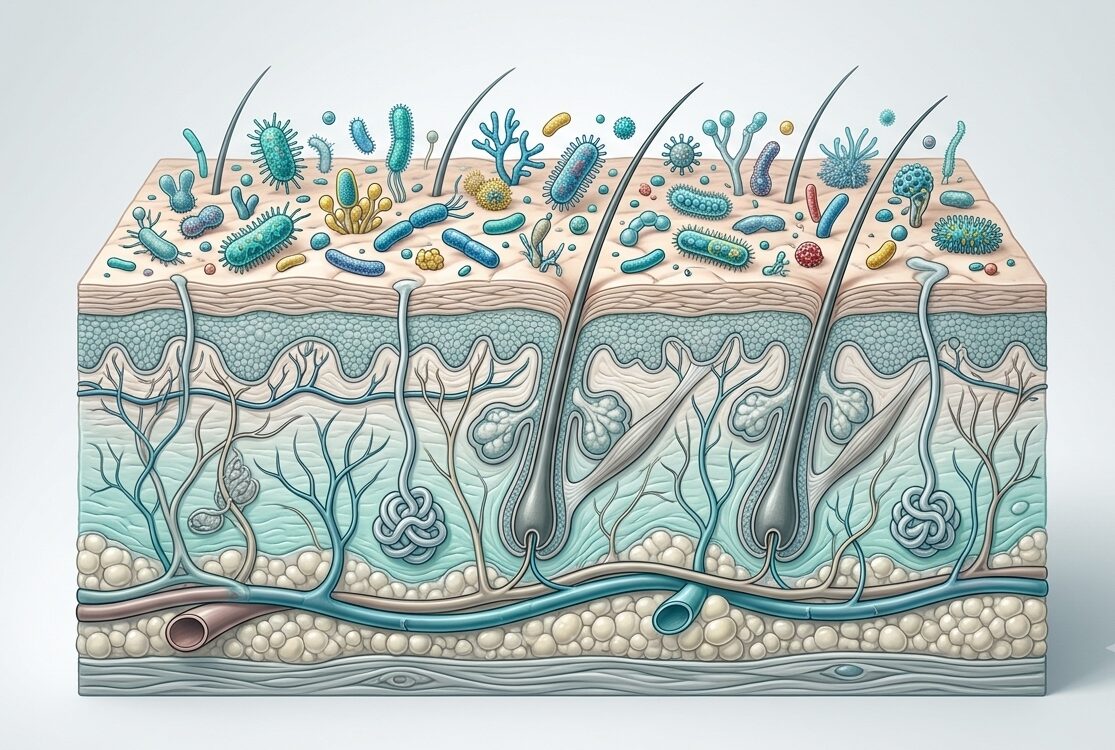
The human skin is home to a complex and dynamic ecosystem of microorganisms collectively known as the skin microbiome. This microbial community – comprising bacteria, fungi, and viruses – plays a critical role in maintaining skin health, regulating immune responses, and protecting against pathogenic invasion. As scientific understanding of the microbiome expands, so too does interest in how external interventions, including topical botanical applications, interact with this delicate biological system.
Historically, botanical ingredients such as essential oils have been widely used for their antimicrobial and therapeutic properties. However, their impact on the skin microbiome introduces a more nuanced discussion – one that balances antimicrobial efficacy with the preservation of microbial diversity and skin barrier integrity.
That balance is becoming increasingly important.
As dermatological science and product development evolve toward more microbiome-conscious approaches, there is growing recognition that not all antimicrobial activity is inherently beneficial. Instead, the focus is shifting toward selective modulation – supporting beneficial microbial communities while minimizing disruption to the broader ecosystem.
The Skin Microbiome and Its Biological Role
The skin microbiome functions as a critical component of the body’s first line of defense. Commensal microorganisms contribute to barrier function, inhibit colonization by pathogenic species, and play a role in immune system signaling. This symbiotic relationship helps maintain homeostasis and supports overall skin health.
Disruptions to the microbiome- often referred to as dysbiosis- have been associated with a range of dermatological conditions, including acne, atopic dermatitis, and psoriasis. Factors such as environmental exposure, hygiene practices, and topical product use can influence microbial composition and diversity.
Understanding how botanical compounds interact with this system is therefore essential for both clinical application and product formulation.
Interactions Between Essential Oils and the Skin Microbiome
Essential oils are complex mixtures of bioactive compounds, including terpenes, phenols, and aldehydes, many of which exhibit antimicrobial properties. These characteristics have contributed to their widespread use in topical formulations aimed at cleansing, soothing, or protecting the skin.
However, antimicrobial activity is not inherently selective.
Certain essential oil constituents have demonstrated broad-spectrum antimicrobial effects in in vitro studies, showing activity against both pathogenic and commensal microorganisms. While this may be beneficial in reducing harmful microbial load, it also raises concerns regarding unintended disruption of beneficial skin flora.
For example, compounds such as thymol, eugenol, and carvacrol have been shown to exhibit strong antimicrobial activity. While these effects may support applications in infection control or acne management, their impact on microbial balance remains an area of ongoing investigation.
Emerging research suggests that concentration, formulation, and frequency of use are critical factors in determining whether these interactions result in therapeutic benefit or microbiome disruption.
Antimicrobial Efficacy vs. Microbiome Preservation
The distinction between antimicrobial efficacy and microbiome preservation represents a central challenge in the development of botanical-based dermatological products.
Traditional approaches to skincare have often prioritized eradication of microbes, particularly in conditions associated with bacterial overgrowth. However, this strategy does not account for the protective role of commensal organisms. Overuse or high concentrations of antimicrobial agents may contribute to dysbiosis, impair barrier function, and potentially exacerbate underlying skin conditions.
In contrast, emerging approaches emphasize microbiome-friendly formulations. These strategies aim to maintain or restore microbial balance rather than eliminate microbial presence altogether.
This shift parallels broader trends in microbiome research across other areas of healthcare, including gastrointestinal and immunological studies, where microbial diversity is increasingly recognized as a marker of health.
Implications for Dermatological Product Development
The integration of microbiome science into topical formulation development is influencing how botanical ingredients are selected, tested, and applied.
Product developers are now considering factors such as:
- Selectivity of antimicrobial activity
- Impact on microbial diversity and resilience
- Interaction with the skin barrier
- Synergistic effects between botanical compounds and existing microbiota
Advanced analytical techniques, including genomic sequencing and metabolomic profiling, are enabling more detailed assessments of how formulations influence microbial communities over time.
Additionally, there is growing interest in combining botanical ingredients with prebiotic or postbiotic components to support beneficial microorganisms while maintaining therapeutic efficacy.
From a regulatory and clinical perspective, these developments highlight the need for more robust, standardized testing methodologies. Demonstrating both safety and microbiome compatibility may become increasingly important as consumer awareness and scientific expectations evolve.
Clinical and Research Considerations
While preclinical and in vitro studies provide valuable insights into the antimicrobial properties of botanical compounds, translation into clinical outcomes remains an area requiring further investigation.
Variability in study design, formulation composition, and microbial assessment methods presents challenges in establishing consistent conclusions. Larger, well-controlled clinical trials will be essential to better understand long-term effects, optimal concentrations, and appropriate use cases.
Healthcare professionals and formulators must also consider patient-specific factors, including skin type, existing conditions, and sensitivity, when recommending or developing botanical-based products.
Education plays a key role in this process. Clear, evidence-based guidance can help ensure that botanical interventions are used in ways that support, rather than disrupt, the skin’s natural ecosystem.
Future Directions and Innovation
The intersection of microbiome science and botanical therapeutics represents a rapidly evolving area of research and innovation.
Future developments may include:
- Precision formulations tailored to individual microbiome profiles
- Real-time monitoring of microbial changes through wearable or diagnostic technologies
- Enhanced delivery systems that optimize efficacy while minimizing disruption
- Greater integration of microbiome endpoints in clinical trials
As scientific understanding deepens, the goal is not simply to harness the antimicrobial properties of botanical compounds, but to apply them in a way that aligns with the complexity of the skin’s biological systems.
Conclusion
The role of the microbiome in topical botanical applications underscores the importance of a more nuanced and evidence-informed approach to skincare and dermatological science.
While essential oils and other botanical compounds offer promising therapeutic potential, their interaction with the skin microbiome requires careful consideration. Balancing antimicrobial activity with the preservation of beneficial microbial communities is essential for maintaining skin health and achieving optimal clinical outcomes.
As research continues to evolve, integrating microbiome-conscious strategies into formulation and clinical practice will be critical. By aligning traditional botanical knowledge with modern scientific frameworks, the field can move toward more targeted, effective, and biologically compatible solutions.
Author Bio

Shanna Bynes Bradford is a Clinical Researcher, Master Aromatherapist, and Founder of Grow Out Oils. Her work focuses on the intersection of botanical science, sensory-based therapeutics, and integrative healthcare. With a background in clinical research and formulation development, she collaborates with laboratories and healthcare professionals to support safety validation, product testing, and evidence-informed innovation within the cosmetic and aromatherapy industries. She is affiliated with the American College of Healthcare Sciences as a graduate ambassador and continues to advocate for responsible, research-driven approaches to plant-based therapeutics, clinical skincare formulation, and medical aesthetics education.