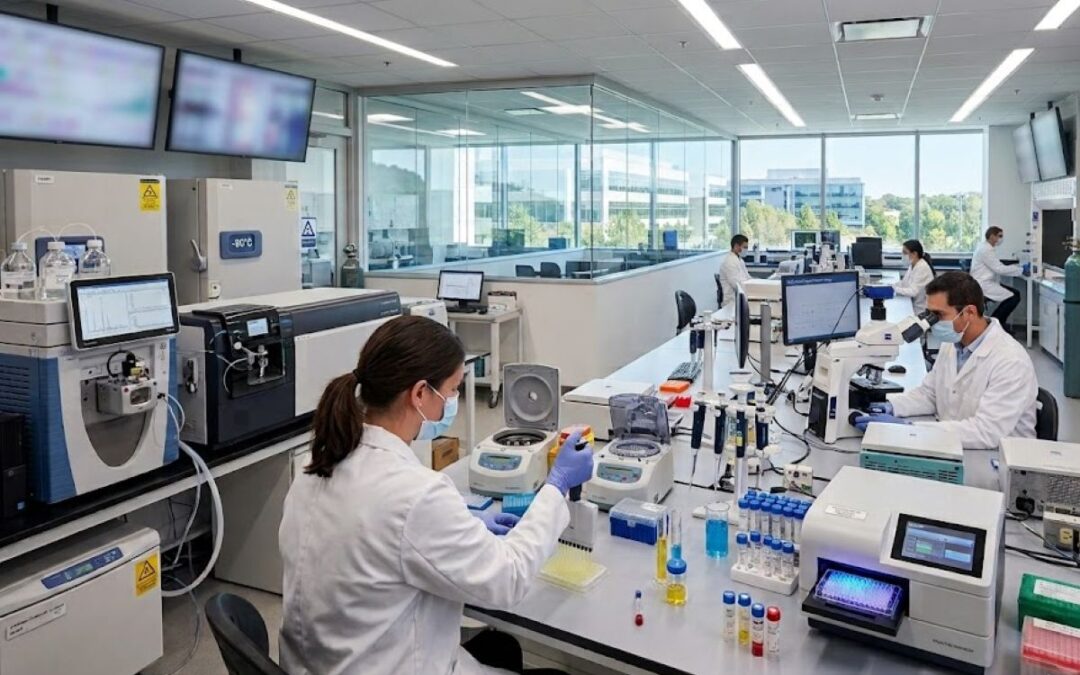


Singapore has rapidly transformed into one of the world’s most advanced and influential life science hubs. Over the past two decades, the city-state has combined strategic investment, world-class infrastructure, and a thriving innovation ecosystem to position itself at the forefront of biotechnology, biomedical research, and healthcare technology. Today, Singapore is not only a regional leader in life sciences but a global benchmark for how coordinated national policy can accelerate scientific and commercial progress.
Building a World-Class Research Ecosystem
Singapore’s rise began with deliberate, long-term planning. In the early 2000s, the government launched major initiatives to diversify the economy by investing heavily in biomedical sciences. Agencies such as the Agency for Science, Technology and Research (A*STAR), together with the National Research Foundation and Economic Development Board (EDB), provided the scientific backbone for this national vision.
Over the years, the government has committed billions through multi-year research frameworks, enabling the creation of research campuses like Biopolis and Fusionopolis. These integrated facilities bring together academic researchers, public institutions, and industry partners under one roof, accelerating the pace of discovery through co-location and shared resources.
Today, Singapore’s public research institutes conduct internationally recognised work in areas including oncology, infectious diseases, genomics, advanced therapeutics, and precision medicine.
Biopharmaceutical Manufacturing Excellence
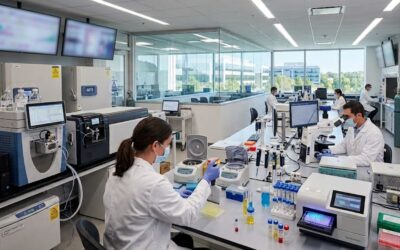
Beyond research, Singapore has become a leading site for biopharmaceutical manufacturing. Many of the world’s largest pharmaceutical companies operate major facilities in the country, including Pfizer, Novartis, Amgen, and GSK. The nation’s advanced infrastructure, strong intellectual-property protection, and highly skilled workforce make it an ideal location for high-value biologics and vaccine production.
Singapore’s manufacturing ecosystem is supported by the Biomedical Manufacturing Programme, which focuses on continuous skills development, automation, and bioprocess innovation. As a result, the country consistently ranks among the top global exporters of biologics and medical devices.
Startups and Innovation: A Thriving Biotech Scene
Singapore’s biotech landscape has expanded dramatically in recent years, with a new generation of startups driving innovation in fields such as cell and gene therapy, synthetic biology, artificial intelligence in healthcare, and microbiome research.
Local venture capital firms, along with global investors, have poured significant funding into Singapore-based companies. Startups such as Esco Lifesciences, RWDC Industries, MiRXES, Engine Biosciences, and ImmunoScape are gaining international attention.
The growth of venture creation programmes like ASTAR’s ETPL (now Accelerate), Singapore-MIT Alliance for Research and Technology (SMART), and the National University of Singapore’s (NUS) entrepreneurial ecosystem further strengthens the pipeline of science-based ventures.
Precision Medicine and Genomics Leadership
Singapore is a global pioneer in precision medicine. The country’s National Precision Medicine Programme, launched to better understand genetic diversity across Asian populations, is producing large-scale genomic data that can transform diagnostics, drug development, and personalised healthcare.
Initiatives such as SG10K, a whole-genome dataset that captures the unique genetic landscape of Singapore’s population, are enabling more accurate disease prediction tools and improved therapeutic approaches.
The country’s focus on precision medicine is also catalysing partnerships with industry, clinical institutions, and global research organisations.
Clinical Research and Trials
With its internationally accredited healthcare system and strong regulatory environment, Singapore has become an attractive destination for clinical trials. The Health Sciences Authority (HSA) operates through stringent but efficient regulatory pathways, giving companies confidence in the quality and reliability of trial data.
Major global pharmaceutical companies frequently choose Singapore for early clinical development in areas including oncology, rare diseases, and infectious disease therapeutics. Its multi-ethnic population also provides valuable diversity in patient recruitment.
Driving Health Technology and Digital Medicine
Beyond biotechnology and pharmaceuticals, Singapore is fast becoming a leader in digital health and medtech. The country’s Smart Nation initiative fuels advancements in AI-powered diagnostics, telemedicine platforms, wearable devices, and remote monitoring technologies.
Singapore’s regulatory sandbox approach allows innovators to test products safely while meeting high regulatory standards. This has made the nation a preferred testing ground for healthcare technologies intended for broader Asia-Pacific deployment.
A Future Powered by Talent, Policy, and Innovation
Singapore’s life science momentum shows no signs of slowing. The government’s latest Research, Innovation and Enterprise (RIE) plan continues to prioritise biomedical sciences, precision medicine, sustainability in healthcare manufacturing, and digital innovation.
With increasing collaboration between academia, industry, and government, the country is positioned to remain a global centre for life science excellence. Its combination of strong policy support, scientific capability, and entrepreneurial energy ensures that Singapore will play a pivotal role in shaping the future of medicine, biotechnology, and global health.