
Why comfort and fit are essential design considerations in medical devices
In many industries, product design rarely accounts for the variability of user profiles, with a focus on the ‘average’ person. Headphones or even glasses too often do not account for head size and comfort; instead, there is more of an emphasis on functionality. The medical device sector is no different. Dr Jae Son, CEO and Founder of tactile sensing expert PPS, explains how tactile sensors can boost adoption, improve patient outcomes, and help medical technology reach its full potential.

Dr Jae Son
Ergonomics, also known as human factors, in the medical context is designing and engineering equipment that is tailored to the user’s body and needs. Comfort and fit, along with usability and performance, are key aspects of a medical device’s success. In surgical cases, up to 20 per cent of patients with knee replacements are unhappy with the results. This shows that even advanced medical devices and implants can fall short, often due to discomfort or a poor fit of the implant.
Another example is a sleep apnoea mask which has exploded in recent years with some people’s lives having been changed dramatically from better sleep. Research shows that many people don’t use sleep apnoea devices due to an uncomfortable fit. What feels comfortable for one user might not work for another. This means that designing for various body shapes and biomechanical variations is a big challenge. It takes more effort than just focusing on ‘the average user’.
The one-size-fits-all approach, while needed from a practical design, inventory management and business perspective, is one of the common pitfalls in designing medical devices. This may occur either because the high pressure causes the device to buckle, or because its size does not match the individual’s head, making an otherwise effective device unusable. Like with other products away from the medical setting, such as helmets, shoes or goggles, if they do not fit right, they will not be used.
The role of tactile sensing
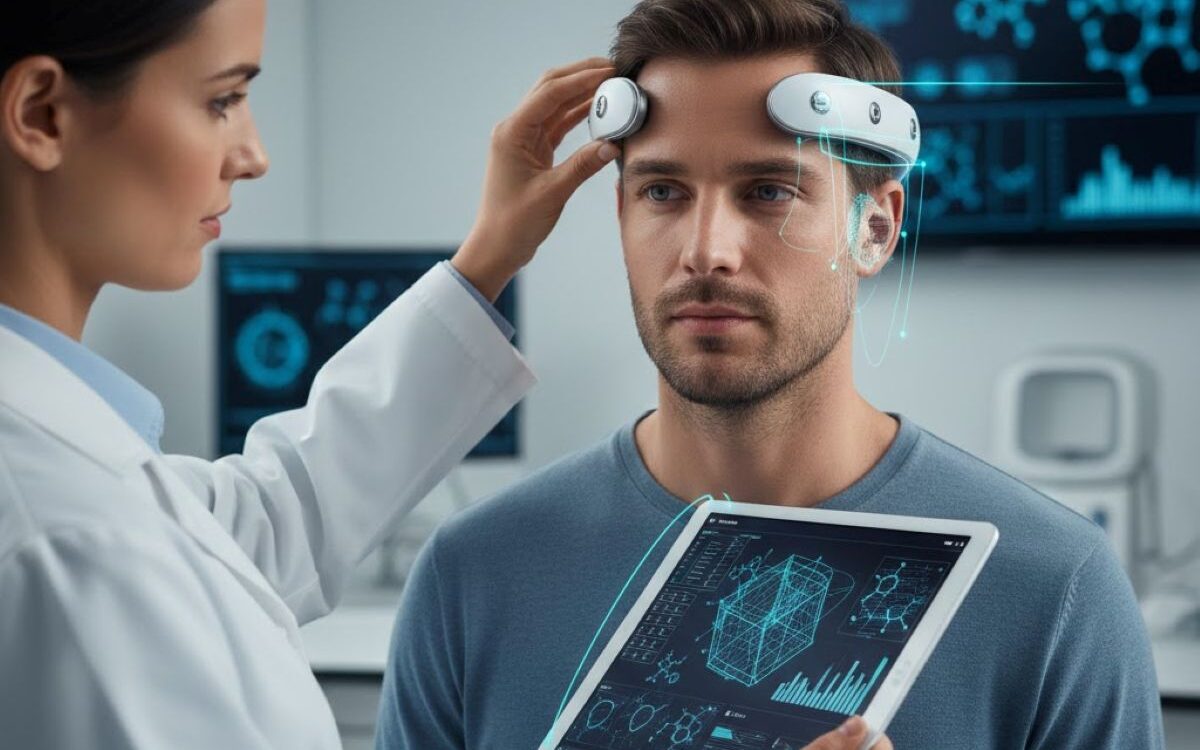
Tactile sensing allows product developers to objectively measure fit so they can refine products beyond a process of trial and error. Using this to aid quantitative measurement enables reliable ergonomic design. Our PPS TactileHead are consistently used by device developers to obtain quantitative information about the fit and comfort of a head-worn product.
Traditional fit tests with individuals can change based on the fitters’ mood. However, using reference standards like ISO, NIOSH, or NOCASE headforms helps product developers grasp how fit and comfort vary. These variations come from material selection, size, features, and product geometry.
Surgical applications
Knee implants or replacements involve a very complex procedure. The process involves balancing soft tissue. Traditionally, this has been subjective to the surgeon, relying on their manual perception, tensor devices, and gap gauges. This has led to inconsistent outcomes, with only four out of five patients reporting satisfaction. The PPS Precision Knee Aligner (PKA) uses pressure sensors and real-time data. This helps surgeons balance soft tissues accurately during knee replacement surgeries. It looks at the fit between the tibia and femoral implants. When the joint is too tight or too loose, it does not feel like a natural knee and can lead to awkward movement or poor comfort.
Measuring forces is a vital part of ensuring a medical device is tailored to its users, but it can be tricky to address. One common pitfall we see is not being able to control the force load path through the sensor or housing of a medical device. If all the force doesn’t go through the sensor, the performance won’t be as good due to variations in tolerances.
While people understand the wobbly table at a restaurant, we can often see an over-reliance on perceived precision. For instance, even the most precise injection moulded or machined parts aren’t completely flat on a microscale that force sensors measure force. This means that even small irregularities can influence testing results.
The PKA contains a patented housing that ensures all force goes through the sensors, making device accuracy the best in the world. By accurately measuring internal load distribution, surgeons can make informed decisions that will improve patient satisfaction rates.
This is just one example where tactile sensing and user-centred design can deliver medical devices that truly enhance patient lives. Comfort drives compliance. If a device isn’t comfortable, it won’t be used, no matter how advanced the technology. That’s why ergonomic design must be prioritised across all medical device development.
To find out more about the use of tactile sensing technology in medical device development, visit PPS’s medical device page.
About PPS:
PPS prides itself on being pioneers in tactile sensing technology. With over 25 years of expertise, its diverse and accomplished engineering team specialises in solving complex problems with innovative, high-precision solutions. By integrating its cutting-edge sensors into your research, design, and development processes, PPS empower its customers with deeper insights and actionable data – helping create better products, streamline processes, and achieve exceptional project outcomes.