

Words To Begin
At age 81, the author has lived a “life of letters” (perhaps three million words) addressing a wide variety of subjects during multiple careers:
- Systems Engineering (PhD at UCLA in 1976),
- Military Science (21 years on active duty, in high-tech acquisition management and military intelligence at US National level),
- Online Education (member of the American Educational Research Association – AERA – in the 1990s.)
- Healthcare (three decades and over 300 papers, articles and interviews published in peer reviewed clinical journals and mass media).
This current offering to Life Science Daily News is unlike anything else I have ever published – it is, at its heart, a set of end of life reflections, with the possible exception of a short autobiography shared with a few close personal friends. This is both personal and professional. And it is largely about a life other than my own.
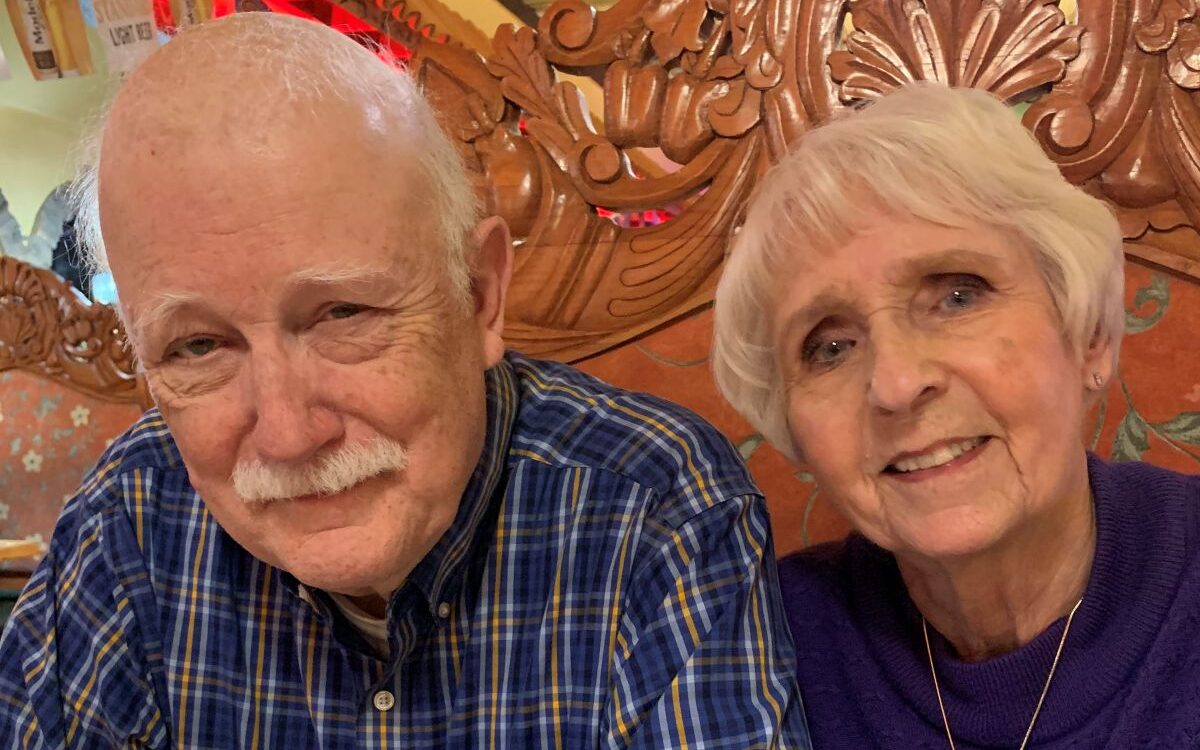
My Wife of 47 Years is Dying
Writing these end of life reflections, the day of her death has yet to be determined, but the causes are certain. Multiple Stage 4 metastatic pancreatic and liver cancers will allow her a few weeks more in which to say goodbye to a large circle of family and friends. She has decided not to undergo chemotherapy or radiation that at most might extend her life by a few weeks – at the cost of the quality of whatever time she has left.
So far, friends wouldn’t know she is sick, except that she involuntarily lost 22 pounds in a year. Since major surgery, she has regained her appetite and much of her energy. A local and international circle of family and close friends are lined up on our calendar to visit in the coming weeks. We are also supported by a professional chef, an oncologist, and a palliative care specialist. When needed, she will have in-home hospice nursing care.
I’ve been married to this lady for 47 years. It was a second marriage for both of us. Our prior marriages had been vastly different experiences. We entered our relationship from places a world apart, and she has educated me often since.
Two Childhoods
I grew up as a battered child, in an urban and family combat zone. My parents shouted and barked like rabid dogs, occasionally coming to physical blows. The violent neighborhood streets around us were often dangerous. So was our dinner table.
I sometimes remarked unkindly to others that my parents may have stayed together primarily because neither of them could find a better sparring partner anywhere else. My mother also didn’t have other options for living as a single person. Like her husband, her education had stopped at about sixth grade. She never read above 4th grade level.
I resolved in my teens that I would be like neither of my parents, toward any kids that I might eventually have. These days, I believe that I may have succeeded, despite the disaster that was my first marriage.
The First Time Around
My ex- could have earned grand national masters’ points in the art of emotionally fighting dirty and carrying a grudge.
The Second Time Was the Charm
- Differences may attract, but commonalities of values and views are ultimately a stronger sustaining force in all forms of ongoing close relationship.
- Sexual intimacy (either actively enjoyed or as a concession offered to obtain personal security) draws many couples into bed and/or marriage. Sex can be great good fun. But sex alone rarely sustains a relationship for many years. Kids will put pounds on a woman’s figure. Other relationship encounters — often with younger partners — might offer intense passion (or at least a temporary promise of relief from marital boredom). But such relationships rarely live up to hopeful expectations and often create major messes in daily life.
- Not accidentally, US divorce rates are now over 40% [1] for first marriages, with marital infidelity topping the list of reasons. Some marriages do survive infidelity. But if this is to happen, then both partners must practice an uncommon degree of patience, humility, commitment, and self-awareness. American society does a lousy job of educating our kids to these realities.
- Liking your lover and talking with them frequently are more important in marriages that last, than screwing each other or third parties to heaven and back in exotic locales or phone booths. [2]
- Marrying someone you’ve met only two weeks or two months before is a reliable prescription for equally rapid marital disaster. “Marry in haste, repent at leisure” is a fundamental truth. [3]
- Marriages are power relationships. Two partners who have greatly different needs for power over other people won’t be together for long. Two emotionally weak people are also unlikely to merge into one emotionally strong love affair. We must each do our own growing up. Nobody can do it for us, even with the best of intentions.
- When both partners believe that a win for their partner is a win for their relationship and not a loss for themselves, then marriages can last. Partners who last together will cultivate and support each other — not just for ourselves, but for each other. Partners who must win their battles to feel good about themselves rather frequently lose their marital wars and their marriages.
Relationships between good listeners tend to last longer. Ours certainly has.
A Few Words in Closing
I ask readers here at Life Science Daily News (with my tongue only slightly in my cheek) to let my youngest daughter discover this article on her own. She is all the proof I could ever need that there is a gene passed down between opinionated people. She got hers from me. She’s long had a mixed opinion of her biological father. I don’t need to aggravate her further by dipping her nose in my memories of her now deceased Mom, despite the conflicts and hurts that occurred between the two of them.
Acknowledgements and About the Author
The editors of Life Science Daily News have kindly permitted the author to expand this paper from work recently published in another widely read online healthcare newsletter. The present piece is certainly about “life.” But it otherwise fits none of the broad categories used here to organize published work. This is more fundamental than either science or technology. These end of life reflections are about deeply human values in marriage — the most fundamental relationship we know in daily life. It is offered in a fundamental spirit of celebration, even as we acknowledge that many readers may feel unable to do other than grieve for dear ones they are losing or have lost.
We all do our own growing up – each of us in our own ways.
Disclaimer: This guest commentary reflects the author’s analysis and is provided for informational purposes only; it does not constitute medical, legal, or official editorial advice from Life Science Daily News.