While oncology has historically relied on a “Hospital-as-Hub” model, the specific logistical demands of radiopharmaceutical therapy (RPT) are revealing its limitations. The decentralized outpatient model is emerging as a significant industry trend, demonstrating that specialized outpatient centers can provide a higher resolution of care, particularly in areas like dosimetry and clinical trial access. This approach contrasts with traditional academic institutions by prioritizing patient convenience and optimizing specialized workflows.
Outpatient Agility vs. Traditional Hospital Settings
For patients undergoing RPT with isotopes like Lutetium-177, the traditional hospital experience can involve navigating complex environments, multi-floor transit, and the administrative burdens of a large health system. In contrast, the decentralized outpatient model is specifically designed for the unique requirements of nuclear medicine, streamlining the process for patients. This patient-centered approach aims to meet patients where they are, bringing treatment, technology, and safety assessments to a convenient location.
A critical advantage of the outpatient model is its precision in dosimetry. Many hospitals often utilize a single-time-point “snapshot” scan due to scheduling constraints and high-volume diagnostic imaging turnover. However, outpatient facilities are capable of standardizing more comprehensive protocols, such as a 4-time-point approach. For instance, certain specialized centers have standardized multi-time point dosimetry, an advanced technique that quantifies the radiation dose received by a patient’s tumors and healthy organs over time, allowing for personalized treatment planning.
- The 4-Point Delta: By scanning patients at multiple intervals, typically up to 144 hours post-infusion, clinicians can map the unique biological half-life of the drug within that specific patient. This allows for a more accurate prediction of energy deposition in tumors and normal tissues.
- Addressing Logistical Challenges: Large hospitals may struggle to accommodate patients for four separate dosimetry appointments without disrupting their primary diagnostic imaging schedules. An outpatient facility dedicated to theranostics eliminates this conflict, making personalized dose-scaling a more consistent practice rather than an exception.
Clinical Trials and the Future of Precision Oncology
The decentralized outpatient model is crucial in bridging the gap between clinical research and broader community access. This model allows for greater participation by making it easier for individuals who do not live near trial locations to enroll, leading to a larger and more diverse patient pool. The U.S. Food and Drug Administration has recognized the importance of decentralized trials and issued draft guidance to increase their adoption. As an example of this trend, some companies are actively involved in early-phase clinical trials, exploring new radiopharmaceutical targets and isotopes. The pipeline for RPT is continuously evolving, with new trials exploring advanced interventions:
- The Alpha-Emitter Shift: Studies, such as the ANDROMEDA study, are comparing traditional Beta-emitters like Lutetium-177 (Lu-177) with high-energy Alpha-emitters such as Actinium-225 (Ac-225).
- Expanding the Scope: Research is moving beyond prostate cancer, with ongoing trials investigating RPT for conditions such as Small Cell Lung Cancer (SCLC) and refractory Neuroendocrine Tumors. Some research focuses on cancers historically difficult to treat, including small cell lung cancer, pancreatic cancer, melanoma, and colon cancer.
- Combination Therapies: Trials like SPLENDOUR are exploring the synergistic effects of combining Lutetium-177 with PD-L1 inhibitors, aiming to enhance treatment efficacy.
The Physics of Targeted Radiation: Alpha vs. Beta
In targeted radiation, the choice of radioisotope significantly impacts treatment delivery and effectiveness.
- Beta Particles (e.g., Lu-177): These emit electrons that travel several millimeters (up to 12mm). They are effective for larger tumor masses, where their range can treat cells that the therapeutic agent may not have directly bound to, often referred to as a “crossfire” effect.
- Alpha Particles (e.g., Ac-225): These emit helium nuclei that travel a very short distance, typically the width of a few cells. While their range is limited, they carry significantly higher energy, causing “double-strand DNA breaks” that are nearly impossible for cancer cells to repair, making them ideal for micro-metastatic disease. Actinium-225 is considered a promising radioisotope for targeted alpha theranostics due to its substantial energy deposition and a relatively long half-life of 9.9 days, along with its emission of imageable photons.
Democratizing Access to Precision Oncology
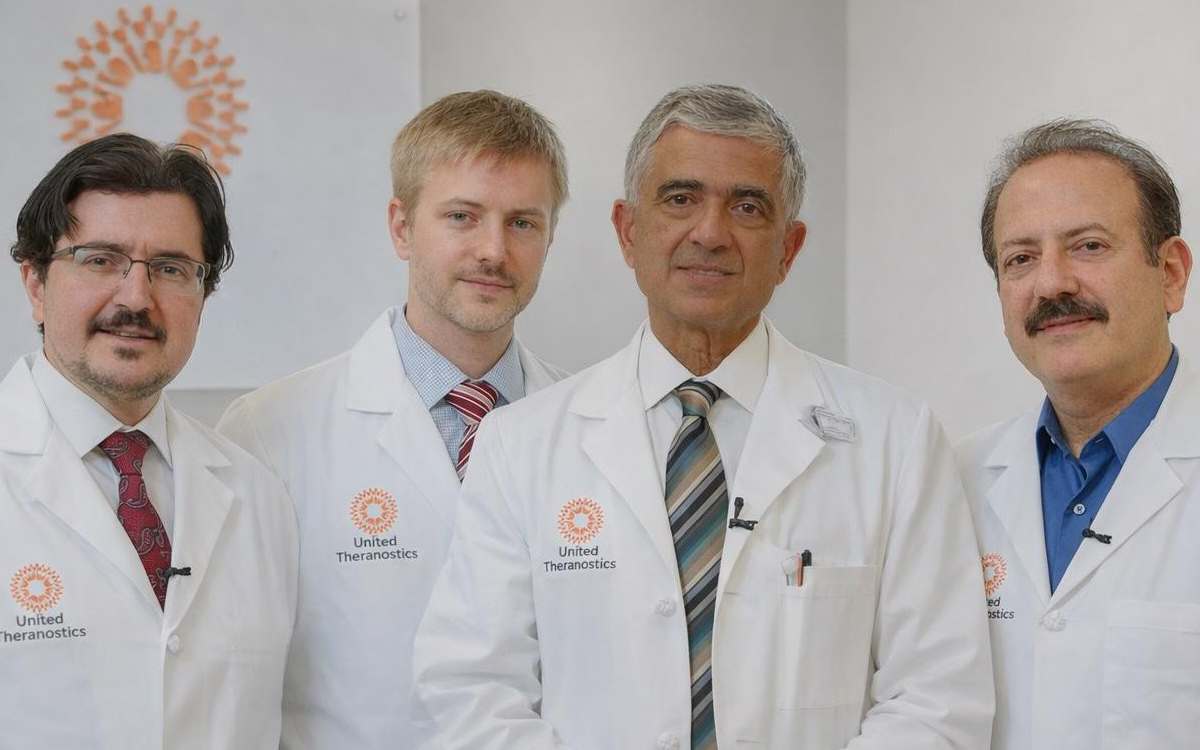
The expansion of the decentralized outpatient model is fundamentally driven by the imperative to enhance patient-centric outcomes. This approach aims to reduce patient burden by eliminating the need for extensive travel and time away from daily activities. It enables greater participation and expands recruitment geography, reaching a larger, more diverse pool of patients. This model supports equitable access to potentially life-changing treatments by integrating high-level care into local communities. United Theranostics (UT), for example, is actively working to redefine cancer treatment by bringing precision oncology directly to local communities through a decentralized care model.
“By making cutting-edge theranostics and clinical trials accessible to all, we are ensuring that the healing journey is supported, not hindered, by geographic constraints,” said Dr. Babak Saboury, MD, MPH, DABR, DABNM, United Theranostics Chief Innovation Officer, and Co-founder.
UT combines advanced diagnostic imaging with targeted therapies like Pluvicto to make life-saving treatments more accessible.
“Our expansion is fundamentally driven by the imperative to enhance patient-centric outcomes,” adds Rob Cherney, United Theranostic CEO. “This isn’t just about growth; it’s about equitable access to life-changing treatments and removing the concept of “hitting the cancer geography lottery.””
Editor’s Note: This article was contributed by United Theranostics, a national leader in community-based radiopharmaceutical therapy. The clinical and operational perspectives provided are led by CEO Rob Cherney and Chief Innovation Officer Dr. Babak Saboury, highlighting the transition of theranostics from centralized hubs to a decentralized, outpatient clinical standard. For further insights on their nationwide network, visit unitedtheranostics.com.