The intersection of artificial intelligence (AI) and pharmaceutical research is transforming drug discovery, clinical trials, and healthcare innovation. Leading technology companies Nvidia, Microsoft, and Google are spearheading this evolution, applying advanced AI tools to accelerate pharmaceutical R&D and bring novel treatments to patients faster.
Nvidia’s Strategic Collaborations Boost Drug Discovery
Nvidia is increasingly partnering with pharmaceutical and life sciences companies to leverage AI in drug development. In collaboration with Novo Nordisk and DCAI, Nvidia’s DGX SuperPOD™ infrastructure and BioNeMo™ platform are being deployed to enhance the prediction of cellular responses to experimental drugs. This approach aims to reduce development timelines and improve the efficiency of early-stage therapeutics.
In addition, Nvidia is collaborating with Alphabet and Google on agentic and physical AI applications. Platforms such as Omniverse™, Cosmos™, and Isaac™ are enabling the development of robots with advanced grasping capabilities, while AI-driven models are helping reimagine drug discovery processes. Teams from Google DeepMind, Isomorphic Labs, and other Alphabet subsidiaries are actively contributing to these initiatives, which were highlighted at the Nvidia GTC global AI conference in March 2025.
Microsoft Expands Generative AI in Life Sciences
Microsoft is extending its collaboration with Nvidia to integrate generative AI into healthcare and pharmaceutical research. Combining Microsoft’s Azure cloud platform with Nvidia’s DGX Cloud and Clara suite, the partnership aims to accelerate clinical trials and drug discovery. The BioNeMo™ generative AI platform allows researchers to train models on proprietary datasets efficiently, identifying potential drug candidates more rapidly.
AI diagnostic tools, including MONAI and the Nuance Precision Imaging Network, are also integrated to enhance imaging capabilities. These tools allow healthcare providers to deploy unified AI models, improving the speed and accuracy of diagnostics and supporting evidence-based clinical research.
Google Invests in Quantum Computing for Drug Discovery
Google is making significant investments in quantum computing to advance pharmaceutical R&D. Its subsidiary, SandboxAQ, recently secured $150 million in additional funding from Nvidia, Google, and other investors. SandboxAQ is developing Large Quantitative Models (LQMs) to analyse complex datasets for drug discovery and financial modelling. Quantum computing enables the simulation of molecular interactions at unprecedented scale, a capability Google has been pioneering.
How AI is Transforming Pharmaceutical R&D
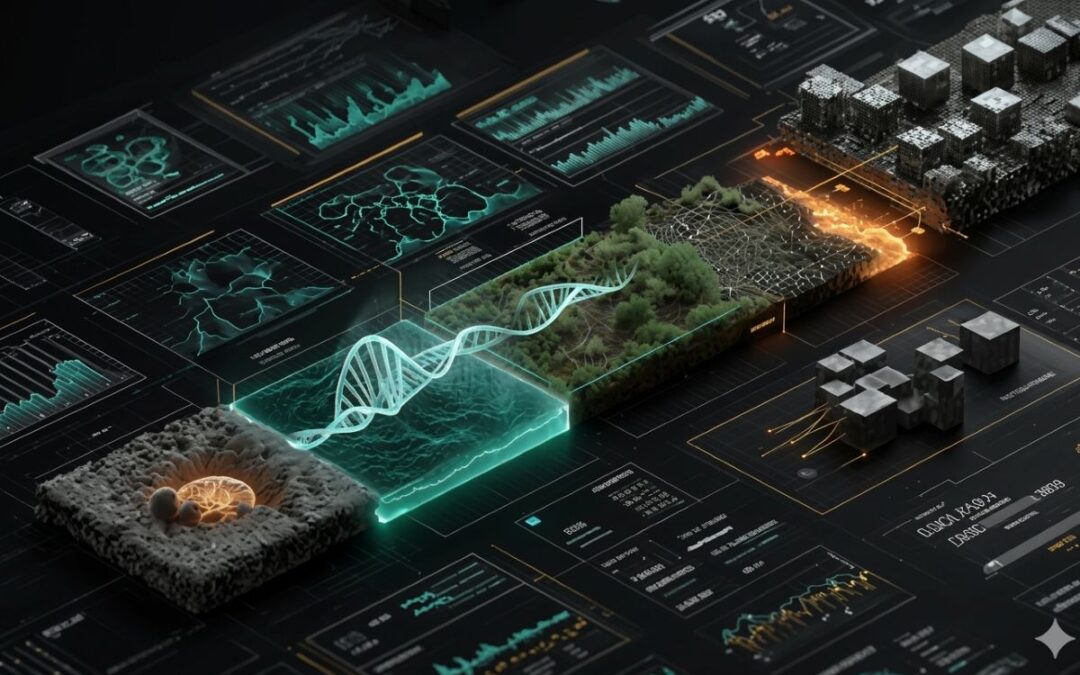
The integration of AI in drug development is reshaping pharmaceutical research. Generative AI, machine learning, and quantum computing are enabling scientists to analyse vast datasets, predict molecular interactions, and design new drugs more efficiently. These technologies accelerate the discovery process, reduce development costs, and increase access to personalised medicine.
AI platforms are also automating laboratory workflows, enabling real-time coordination of instruments, experiments, and personnel. This “self-driving lab” approach enhances reproducibility, streamlines experiments, and supports data-driven research. Companies like Recursion Pharmaceuticals are demonstrating how AI can uncover novel therapeutics more efficiently than traditional methods.
Future Implications for Pharmaceutical Innovation
The initiatives by Nvidia, Microsoft, and Google signal a transformative shift in pharmaceutical R&D. By combining AI and quantum computing, these companies are enhancing drug discovery efficiency, supporting personalised medicine, and improving patient outcomes. As these technologies mature, their impact is expected to grow, enabling faster development of novel therapeutics and more effective healthcare delivery.
Interdisciplinary collaborations, such as Novo Nordisk’s partnership with Valo Health, showcase the potential of AI in developing treatments for obesity, type 2 diabetes, and cardiovascular disease. The integration of AI into pharmaceutical R&D is poised to redefine medical research, driving innovation across healthcare and life sciences globally.