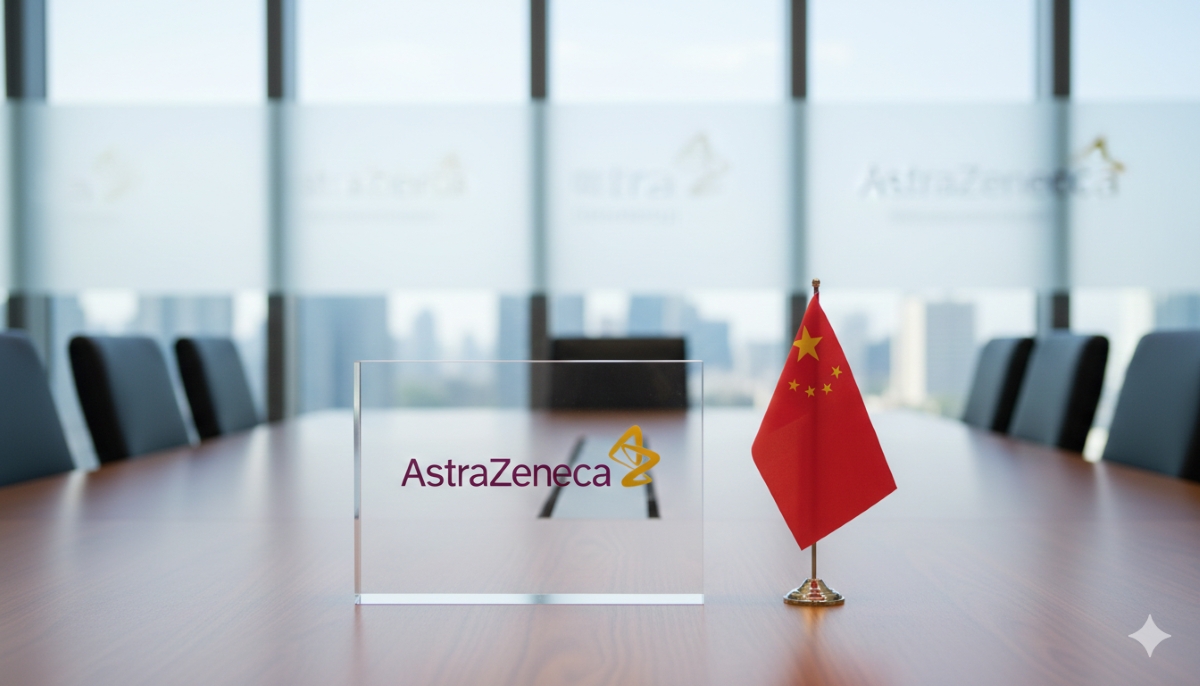
AstraZeneca has announced plans to invest up to 15 billion US dollars to expand its research, development, and manufacturing operations in China, reinforcing the country’s role as a central pillar of the company’s global strategy.
The long-term investment will fund new research facilities, expanded manufacturing capacity, and deeper collaboration with Chinese academic institutions and biotechnology companies. It represents one of the largest commitments by a multinational pharmaceutical company to China’s life sciences sector.
Strengthening a Long-Term Presence
China is already AstraZeneca’s second-largest market by revenue, and the company has steadily increased its footprint in the country over the past decade. The new investment builds on existing research hubs in cities including Shanghai and Beijing, as well as manufacturing sites that supply both domestic and international markets.
The funding will be deployed over several years, with AstraZeneca focusing on priority therapy areas such as oncology, cardiovascular and metabolic disease, respiratory medicine, and rare diseases. The company has also highlighted plans to expand digital and data-driven research capabilities, including the use of real-world evidence (RWE) and artificial intelligence-supported drug discovery.
Chief Executive Pascal Soriot said the investment reflects confidence in China’s scientific talent, clinical research infrastructure, and innovation ecosystem, as well as long-term growth in healthcare demand.
China’s Growing Role in Global Drug Development
China has become an increasingly important contributor to global drug development, offering access to large and diverse patient populations, expanding clinical trial capacity, and a rapidly maturing biotechnology sector. Regulatory reforms by the National Medical Products Administration (NMPA) have shortened approval timelines and improved alignment with international standards, making the country more attractive to global pharmaceutical companies.
For AstraZeneca, expanding R&D activity in China allows earlier inclusion of Chinese patients in global clinical trials and faster development of medicines relevant to regional disease patterns. The company has previously indicated that a growing share of its R&D pipeline now involves China-based research or clinical development.
Manufacturing expansion is another core component of the investment. AstraZeneca aims to strengthen supply chain resilience and increase local production of innovative and established medicines, supporting both domestic demand and global supply.
Balancing Opportunity and Geopolitical Risk
The scale of the commitment comes amid heightened geopolitical tension and increased scrutiny of Western companies operating in China. While some multinationals have adopted more cautious strategies, AstraZeneca’s decision signals confidence that the long-term opportunities outweigh the risks.
Industry analysts suggest the investment may also help AstraZeneca strengthen relationships with Chinese regulators and partners at a time when competition for access, talent, and trial capacity is intensifying.
A pharmaceutical policy expert said the move
“shows AstraZeneca views China not just as a sales market, but as a critical engine of innovation and manufacturing within its global network.”
Implications for Innovation and Competition
The investment is likely to intensify competition within China’s life sciences ecosystem. Greater collaboration between AstraZeneca and local biotech firms could accelerate innovation, while expanded manufacturing capacity may increase competitive pressure on domestic producers.
More broadly, the announcement underscores China’s growing influence on the direction of global pharmaceutical research. As more early-stage discovery and production take place in China, the country’s role in shaping future medicines is set to expand.
Outlook
AstraZeneca’s $15 billion investment represents a major vote of confidence in China’s life sciences sector. While regulatory complexity and geopolitical uncertainty remain, the scale and scope of the commitment suggest the company sees China as integral to its future growth and innovation strategy.
As global pharmaceutical companies reassess where to place long-term investment, AstraZeneca’s decision may serve as a benchmark for how the industry balances scientific opportunity with political and operational risk.