Historically, healthcare has been reactive, defined largely by where a patient lives and what is available within their local system. That model is beginning to break down as healthcare becomes increasingly global. Patients are no longer confined to a single system,...
The Underestimated Occupational Impact of Pelvic Pain
When people think about pelvic pain, they often think about symptoms. Cramping. Heavy bleeding. Fatigue. Bloating. Pain during intimacy. Bladder urgency. What is discussed far less is the occupational impact of pelvic pain: the way pain changes a person’s ability to...
How AI Infrastructure Accelerates the Next Phase of Healthcare Innovation
Artificial intelligence is beginning to reshape healthcare in ways that would have seemed unrealistic just a decade ago. Hospitals are experimenting with tools that can analyze medical images in seconds, help clinicians monitor patients remotely, and even assist with...
The Silent Clock in Your Arteries
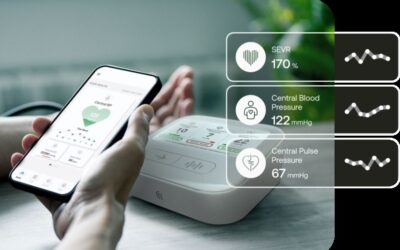
The Silent Clock in Your Arteries: Why Vascular Aging Is the Heart Health Crisis We're Missing We are living in an era of extraordinary innovation in heart health. Precision diagnostics. AI-guided therapies. Wearables that track everything from rhythm to recovery. And...
Climate-Sensitive Maternal Mental Health Screening
A pregnant woman may never walk into a clinic saying climate change is affecting her mental health. She may say she has not slept through the heat. She may say flooding made her miss an antenatal visit. She may say food costs have changed what she can feed her family....
LillyPod Drug Discovery: Lilly’s NVIDIA Supercomputer Explained
Eli Lilly has switched on what it describes as the most powerful supercomputer ever owned and operated by a pharmaceutical company, and the implications for LillyPod drug discovery could reshape how medicines are found, tested, and delivered. Inaugurated in February...
Pregnancy, the Brain, and the Nervous System
Pregnancy, the Brain, and the Nervous System: A Holistic Perspective on Perinatal Mental Health Pregnancy is often framed as a joyful milestone, yet from a clinical and neurobiological standpoint, it is one of the most significant periods of transformation a human...
Australian Healthcare Reviews Mean Nothing Without the Right Governance
Australians are making some of their most important healthcare decisions based on information that was never designed to carry that weight. For most Australians, searching for health information online and accessing test results digitally is already routine. Around 90...
GMCA: Why Unlocking Longevity Research Will Drive Innovation
The science of longevity has never been more active. With advances in preventive medicine and digital health, as well as new insights into lifestyle, environment, drug therapies and genetics, there is more research available than ever on how people age and live well....
NIH Scientists Pioneer “Digital Twin” of Eye Cells
NIH Scientists Pioneer “Digital Twin” of Eye Cells: A New Frontier in Treating Age-Related Macular Degeneration In a landmark achievement for computational biology and ophthalmology, researchers at the National Institutes of Health (NIH) have announced the development...
Doctors Warn AI Diet Advice Should Not Replace Medical Care
As more people turn to AI tools and online algorithms for diet and weight-loss advice, doctors are warning that this growing reliance may be overlooking critical health risks. Doctors stress that AI-generated information should never replace personalised medical...
Fertility Decisions and AI: Clarity Without False Certainty
As a researcher studying how people interact with large language models (LLMs), and as a clinician trained at the master’s level in clinical psychology, I keep seeing the same pattern in fertility and reproductive contexts. People rarely turn to AI only for...
AI-Enabled Pathology: De-risking Oncology Drug Development
Today, oncology drug development continues to experience the highest attrition rates across therapeutic areas[1]. Despite major advances in molecular profiling and biomarker-driven strategies, a significant proportion of oncology clinical trials still fail, often due...
Why Sugar May Matter More Than We Thought
A New Energy-Centered Model of Metabolic Disease For decades, sugar has been framed as a problem of excess. Too many calories. Too many insulin spikes. Too much sweetness in the modern diet. That framing has shaped public health guidance, food reformulation, and...
Cera and Promptly Health Partner to Bridge the ‘Evidence Gap’
Cera, Europe’s largest digital-first home healthcare provider, has announced a global real-world evidence (RWE) partnership with Promptly Health, focused on the over-65s, to accelerate drug development and enable precision medicine. The partnership integrates Cera’s...
RCM Efficiency: Solving Insurance Denials & Margin Pressure
Insurance Denials and Revenue Cycle Inefficiencies Are Becoming a Primary Driver of Hospital Financial Strain U.S. hospitals are entering the next fiscal cycle under sustained financial pressure, and insurance denials have emerged as one of the most consequential, yet...
Chronic Pain and Neuroplastic Pain: Rethinking How Pain is Created
Chronic pain affects hundreds of millions of people worldwide and remains one of the most challenging problems in modern medicine. For decades, pain has largely been understood as a direct signal of tissue damage or disease. However, advances in pain science are...
Neuroscience of Trauma, Stress & Alcohol: Integrated Treatment
Alcohol problems are often framed as a failure of willpower or “poor lifestyle choices”. Yet clinical neuroscience has made that narrative increasingly untenable. Problematic alcohol use is often a learned response to stress, a learned neurobiological adaptation,...