
A pregnant woman may never walk into a clinic saying climate change is affecting her mental health.
She may say she has not slept through the heat. She may say flooding made her miss an antenatal visit. She may say food costs have changed what she can feed her family. She may say her child’s breathing worsens when the air is poor, or that she feels too exhausted to manage care at home.
If health systems do not know how to read those signals, climate risk remains invisible until it becomes illness.
Climate change is no longer only an environmental exposure problem. It is becoming a clinical detection problem. Across life sciences, the health effects of climate change are increasingly studied through heat exposure, air pollution, pregnancy outcomes, and health system resilience. That progress matters. Yet one pathway remains poorly translated into care: the mental health burden carried by pregnant women, mothers, and caregivers as climate stress enters daily life.
The Detection Gap
For many women, climate stress does not arrive as a single disaster. It arrives as repeated nights without sleep during extreme heat, missed antenatal visits during floods, anxiety over a sick child during poor air quality, and caregiving overload inside homes not built for environmental protection.
The life sciences sector has become better at measuring climate exposure. It now needs to ask whether health systems can detect what that exposure is doing to women’s lives.
A 2024 systematic review and meta-analysis in Nature Medicine found that escalating heat exposure poses major risks to maternal, fetal, and neonatal health, including preterm birth, stillbirth, and obstetric complications [1]. Yet when researchers examine heatwave exposure and maternal mental health directly, the evidence base remains thin. One North Carolina matched analysis has begun to quantify this association [2]. The physical pathway is being mapped. The psychological pathway is barely being studied.
This is the gap my own fieldwork set out to examine in a climate-exposed, low-resource setting.
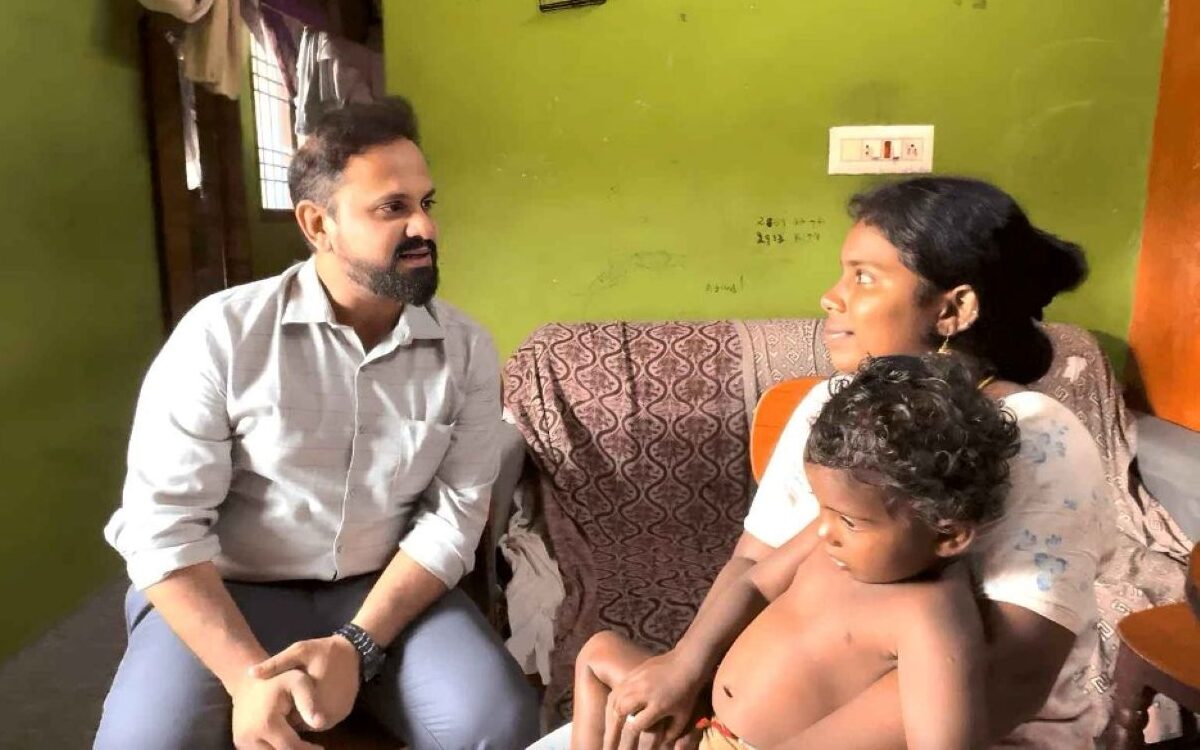
In 2024–25, I surveyed 391 mothers across all 38 districts of Tamil Nadu, India, as part of research at Harvard Medical School examining how climate extremes affect maternal mental health. Preliminary findings showed that 65 percent of surveyed mothers reported mild-to-moderate depressive symptoms, while only eight percent reported access to any form of mental health support. In homes with poor ventilation, high pollution, or no cooling, depression, anxiety, and caregiving strain were markedly worse. Environmental stress was entering households long before it entered any clinic.

Household setting in Tamil Nadu, India, illustrating the everyday environmental and caregiving conditions that shape maternal mental health. Image courtesy: Dr. Saravanan Thangarajan Photo credit: Sreeaarthi Ramarao
A mother experiencing heat stress, food insecurity, and caregiving pressure may not present with a formal psychiatric diagnosis. She may present with exhaustion, poor sleep, fear, missed appointments, or an inability to follow a care plan. Those signals matter. They may indicate that the household is losing its capacity to protect health.
Why Current Screening Misses Climate Stress
Maternal mental health screening, where it exists, typically focuses on depression or anxiety symptoms without asking about climate-linked stressors. Climate health programmes track heat illness or birth outcomes without integrating mental health. Digital health tools may collect symptoms but miss household exposure and environmental context.
The problem deepens when AI-enabled products are trained on populations that do not reflect women in heat-exposed, low-resource settings. Life sciences may detect climate risk biologically while missing how that risk becomes distress, delayed care, and functional decline inside households.
A useful screening approach could ask direct, locally adapted questions: Has extreme heat affected sleep or caregiving? Has poor air quality worsened anxiety at home? Have climate-related costs changed food access? Have floods or heat caused missed care visits? Are caregiving responsibilities becoming unmanageable?
These questions connect exposure to action. A positive screen should not simply label distress. It should trigger a pathway: counselling, home visit prioritisation, nutrition support, heat safety planning, or referral to mental health services.
A screening tool that identifies risk but cannot trigger care is not innovation. It is documentation of failure.
What Life Sciences Should Build Next
The sector should treat climate-linked maternal mental health as a detection, validation, and implementation challenge – not a research footnote.
Researchers need climate-sensitive maternal mental health risk indices that combine environmental exposure, household vulnerability, mental health symptoms, and care access barriers. A useful index would capture not only heat and pollution data but also sleep disruption, food insecurity, missed care, and caregiving burden. These tools need validation in the communities most affected – not only in well-resourced urban clinics.
A tool that performs well in a hospital setting but fails in a heat-exposed rural community should not be considered ready for scale.
Digital triage must connect risk to response. If a mother is flagged as high risk but there is no referral pathway, no community follow-up, and no service capacity, the tool has shifted responsibility without improving care. Implementation researchers should test how screening fits into real workflows: who asks the questions, what happens when a woman screens positive, who receives the alert, and what support follows.
AI may help. A 2025 systematic review found growing use of machine learning to predict, diagnose, and support treatment of perinatal depression and anxiety in low- and middle-income countries, although many tools remain early stage [3]. But frontline tools used in maternal health must be conservative, explainable, culturally adapted, and safe under low-connectivity conditions. The question is not only whether AI can generate a recommendation. The question is whether the health system can safely act on it.
The model can be accurate, and the system can still fail the mother.
From Exposure Data to Care Pathways
Climate stress is becoming part of maternal health. Maternal health systems are not yet built to recognise it.
Untreated maternal distress affects sleep, nutrition, infant care, and family functioning. When layered with heat, pollution, financial insecurity, and caregiving strain, the burden becomes both clinical and social – visible in households long before it appears in medical records.
Life sciences can help close this gap, but only if the sector asks different questions. Not just: can we measure climate exposure? But: can we translate that measurement into support for the woman living with it every day – before it becomes a diagnosis, a missed visit, a child who stops feeding?
If life sciences want to respond to climate change with clinical relevance, it must move beyond exposure measurement and start building care pathways for the burden climate stress is already creating. The future of maternal health will depend not only on safer pregnancies. It will depend on whether health systems can recognise what is happening inside households before it appears in medical records.
Author Bio

Dr. Saravanan Thangarajan, MDS, MMSc, MBA
Dr. Saravanan Thangarajan is a global health researcher and Visiting Scientist at the Harvard T.H. Chan School of Public Health. His work examines climate stress, household environmental exposure, maternal mental health, and preventive health systems. His 2024–25 field research across Tamil Nadu’s 38 districts studied how heatwaves, air pollution, and environmental stress affect maternal mental health and caregiving.
Feature image – Dr. Saravanan Thangarajan speaking with a mother and child during field research on climate stress, caregiving burden, and maternal mental health in Tamil Nadu, India.