Ageing at home is widely accepted as the ideal outcome for older adults, families and healthcare systems, but the way we attempt to support it is deeply flawed.
Most technologies deployed into homes today are built on a reactive model of care – where they wait for something to go wrong, unequipped for the nuances of humans’ unpredictability.
Motion sensors trigger alarms after a fall, wearables log steps without understanding why activity is declining, check-in calls rely on a person admitting they are not coping. These systems collect data, but they lack the ability to interpret human context; the subtle changes in movement, behaviour and emotion that often precede serious incidents by weeks or months. These are the missing insights that could be the difference between life, death, or serious injury of a parent or grandparent.
This is where a new category of healthcare technology is emerging: Companion robotics
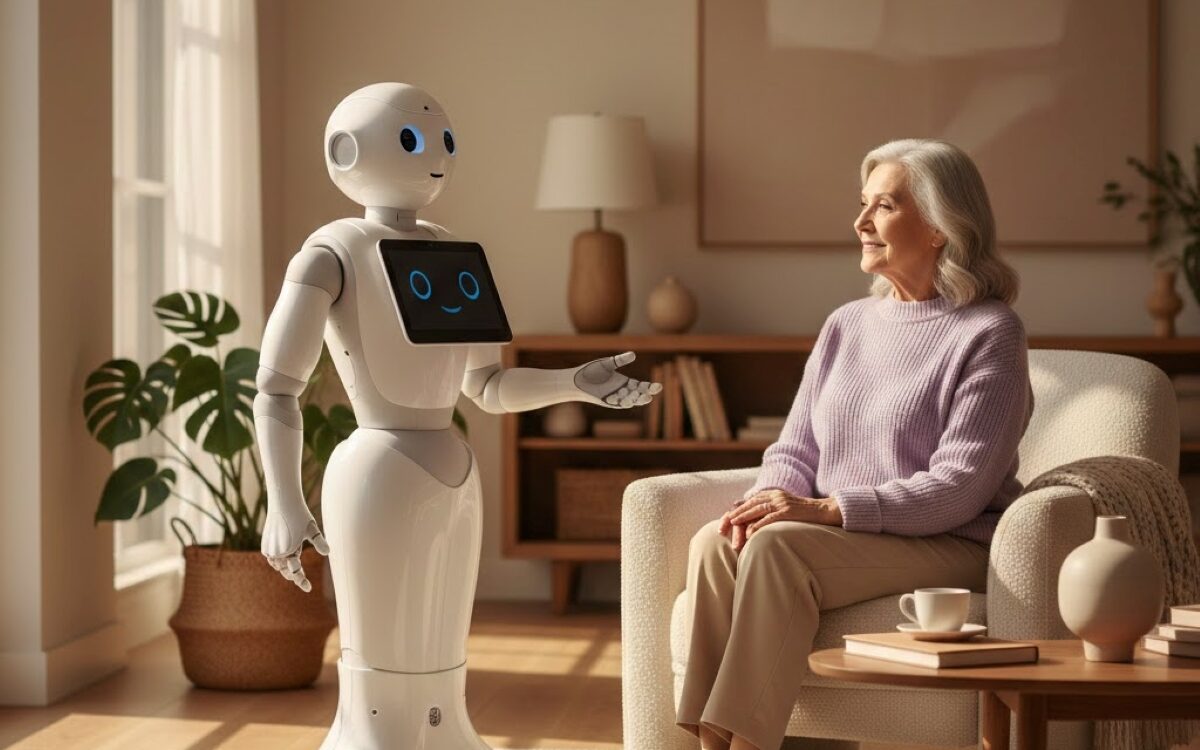
Unlike passive monitoring tools, companion robots are autonomous, mobile and user-centred. They exist within the lived environment and are able to build a continuous understanding of an individual’s routines, movement patterns and behavioural norms. This shift, from event detection to contextual interpretation, is what gives companion robotics clinical relevance.
In practice, many of the events we treat as sudden in aged care are anything but. Changes in gait stability (walking ability), posture, or daily movement often signal increasing fall risk well before an incident occurs. Withdrawal from conversation, changes in speech patterns or emotional tone can indicate loneliness, anxiety or cognitive decline long before it becomes visible to carers or family members.
The challenge has never been whether these signals exist, but how to observe them unimposingly in everyday home environments.
Companion robotics offers a pathway to do exactly that
Through camera-based perception, sensor fusion and real-time AI processing, these systems can track posture, mobility and activity patterns without requiring the user to wear devices or alter behaviour. At the same time, advances in conversational AI allow robots to engage in natural, ongoing dialogue that builds an understanding of communication patterns and emotional baseline over time.
Importantly, emotion-aware AI in this context is not about diagnosis. Developed with input from qualified psychotherapists, it is about recognising potential risk signals – increased disengagement, anxiety or mood changes – that may warrant human attention. This distinction is critical for maintaining clinical responsibility and user dignity.
These principles underpin our work to develop an AI companion robot ecosystem designed to support older adults through continuous physical and emotional risk awareness.
Robots are connected to a care ecosystem
This level of robotic innovation allows family members to receive meaningful wellbeing updates through a dedicated application, while care providers access structured insights and trend analysis through an administrative platform. This ensures that information gathered in the home translates into more proactive and coordinated care, rather than remaining just as isolated data.
The broader implication for healthcare innovation is significant. Companion robotics challenges the idea that AI in aged care should be limited to monitoring and reporting. Instead, it demonstrates how autonomous systems can participate in care by continuously interpreting context, surfacing early risks and strengthening the connection between older adults, families and carers.
Deploying such systems is not trivial. Homes are unpredictable and personal spaces, and trust, privacy and reliability must be foundational design principles in aged care. But when done responsibly, companion robotics shifts the role of technology from a passive observer to an active supporter of independence equipped to deliver care beyond human capability.
For the life sciences and healthcare community, the opportunity now is to look beyond devices that measure, and toward systems that also understand.
About Yifei Wang:
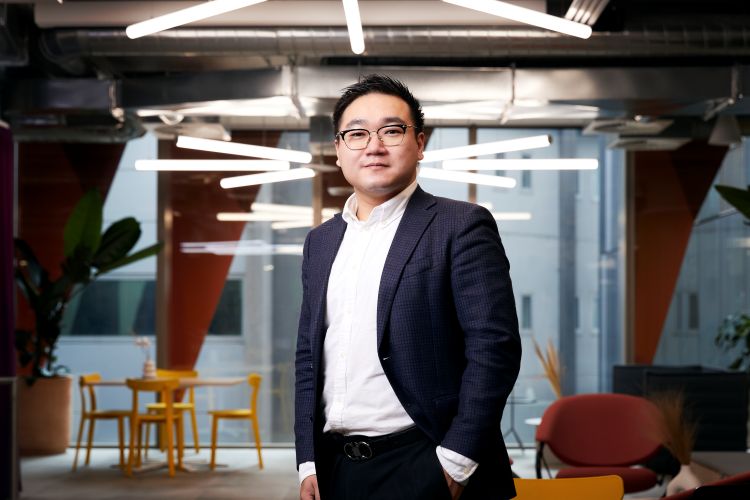
Yifei Wang
Yifei Wang is an experienced entrepreneur, technologist, and educator with over 10 years of experience in founding and scaling technology ventures. As founder and CEO of AIBUILD, he has led the company in securing over $20 million in government grants and generating multi-million-dollar revenue through innovation-driven projects.
Yifei is passionate about creating technologies that are not only powerful, but purposeful, empowering businesses, governments, and communities to solve real-world challenges with intelligence and impact.