
Why People, Process, and Purpose Matter Most
Following a period of experimentation, life sciences is entering a pivotal new phase in AI adoption. The industry is shifting away from hype-driven pilots and toward proven, value-led applications that improve how therapies are developed, launched, and delivered to patients. What’s becoming clear is that the true differentiator won’t just be more algorithms, it will be how companies reimagine their people, processes, and data to unlock AI’s potential.
From commercial model transformation to clinical research acceleration, 2026 will be the year organisations embed AI into core operations with discipline and purpose. Below are five predictions on how this shift will take shape across the value chain.
1. People and process change will drive AI pivot to value
After years of widespread pilots with limited ROI, the industry will step back from an AI-at-all-costs approach. Organisations will prioritise high-value AI use cases pointed at core operational and mission-critical processes and training people in new ways of working.
The right AI projects will drive noticeable efficiency and productivity gains, but in order to unlock business value, focus will need to be given on people and process change to drive AI outcomes. For example, an AI agent that helps commercial teams quickly evaluate content for medical, legal and regulatory review will ensure accuracy, brand, and industry compliance to speed reviews. This in turn will free up highly trained experts to focus on higher-value work.
With a repeatable, targeted approach, organisations can set measurable goals based on business value, work with specific sets of operational users on AI adoption, adapt people and processes to new ways of working, and measure meaningful results.
2. Industry-specific AI will orchestrate commercial connections
Industry-specific AI, embedded in compliant and connected platforms and applications, will prove to be the critical component that unlocks coordination across sales, marketing, and medical activities. AI agents that have direct and secure access to data, content, and business processes will surface insights and connect workflows across teams with seamless omnichannel orchestration.
AI agents will keep the entire commercial team informed for more meaningful relationships with healthcare professionals (HCPs). For example, a field representative will record voice notes with ease as an AI agent checks them for compliance. Another AI agent will automatically surface this information to the right field team members at the right time for better relationship management. AI can then be used to identify critical commercial themes and insights from the complete set of voice notes — a new and highly valuable dataset — to inform brand and go-to-market strategy.
These agentic AI capabilities will work together to support commercial teams in increasing productivity and delivering more effective customer engagement.
3. Industry advances to more agile, dynamic data for launch success
The pace of launches is driving a shift toward more timely use of data, with processes catching up to daily access to data. A successful launch requires dynamic analytics and decision-making, like reallocating field resources when an HCP or territory is over or under planned treatment targets. This has created urgency for biopharmas and emerging biotechs to plan prompt actions from targeted data alerts and analytics rather than waiting for reports.
Smaller biotechs, whose survival depends on a new therapy going to market, are driving agility the industry will adopt. For 2026 some companies will turn a 14-day data analysis cycle into just 14 hours to activation. This is a big step forward from legacy weekly, monthly, or quarterly data. This change not only sets biopharmas up for launch success, it also enables better decision making for industry-specific AI. Real-time reallocations, especially during the first 18 months of a launch, will help get new medicine to the right patient, faster.
4. Agentic AI lab assistants will drive connectivity and speed
Labs will move beyond chatbots to embed agentic lab assistants that connect highly specific tasks in a regulated environment. QC labs are turning their attention to the efficiency potential of AI agents and steering effort toward activating them across people and process. However, the technology ecosystems in QC labs are fragmented and paper-based processes persist. Companies will modernise and consolidate systems, standardise data and workflows, and integrate quality assurance to reap the productivity gains of QC-specific AI.
Lab analysts will work alongside agents capable of starting workflows, summarising outcomes, and observing and analysing trends. This will advance proactive risk management by identifying issues early on and driving right first time execution. The outcome will be a highly effective and efficient QC lab where people and agents work together to shorten batch cycle times.
5. Clinical trial data flow will advance recruitment and improve patient access and experience
The flow of clinical data between sites and sponsors will yield faster, more efficient trials. Study information will go straight to physicians to connect their patients with relevant research. New embedded AI will connect trial data between sponsors and sites so that physicians can search treatment and trial options based on a patient’s conditions or test results. This direct-to-physician approach will reduce the industry’s reliance on sites to find study participants to meet recruitment goals sooner and improve patients’ access to clinical trials
With less burden from patient recruitment requirements and modern technology, sites will see the promise of eliminating paper and manual source data verification (SDV) for clinical research associates (CRAs) become a reality. eSource tools will better connect upstream and downstream clinical data sources, first with EHRs so that patient health data can merge more efficiently with trial data. When connected with EDC, source forms will be defined by a trial definition so data can flow faster, and with more clarity, to the sponsor. This data flow will streamline study visits for patients and advance trials for sites and sponsors.
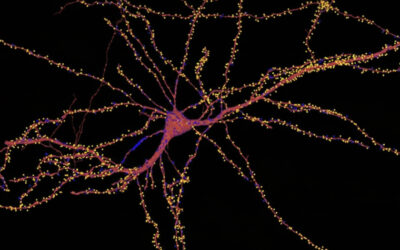
AI is no longer an experimental technology sitting on the edges of the business. It is rapidly becoming the connective neural pathway that links people, processes, and data across the entire development and commercial ecosystem. But the organisations that will lead in 2026 won’t be the ones chasing the flashiest tools. They will be the ones making deliberate choices: focusing on high-value use cases, preparing teams for new ways of working, and building the connected foundations that allow AI to operate safely, compliantly, and at scale.
The next era of innovation in life sciences will be defined not just by what AI can do, but by how intelligently and responsibly companies deploy it. Those who get this right will drive faster insights, smarter execution, and ultimately, better outcomes for patients.

By Chris Moore, President Europe, Veeva Systems