
The science of longevity has never been more active. With advances in preventive medicine and digital health, as well as new insights into lifestyle, environment, drug therapies and genetics, there is more research available than ever on how people age and live well.
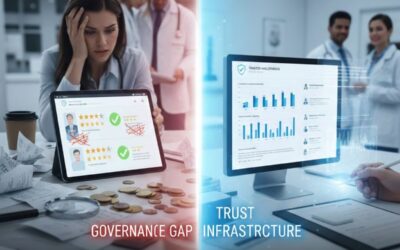
While longevity research is accelerating, a gap persists between the findings of this research and what actually shapes real-world outcomes across the lifespan. This rich trove of knowledge is not easily accessible across organisations, disciplines, and borders. Much of the valuable research on ageing well is disconnected from the people designing policies and those who design products.
Such gaps are problematic because longevity is not a niche concern. It touches many vital areas, including public health, clinical practice, medtech, biotech, and social policy. The positive impacts of important research are being diluted when that research isn’t freely flowing between these domains. Research accessibility is vital for scientific innovation.
A system rich in insights, but poor in connections
Across life sciences, enormous volumes of research sit behind paywalls or in isolated repositories. Clinicians, policymakers, and innovators are left navigating a patchwork of reports and datasets. But they don’t always have the time or tools to connect this information and uncover new insights.
The result is a paradox familiar to many in the sector. We know more than ever about health, ageing, and longevity, yet policy and product decisions are still made on evidence that may be partial or on outdated assumptions. The consequences of this can (and do) accumulate.
Lessons learned in one region or discipline fail to be recognised elsewhere. Promising insights go underused or overlooked.
Contrast this with examples where research sharing has accelerated progress. During the COVID-19 pandemic, unprecedented global data sharing enabled faster learning, and ultimately, innovation. Research moved quickly from publication to practice because systems were built with visibility and collaboration in mind.
Longevity research, by comparison, remains scattered. As populations age and health systems feel the strain, that fragmentation is increasingly an obstacle to developing much-needed breakthroughs.
Out of the archive and into practical application
What would it look like if longevity research were treated less like a poorly organised archive and more like a living resource?
This question sits at the heart of the work underway at Global Centre for Modern Ageing (GCMA) and its platform, Lumyn, the world’s first AI-powered platform dedicated to ageing and longevity research. The intent is far more expansive than storing research. Lumyn is designed to transform how longevity research is accessed, synthesised, and applied.
By using artificial intelligence to map and develop insights across disciplines and geographies, Lumyn is built to bridge the gap between evidence and the action that leads to innovative products and improved services. Academic research can sit alongside real-world data, policy analysis, and practical insights from industry and care settings. Instead of reinforcing siloes, the platform connects them.
For organisations shaping quality of life, whether in healthcare policy and delivery, or consumer wellness, this kind of visibility is vital. They can identify where evidence is converging and where it is conflicting. It allows decision-makers to see broader patterns rather than isolated findings.
Why accessibility matters more than volume
Accessibility is not just about open access publishing, although that remains important. It is just as much about making research discoverable and interpretable to diverse stakeholders. Clinicians, scientists, founders, funders, and regulators all depend on the accessibility of research to make their work effective and to innovate.
Advances in AI-enabled early detection of neurodegenerative disease show how powerful research can be when data is easily shared across clinical and technological boundaries. Similarly, the rapid uptake of cloud-enabled R&D and clinical operations points to the broader shift toward systems that facilitate speed of learning over static data ownership.
When evidence is more accessible, there are multiple profound benefits. Earlier interventions, better product design, and more realistic policies are developed. When it is not accessible, systems and practices can default to reactive care and short-term fixes. These can come at a significant human and economic cost.
Take for example the emerging therapies for muscle degeneration, frailty and sarcopenia. These are advancing fast, but their success depends on more than just discovery. Insights from biology, clinical trials and lifestyle research also need to be analysed together. Without that broader view of multiple domains, the most promising interventions risk remaining isolated within narrow domains.
Ageing as a shared, global challenge
Longevity is often framed as a future problem. In reality, it is very much a present one, playing out differently across populations but touching every society. Solutions developed in isolation will always struggle to keep pace with demographic change.
By connecting fragmented and underutilised insights, platforms like Lumyn point toward a more collaborative model for longevity research. Research does not lose its rigour by being shared more widely. It gains relevance.
For life sciences professionals, the opportunity is clear. The next phase of longevity innovation will be enabled by easier translation of research, along with the essential foundation of novel discovery. Not just by what we know, but by how effectively we connect that knowledge to practice.
If we are serious about improving wellness and quality of life across the lifespan, we must build systems that allow research to evolve and be applied. Otherwise, the insights we need most risk remaining just out of reach.
Author Bio

Philippa Lewis
Philippa Lewis is a leader working across health, technology, and innovation, with experience spanning medtech, biotech, digital health, and AI. She has founded and scaled multiple ventures, led global IPOs and mergers, and worked across complex international markets including North America, Europe, China, and Australia. She also mentors CEOs and serves as a director and chair of listed and private companies.
Through the Global Centre for Modern Ageing and its platform Lumyn, Lewis is focused on transforming how longevity and wellness research is accessed and applied, connecting fragmented, underutilised insights with the organisations shaping quality of life, policy, and products across the lifespan.