

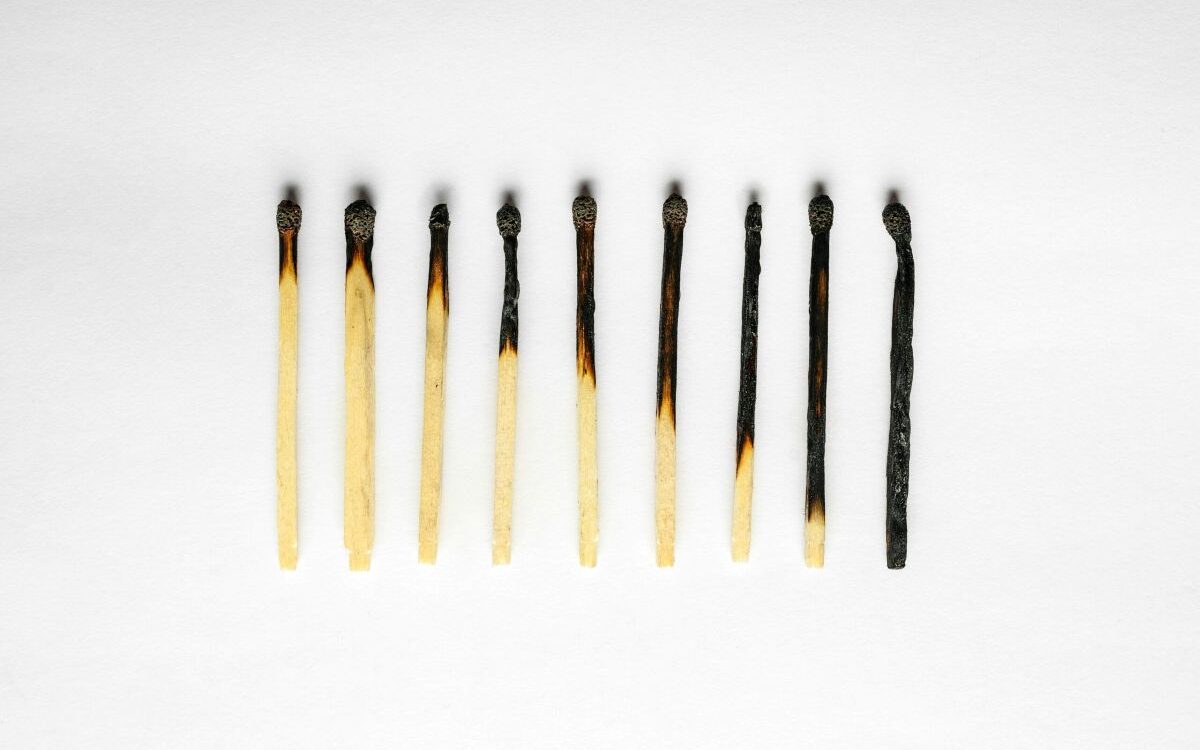
Working professionals know the feeling of being worn out at the end of a long, demanding day; however, burnout is considered a more intense, full-body breakdown resulting from longer-term exhaustion. Herbert Freudenberger, Ph.D., who coined the term burnout, defined it as “a state of fatigue or frustration brought about by a devotion or cause” and noted that seems to especially affect dedicated, high-achieving individuals who ultimately collapse from unrealistic, highly demanding goals.
Individuals in healthcare and helping professions are at greater risk for burnout. People who interact closely with intense human distress, traumatic stimuli, and grief witness anguish firsthand regularly. While some roles are especially prone to chronic stress, organizational structures can, unfortunately, exacerbate these difficulties. The field of healthcare also has increasing demands, such as financial pressures, clerical burdens associated with the introduction of electronic health records (EHRs), and an unprecedented level of scrutiny (Shanafelt, Dyrbye, & West, 2017).
Aside from individual impact, burnout has also been shown to influence quality of patient care as well as employee turnover rates (Shanafelt & Noseworthy, 2017). By attending to what Figley calls “costs of caring,” we can help prevent helping professionals from becoming burned out.
Stress versus Burnout
Stress is a broad term referenced liberally in modern times. Stress can often be observed as over-engagement, busyness, and sometimes a frantic, anxious attempt to “do it all.” There may be a sense of feeling overwhelmed by demands, especially when the individual is highly driven to attend to all the problems and get ahead of the overwhelm to feel better.
Burnout is considered a longer-term, chronic state of unmanaged distress, characterized by emotional exhaustion or depletion, with nothing left to give. Professionals who are burned out often present in a state of detachment, emptiness, and blunted numbness. No amount of work completion will relieve the burned-out sensations.
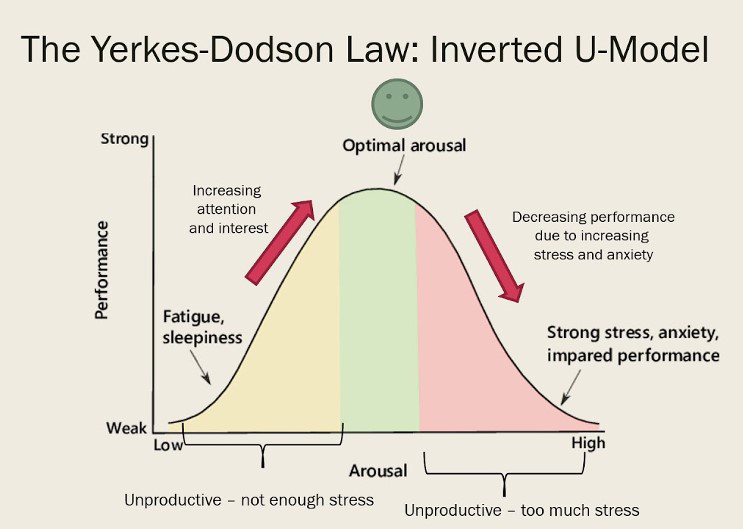
Interestingly, some moderate level of stress can increase motivation and focus if tasks are short-term and resolvable, but unaddressed or ongoing stress can turn into burnout. The Yerkes-Dodson Law is a psychological principle that helps differentiate stress from burnout. The inverted-U (bell-shaped) curve highlights how performance and productivity increase with some moderate (stress) arousal but only to a specific point. Pushing beyond the optimal arousal for an extended period of time can lead to reduced performance and possible burnout.
The Warning Signals of Burnout
In 2019, the WHO included burnout in the ICD-11 as an occupational phenomenon. Burnout is defined as a syndrome resulting from chronic workplace stress that has not been successfully managed.
There are a variety of slow-onset symptoms that can present in burnout, but an acronym of ICE is proposed here as a succinct way to be on the lookout for 3 primary characteristics of burnout (and reminds us of a state of frozen hypoarousal):
- Inefficacy in the professional realm
- Cynicism and negativity about the job
- Exhaustion and energy depletion
An honest, vulnerable reflection of one’s status is required in order to get an authentic evaluation of well-being. Being a good diagnostician with oneself means learning our own patterns of stress accumulation and responding to them sooner.
There has also been some interesting research focused on whether burnout might be a form of depression, as symptoms do suggest significant burnout-depression overlap (Bianchi, Schonfeld, & Laurent, 2015). Although the controversy remains as to the distinctiveness of the burnout phenomenon, the consideration of the many shared features between burnout and depression can also be a helpful way to consider some of the symptom presentation.
Addressing Issues Externally
Because there are many system issues that contribute to the risk of burnout, it is critical that burnout not be considered the sole responsibility of the professional. Blaming only the individual can also lead to individuals leaving the workforce, and these further strain the system and put coworkers at risk.
External or system factors need to be addressed more by employers, managers, and administrators; internal factors need to be addressed by the individual. Lowering stress is not equivalent to increasing well-being, but both are ideally present. The external system is considered responsible for the former (lowering stress factors), while professionals themselves are more in charge of the latter (increasing well-being).
Many things assist in creating positive professional environments, but two of the most significant seem to be the importance of professionals having an opportunity for a balanced schedule and collegial connection. Both of these factors assist in the concept of creating more meaning, purpose, and satisfaction at work. An organizational situation that is continually shifting, demanding, and toxic will be a struggle for any individual, but especially for those who are closer to burnout.
Positive leadership that provides good support is key. Addressing broader concerns (such as powerlessness, team conflict, ambiguity, alienation) is highly valued. The process of restructuring the workplace environment (such as adjusting workloads, increasing participation in decision-making, and fostering organizational fairness) to cultivate employee engagement is considered the “positive antithesis of burnout” (Maslach, Schaufeli, & Leiter, 2001). There is also emerging research demonstrating that prioritizing money over time is a trade-off that can contribute to burnout (Whillans, 2020; Whillans & Dunn, 2018).
Interventions for the Individual: Follow the FACTS
The detached, cynical, anesthetized sense of self for someone who is burned out requires intentional, deeper changes internally. Aside from potentially needing more extended time off, changes in priorities and perspective are often necessary. The FACTS mnemonic is a simple yet powerful way to highlight 5 primary domains found in research to be critical in improving well-being.
Let’s look at the features of FACTS in turn:
- Focus on the present moment: Centering on the “here and now” can help us be attentive at work, but this notion is highlighted here as actively focusing on the present moment when away from work. Learning to disengage from thinking about work when not at work is critical. A stressor-detachment theory posits that well-being will suffer if someone does not maintain detachment from work and work-related stressors during non-work times (Sonnentag & Fritz, 2015). This means intentionally centering on activities away from work, which then leads to more mindful grounding and nervous system settling.
- Articulate feelings: Recognizing and giving voice to the emotions that have been accumulating and affecting one’s well-being is critical. Engaging in more facing rather than avoiding of emotions is the cornerstone of healing. It can be daunting to face the realization of diminished enthusiasm in our chosen career, but we cannot change something until we first accept its reality. Repressing feelings does not lead to long-term resolution, but releasing can lead to repair. Finding a trusted confidant, engaging regularly in journaling, or seeking out a therapist can be essential to recovery.
- Connect with others: One of the most robust findings in burnout literature, as well as in psychological recovery from most any hardship, is that strong support systems are restorative and reduce isolation during difficult times. Oxytocin, the connection hormone, flourishes when we find ways to connect with others and can increase a sense of calm and security. Colleague contacts provide a means to share, problem-solve, and gripe together, while other non-work friendships also allow us to talk about a broader range of non-work topics.
- Tend to self-care: This domain includes the basics that are often minimized when we get busy, such as engaging in regular eating, sleeping, and joyful movement. Our bodies need also non-sleeping rest because living with chronically activated nervous systems can result in a body that might be physically rested but neurologically exhausted. More unstructured, idle moments can create more “time opulence” (Hodgkinson, 2004). Taking brief breaks to be in nature has also been found to be incredibly beneficial, as the “cognitive quiet” awakened by the softer senses outside allow diminished mental strain. We simply can’t meet the demands of nor reap the rewards of a chosen profession if we aren’t finding ways to replenish ourselves.
- Search for meaning and positive purpose: When we have lost our way, coming back to core values and personal interest in a chosen career field can be helpful, serving to reset back to underlying intentions. Finding examples of good and gratitude in our profession (and in the world) is highly valuable. Seeking out positivity does not mean suppressing negative emotions or invalidating the experience; much more effective is the allowing of the negative while also pulling in some positive. We can feel proud to be part of a profession that works so hard to provide worthy services to others while also finding other domains in which we can feel accomplished or purposeful.
Despite knowing the FACTS, they can sometimes be difficult to implement. Seeking out professional support from a mental health clinician is often warranted as an additional resource. Therapy stigma has significantly reduced in recent decades, but choosing to seek out therapeutic support still takes brave vulnerability.
Coming Back in a New Way: Leaning into Compassion More Than Empathy
There is interesting emerging research from social neuroscience (including by Singer, Dowling, and Klimecki) suggesting that it is empathy that fatigues in caregivers, not compassion. The fMRI data shows how unfiltered empathy triggers the brain’s pain matrix (anterior insula), can be perceived as a personal problem, and triggers pain-mirroring networks wherein we are “absorbing” the trauma, anger, or sadness of others. But when we learn to transition to more compassion, the dopaminergic reward and affiliation pathways (ventral striatum) are activated.
Neuroscientists have confirmed that compassion is a skill that can be cultivated and that empathic distress can be reversed, primarily by learning how to turn empathy into compassion. Some of this intervention work is based on Dr. Paul Gilbert’s Compassion Focused Therapy (CFT) and on loving-kindness mindfulness (popularized by Salzberg and Kornfield), creating a shift from feeling another’s pain (empathy) to wishing them well (compassion). Compassion generates positive affect and an energized, pro-social motivation to help, protecting against the drain of passive mirroring or absorbing of suffering. This allows a shift from “I am feeling your pain” to “I can see you’re in pain, and I am here to help you.”
Compassion is also needed for self. Many hard working, driven, high-performing professionals tend to be vicious self-critics, and this can be a setup for burnout. This keeps cortisol/adrenaline levels high and leads to more of a sense of threat rather than safety. Shifting language of self-compassion in work situations allows movement from “I feel like I’m failing” to “This is a very demanding situation which would be difficult for most.”
Moving from empathy to compassion is not about caring less, lowering standards, or stepping away from responsibility. It is an invitation to recognize how personalized emotional overdraft slowly erodes our ability to care well for others and self. And the concept of compassion resilience supports finding ways to engage again in caring without internalizing damaging overloading effects.
Re-igniting the Flame with Resilience and Hope
Resilience is our ability to navigate difficulty and adversity, allowing us to “bounce back” effectively. Once a cornerstone primarily of disaster mental health interventions, the concept of psychological resilience and posttraumatic growth is now widely recognized as crucial in many aspects of life (Tedeschi, Shakespeare-Finch, Taku, & Calhoun, L., 2018).
Psychological research shows that humans possess an inherent capacity for resilience, and capacities for resilience are believed to be shaped by a complex combination of heredity, life experiences, and personality. But some attitudes and actions can strengthen resilience and help maximize our functioning.
One of the most important characteristics of resilience is hopefulness. Having an optimistic outlook allows one to visualize forward progress, rather than staying stuck in the negatives. Hope is not automatic, but people can learn to create more constructive interpretations of situations. As highlighted in Positive Psychology, we can do more focusing on what’s strong in addition to what’s wrong (Seligman & Csikszentmihalyi, 2000). And it is that hope which allows someone rebuilding their life following burnout to re-ignite their flame once again.
Author Bio

Sandra Wartski, PsyD, is a Licensed Psychologist with more than 30 years of experience at Silber Psychological Services, a North Carolina-based group practice dedicated to helping individuals and families navigate life’s challenges. Dr. Wartski is passionate about building meaningful therapeutic relationships that foster growth, resilience, and lasting change. In addition to her clinical work, she enjoys sharing psychological science with both professional and public audiences through presentations and educational writing.