
Findings published in Nature Communications point to a previously uncharacterised cell death mechanism that could open new therapeutic targets for slowing neurodegeneration
Researchers at King’s College London and the UK Dementia Research Institute have identified a previously undercharacterised mechanism of cell death in the brains of people with Alzheimer’s disease and frontotemporal dementia (FTD), offering a potential answer to one of the field’s longest-standing questions: how does toxic protein build-up actually cause brain cells to die?
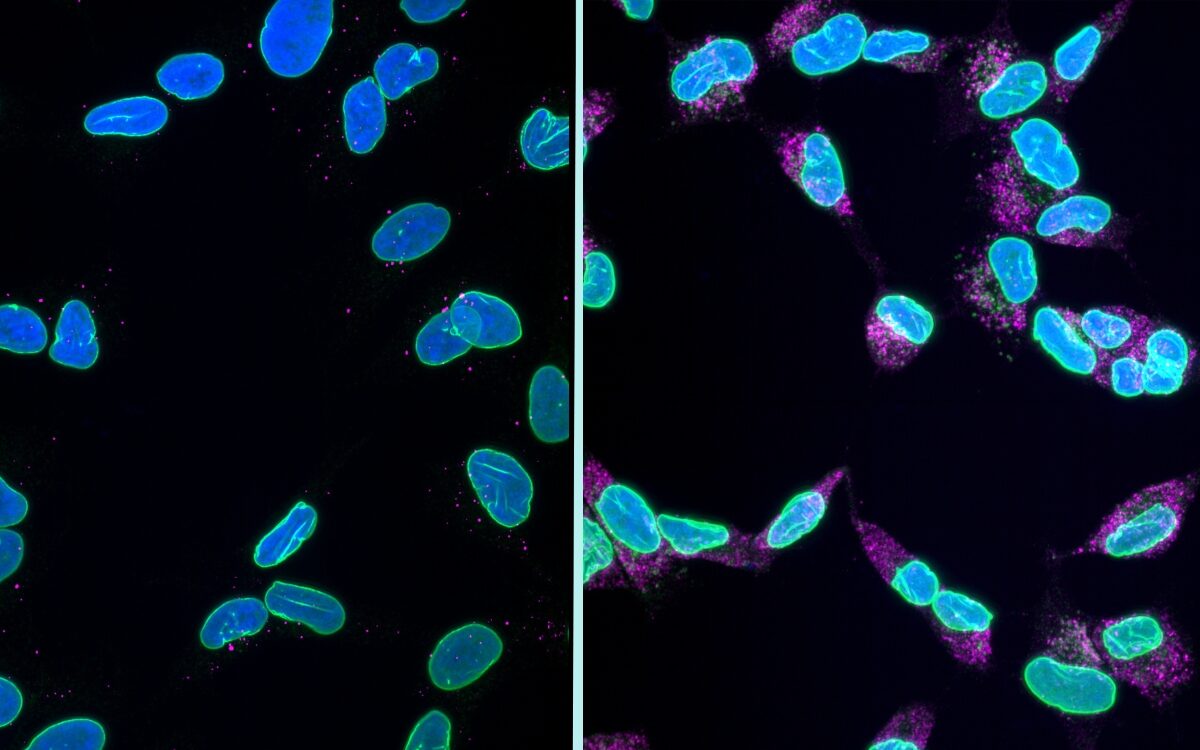
The mechanism, called karyoptosis, describes a cascade of chemical reactions triggered by the accumulation of toxic proteins inside neurons. Unlike other known forms of cell death such as apoptosis, karyoptosis causes the cell’s nucleus, the structure housing its genetic material, to shrink and disintegrate before the cell itself dies. The finding, published in Nature Communications, suggests this process may account for a significant proportion of neuronal loss in dementia that existing models have struggled to explain.
What the study found
The research team used computational algorithms to analyse approximately 3,000 brain cells taken from 28 patients with either FTD or terminal stage Alzheimer’s disease. They found that 35 per cent of cells from the frontal cortex of Alzheimer’s patients showed signs of karyoptosis, compared with just 15 per cent in healthy aged controls. The scale of that difference points to karyoptosis as more than an incidental finding; it appears to be a consistent feature of these diseases.
The study also identified the specific molecular pathway through which karyoptosis operates. Toxic protein accumulation destabilises the outer membrane of the nucleus, triggering a process that causes it to shrivel and break down. Crucially, researchers were able to map the key molecular switches involved, identifying a particular interaction between a kinase called p38 MAP kinase and a structural protein called LaminB1 as a critical control point in the process.
When researchers targeted this interaction in rat neurons in a laboratory setting, they were able to reduce markers of karyoptosis, suggesting the pathway may be therapeutically actionable.
Broader implications across neurodegenerative disease
While the patient tissue findings focus on Alzheimer’s disease and FTD, the study also demonstrates karyoptosis in laboratory and animal models of amyotrophic lateral sclerosis (ALS), a condition that shares significant molecular overlap with FTD. The authors suggest the mechanism could be relevant to any neurodegenerative condition in which toxic protein accumulation places sustained stress on neurons, potentially widening the therapeutic significance of the findings considerably beyond the dementias studied here.
A decade in the making
For the team at King’s, the findings represent the culmination of more than ten years of work. Karyoptosis was first identified in a relatively rare disease, and this study marks its recognition as a common feature of dementias affecting millions of people worldwide.
Dr Manolis Fanto, Reader in Functional Genomics at the Institute of Psychiatry, Psychology and Neuroscience at King’s College London, said:
“Our study is important for the understanding of dementia because it clarifies that there are multiple ways in which neurons die and the one specifically characterised by us, karyoptosis, was entirely unknown before. This information draws a new picture of the pathways that must be acted upon to keep the brain cells alive in dementia.”
Why it matters
The relationship between toxic protein accumulation and neuronal loss has long been central to dementia research, but the precise mechanisms linking the two have remained poorly understood. Existing cell death pathways do not fully account for the scale of neuronal loss observed in conditions such as Alzheimer’s and FTD, leaving a gap that has limited the development of effective treatments.
Dr Sara Rodrigues, Senior Research Manager at Alzheimer’s Research UK, which part-funded the study alongside the Biotechnology and Biological Sciences Research Council, the Medical Research Council, and the UK Dementia Research Institute, said the identification of karyoptosis is a crucial step toward finding targets for treatments that could stop or slow cell loss. She added that it could help widen the window for therapies targeting the underlying causes of disease, bringing the field closer to a cure for dementia.
What comes next
The immediate focus for the research team is on selectively targeting the p38 MAP kinase and LaminB1 interaction to develop viable treatment targets in humans. Importantly, inhibiting this pathway was shown to rescue human neurons derived from induced pluripotent stem cells, a meaningful step beyond animal models toward clinical relevance.
Dr Rebecca Casterton, Senior Researcher at the UK Dementia Research Institute at King’s and first author on the paper, said:
“We are at the start of understanding exactly how this sequence of events works and all of the different chemical signals which coordinate this process. If future research can identify effective ways to switch off karyoptosis to extend the survival time of damaged cells in dementia, that could be a useful tool alongside other therapies which may emerge to tackle the root causes of damage in disease, by effectively buying more time for those therapies to work on damaged cells.”
Image caption – Fluorescence microscopy images showing brain cells with and without signs of karyoptosis. Left: cells with healthy, regular nuclear structure. Right: cells showing hallmarks of karyoptosis, including irregular nuclear shape and accumulation of the nuclear lamina protein LaminB1 in the cytoplasm, indicated by the magenta signal. Image credit: King’s College London, adapted from Figure 1a, Casterton et al. 2026. DOI: 10.1038/s41467-026-73802-w