
South Korea and the United States are both wealthy, technologically sophisticated countries with excellent physicians and world-class hospitals. Yet they placed opposite structural bets on what a health system is for. America bet on treating disease as well as it can be treated. Korea bet on finding it as early as it can be found.
I’ve spent the past several years helping Americans access preventive healthcare in South Korea. What surprised me wasn’t simply how different the patient experience felt. It was how differently the two countries define the purpose of a healthcare system. In my work connecting international patients with Korean hospitals, I watch the consequences of those two bets play out side by side every week, and the divergence is one of the most instructive natural experiments in global healthcare.
The Divergence in Numbers
Start with the scoreboard. The United States spends 16.6 percent of GDP on healthcare; Korea spends 8.5 percent [1]. Korean life expectancy reached 83.5 years in 2023, against 78.4 in the US [1]. The gap in healthy years is wider still: on the World Health Organization’s healthy life expectancy measure, Koreans can expect roughly 72.5 years of healthy life versus 63.9 for Americans, a difference of almost nine years [2].
Cancer statistics sharpen the picture. Korea’s five-year relative survival for stomach cancer is 78.4 percent; the American figure is 39.8 percent [3][4]. The instinctive explanation, that Korean treatment must be better, is wrong. The same US registry data shows American stomach cancer survival reaching 78.1 percent when the disease is caught while still localized [4]. American medicine treats early-stage disease as well as anyone. It just rarely gets the chance, because nothing in the system is tasked with looking.
The control case proves the point in the other direction. Breast cancer is the screening the US does run as an organized, reminder-driven program, and there the two systems nearly converge: five-year survival is 94.3 percent in Korea and roughly 91 percent in the US [3][5]. Where America systematizes detection, America performs. The difference between the two countries is not talent or technology. It is how much of medicine each country chose to systematize.
Architecture: Default Versus Initiative
The Korean model rests on a single structural decision: screening is a default, not a personal project. The National Health Insurance Service covers virtually the entire population and entitles every insured adult to a general health screening every two years from age 40, annually for manual workers. Participation runs at 74 to 78 percent of the eligible population [6]. The National Cancer Screening Program layers on six cancers, from biennial stomach endoscopy at 40 to low-dose CT lung screening for high-risk smokers [7]. Invitations arrive on schedule, and out-of-pocket cost is minimal.
The American model asks the patient to assemble prevention themselves: know the guidelines, secure the referrals, navigate the deductible, chase the results. Predictably, participation tracks motivation and means. US screening rates in 2023 were 80 percent for breast, 75 percent for cervical, and 67 percent for colorectal cancer [8], and cost sits on the scale: 36 percent of American adults report skipping or postponing needed care because of it [9], while Americans borrowed an estimated $74 billion in a single year for medical bills [10].
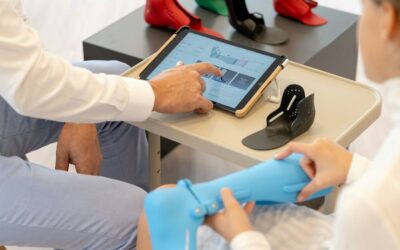
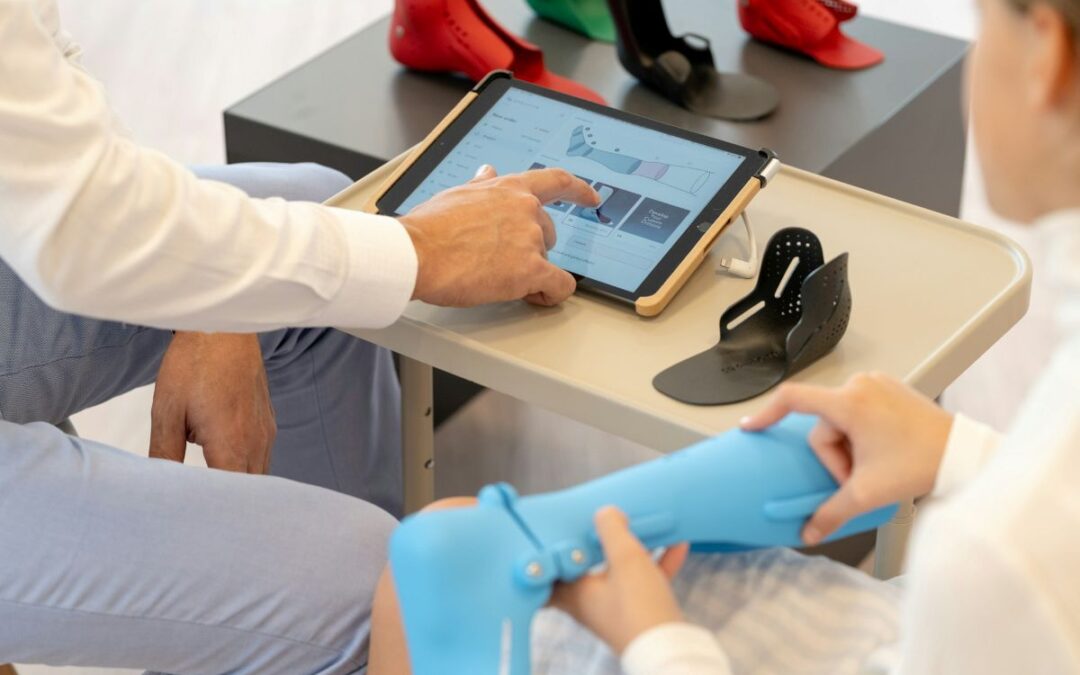
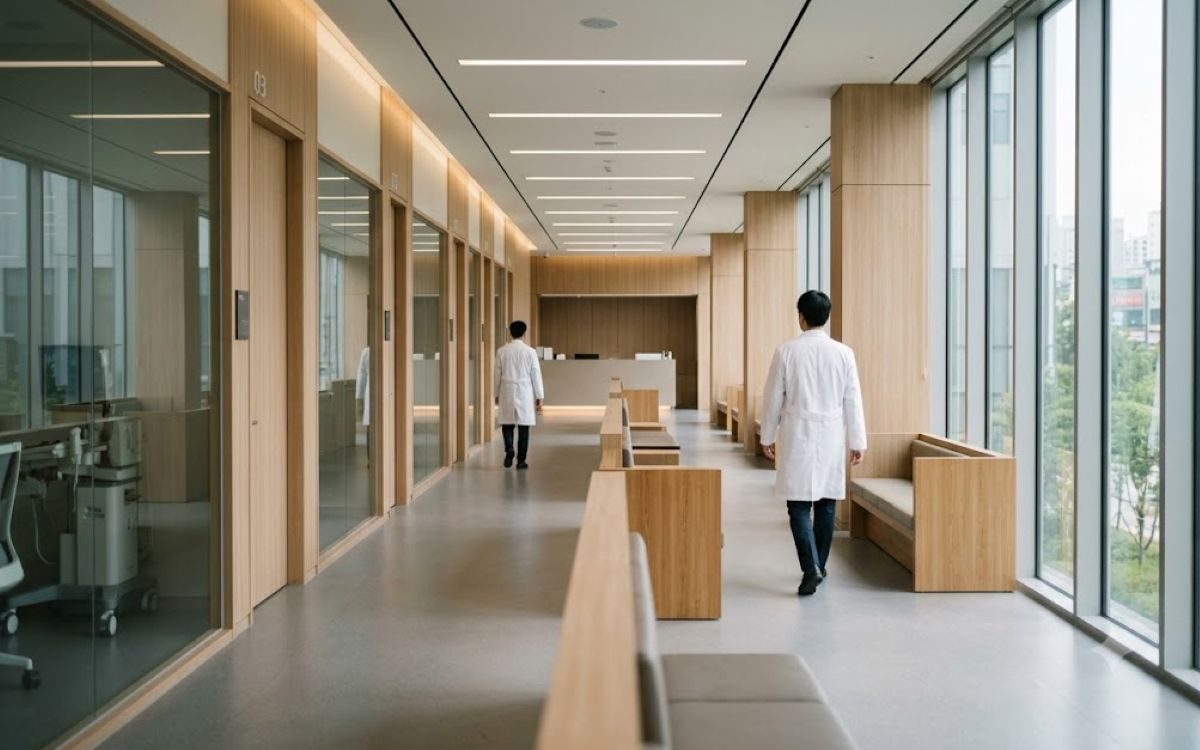
The experience gap follows the architecture. A Korean comprehensive checkup happens in a purpose-built center: dozens of tests, including imaging and endoscopy, completed under one roof in a morning, with most results the same day and a published, bundled price that typically starts in the hundreds of dollars. The closest American equivalent, the executive physical, is delivered at a handful of academic centers at prices from roughly $3,000 to $25,000 [11]. Korea sells the executive physical as a mass-market product; America sells it as a perk.
Where AI Enters Each System
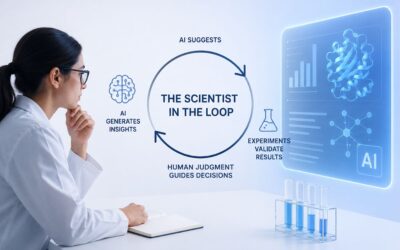
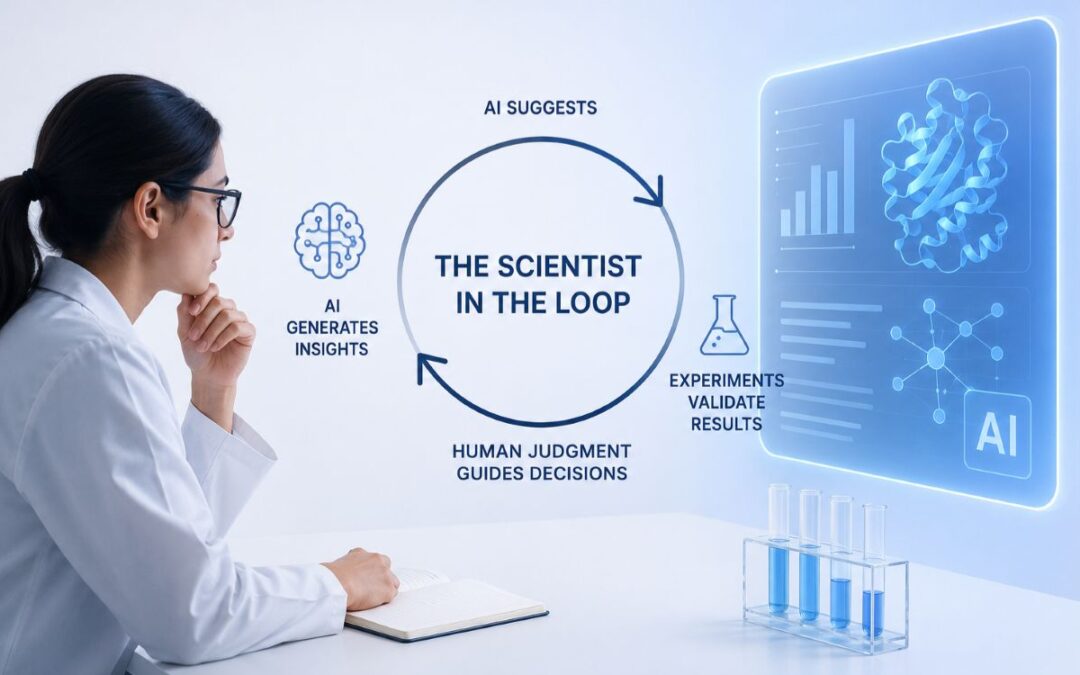
The two architectures also produce different on-ramps for artificial intelligence. Diagnostic AI needs three things to thrive: large volumes of standardized images, digitized records to train and deploy against, and a buyer with a clear reason to pay. Korea’s screening system manufactures all three. Decades of high-volume, protocol-driven checkups generate concentrated image flows, and the country digitized the underlying records long ago. EMR adoption sits above 90 percent of Korean hospitals, among the highest rates in the world [12]. When the data is clean, connected, and abundant, an algorithm has something to learn from and somewhere to plug in.
That environment produced globally competitive companies. Lunit, founded in Seoul in 2013, now has FDA-cleared cancer-detection AI deployed at roughly 600 sites in 40 countries [13], and its chest X-ray software is being embedded directly into imaging hardware, including Samsung devices, so the AI reads the scan the moment it is taken [14]. VUNO developed Korea’s first government-approved AI medical device, and its DeepCARS system, which predicts in-hospital cardiac arrest up to 24 hours in advance, now monitors patients across some 50,000 Korean hospital beds [15]. In Korea, AI’s job is not to prove itself as a pilot. It is to make an already systematized detection machine faster and more consistent, at national scale.
Tellingly, that capability is now flowing outward. In late 2025, a large US imaging provider adopted Korean AI to automate chest X-ray reporting across its American network [16], a quiet reversal of the usual technology direction. The tools built for Korea’s screening volume are now being sold back into the American system that lacks it.
That contrast defines the American on-ramp. Hundreds of imaging algorithms hold FDA clearance, but adoption is fragmented and tracks hospital resources and reimbursement rather than population need. An AI tool in the US must find its own workflow, its own payment code, and its own champion, one hospital at a time. The technology is comparable on both sides of the Pacific. What differs is the terrain it lands in: Korea offers AI a paved highway of standardized data and guaranteed volume, while America offers a patchwork of toll roads. The system, not the algorithm, decides whether AI ever reaches the patient at scale.
The Market Has Started Voting
Patient flows are a verdict rendered in airfare, but the numbers deserve an honest reading. In 2025, international patients in Korea surpassed two million for the first time since tracking began in 2009: 2.01 million visitors from 201 countries, who together with their companions spent about 12.5 trillion won ($8.4 billion), according to Korea’s Ministry of Health and Welfare [17]. Let me be plain about what drove that record: dermatology, which accounted for 62.9 percent of all foreign patients, and 44.3 percent of American ones [17][18]. Korea’s aesthetic reputation, not its screening rooms, filled most of those planes.
The preventive signal sits inside the record, smaller but unambiguous. More than 65,000 visitors came specifically for comprehensive health checkups, roughly three percent of the total, but the segment grew 17 percent year over year, and Americans were the largest screening group for the second consecutive year: nearly 15,700 people, up 33 percent and more than China and Russia combined, per the ministry’s data [18]. Total US patient volume reached an all-time high of over 173,000, and globally, wellness tourism reached $894 billion in 2024 [19].
The composition is the point. The dermatology wave proves Korea’s consumer medicine delivery model works at massive scale, and it grew so fast that the checkup segment’s share of the total actually fell, from 4.5 percent to 3.1 percent, even as checkup numbers rose. Prevention is not yet the reason most people fly to Korea. But the American screening traveller is worth watching: the United States has been the largest source of checkup patients for two consecutive years despite being ten to fifteen hours away, while nearer neighbours send far more patients overall. These are people travelling not because treatment is unavailable at home, but because a preventive care model is not.
What the Divergence Means
For the life sciences sector, the two models are effectively two different markets. A prevention-first system generates demand for diagnostics, imaging, screening infrastructure, and AI at population scale. A treatment-first system concentrates value in late-stage therapeutics. Both produce innovation, and to be fair to the American model, it remains the world’s engine of drug development, and its rescue care is unmatched. But as populations age and payers everywhere confront the arithmetic of chronic disease, which already drives about 90 percent of America’s $4.5 trillion in annual health spending [20], the question of where value migrates has an increasingly clear answer: toward whoever finds disease first.
Korea’s model is not flawless, and honest analysis says so. Its thyroid screening surge in the 2000s became the global textbook case of overdiagnosis; its fee structures and disease epidemiology do not transplant directly; its clinical workforce is under real strain. But the core differentiation stands. One system engineered early detection into national infrastructure, with defaults, purpose-built facilities, integrated AI, and transparent prices. The other left detection to individual initiative and priced it accordingly. The gap between them, nearly nine healthy years per citizen at half the cost, is what a design decision looks like once it compounds for a generation.
Author Bio