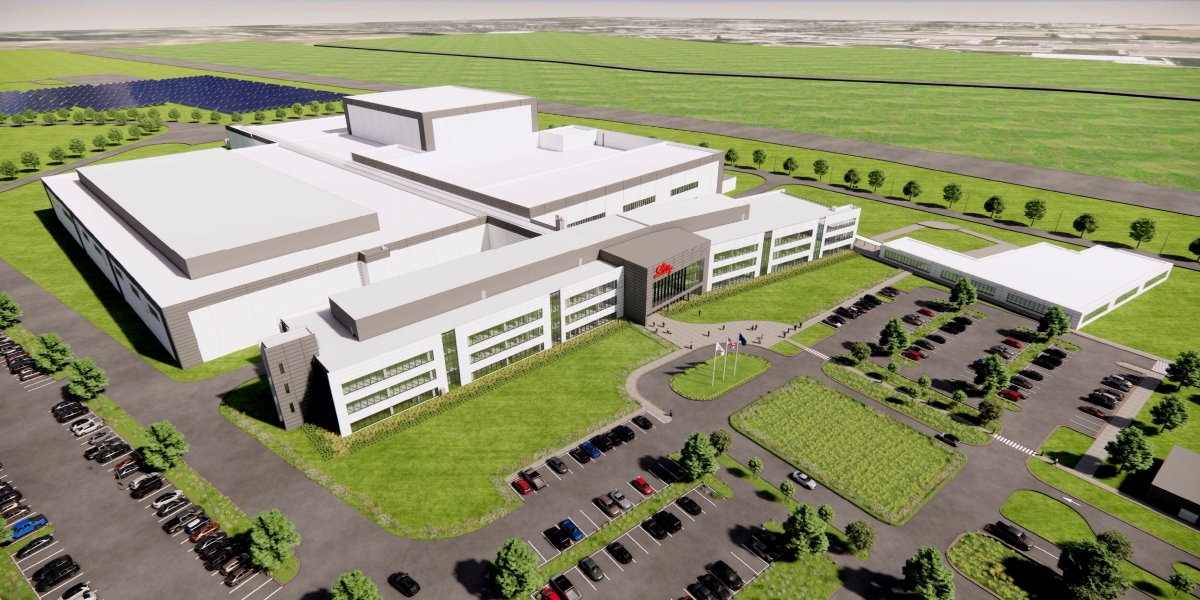
Eli Lilly and Company has officially selected Fogelsville, Pennsylvania, as the site for its newest $3.5 billion injectable medicine and device manufacturing facility. Operating under the name “Lilly Lehigh Valley,” the project represents the final piece of a quartet of new U.S. manufacturing hubs announced by the pharma giant since early 2025, bringing its total domestic investment commitment to over $50 billion since 2020.
The investment is the largest life sciences project in Pennsylvania’s history and is expected to create 850 permanent high-value jobs, including roles for engineers, scientists, and lab technicians.
Scaling the Incretin Pipeline: Focus on Retatrutide
While current demand for Mounjaro and Zepbound is a primary driver, this facility is specifically engineered to support Lilly’s future pipeline. A central focus of the 925,000-square-foot campus will be the production of retatrutide, Lilly’s investigational “triple agonist” (GIP/GLP-1/glucagon).
Retatrutide is currently in Phase 3 clinical trials and represents a potential step-change in metabolic medicine, with recent readouts showing significant weight loss and liver fat reduction. The Lehigh Valley site will integrate:
- Advanced Fill-Finish Lines: High-speed sterile manufacturing designed to handle complex biologics.
- Device Manufacturing: On-site assembly of the proprietary injectable pens required for delivery.
- Industry 4.0 Integration: The site will deploy AI-driven quality control, machine learning for predictive maintenance, and real-time data analytics to ensure supply resilience.
A pharmaceutical manufacturing expert noted that domestic capacity has become a competitive differentiator.
“Following recent supply disruptions, companies are placing greater emphasis on regional manufacturing hubs. Investments like this reduce risk and improve control over complex injectable production.”
Why Pennsylvania? A Competitive Site Selection
Lilly selected the Lehigh Valley from a pool of over 300 potential sites. The decision was influenced by the region’s proximity to one-third of the U.S. consumer base within a day’s drive and its deep industrial roots. To secure the win, Governor Josh Shapiro’s administration assembled a $100 million incentive package, featuring:
- $50 million in PA EDGE tax credits.
- $25 million via a PA SITES grant for site development.
- $25 million from the Pennsylvania First grant.
The project will also utilize the state’s “Permit Fast Track” program to accelerate regulatory approvals, with construction slated to begin in 2026 and operations targeted for 2031.
A Pennsylvania economic development official said the project would deliver lasting regional benefits.
“This investment reinforces Pennsylvania’s position as a leading location for advanced life sciences manufacturing and will create high value jobs while strengthening the local innovation ecosystem.”
Building a Talent Pipeline
A key component of the investment is the collaboration with local educational institutions. Lilly has announced partnerships with Lehigh Carbon Community College and other regional STEM universities to update curricula and labs with specialized pharmaceutical equipment. This ensures a “ready-made” workforce pipeline for the 850 roles required at the site.
Strategic Resilience and Sustainability
This facility is a cornerstone of Lilly’s strategy to “onshore” critical medicine production, reducing reliance on foreign active pharmaceutical ingredients (APIs) and contract manufacturers. Additionally, the site aligns with Lilly’s 2030 sustainability goals:
- Carbon Neutrality: Targeting net-zero emissions for Scope 1 and 2.
- Renewable Energy: Plans for 100% renewable electricity sourcing.
- Circular Economy: Zero routine waste-to-landfill and a “take-back” pilot for used injectable devices to recycle plastic waste.