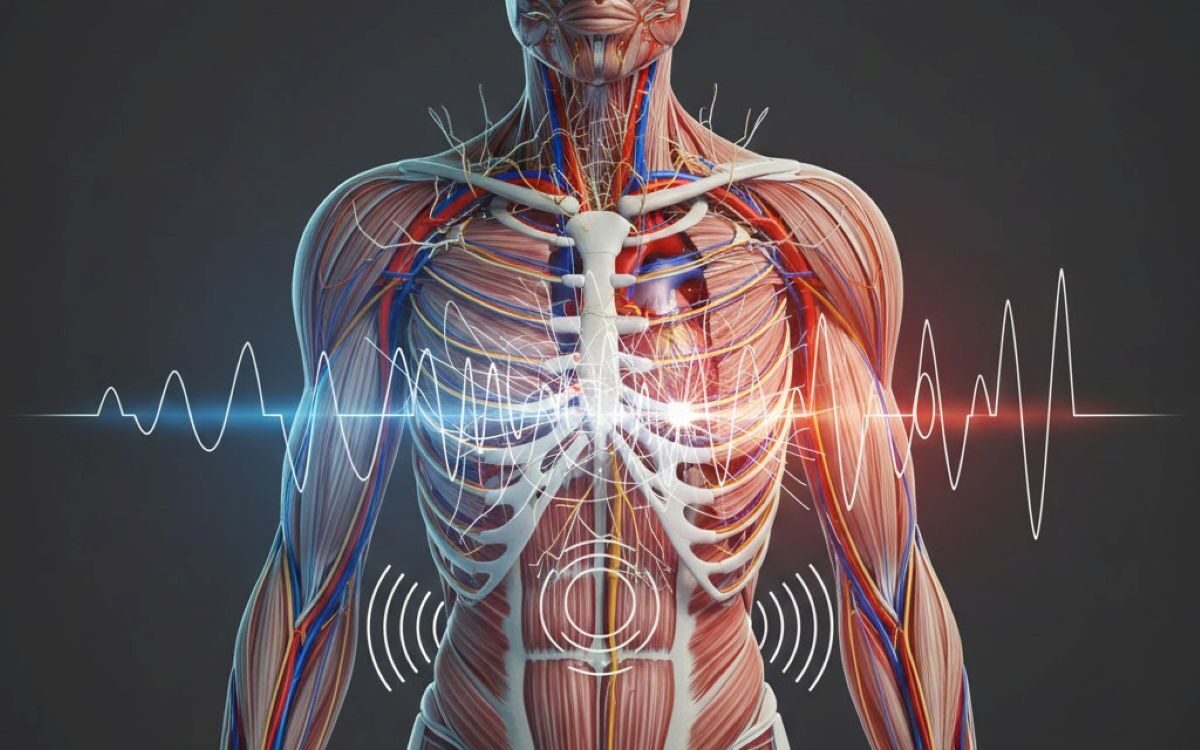
For decades, recovery has been framed as the absence of stress. Rest, relaxation, sleep, and passive modalities have been treated as the antidote to physiological load. While these elements matter, they represent only a fraction of how biological systems actually adapt, repair, and become more resilient.
From a life sciences perspective, recovery is not the removal of stress, it is the precise reintroduction of controlled stress, applied with enough intensity, timing, and clarity to force adaptive change. Without signal, there is no adaptation. Without adaptation, there is no meaningful recovery.
This is the foundation of the Primal Recovery model: recovery as signal engineering, not comfort management.
Stress Is the Upgrade Trigger
Human physiology does not evolve because conditions are easy. At the cellular level, adaptation occurs when systems are challenged just beyond baseline capacity. Mitochondria increase output when energy demand rises. Vascular networks remodel when flow dynamics change. The nervous system recalibrates when it must regain control under load.
Remove challenge, and these systems downregulate. Apply challenge poorly, and they break. Apply it precisely, and the organism upgrades.
This principle is well established in biology under the concept of hormesis, where low-to-moderate stress stimulates beneficial adaptation, while chronic or excessive stress causes damage. The challenge is not whether stress works. The challenge is how to apply it deliberately.
Why Coffee Doesn’t Turn the Body Up to 11
Caffeine is often mistaken for performance or recovery. It creates a temporary elevation in alertness by antagonising adenosine receptors, but it does not meaningfully improve recovery capacity. It doesn’t remodel vasculature. It doesn’t improve mitochondrial efficiency. It doesn’t train autonomic flexibility.
In short, coffee turns the lights on brighter, it doesn’t upgrade the wiring.
Turning the body “up to 11” requires interventions that act at the systems level: circulation, cellular energy production, nervous system regulation, inflammation control, and metabolic signalling. These are not achieved through stimulants. They are achieved through intentional physiological stress.
The Deadpool Effect: Why Controlled Stress Creates Super-Compensation
A useful analogy, used sparingly and deliberately, comes from pop culture. In the Marvel universe, Deadpool doesn’t gain regenerative abilities because he rests more. He gains them because his body is subjected to extreme, repeated stress that forces accelerated repair mechanisms to stay permanently switched on.
The real human equivalent is far less cinematic, but the underlying principle holds. When biological systems are stressed in a controlled, survivable, and repeatable manner, repair pathways don’t just activate, they become more efficient over time.
Cold exposure, heat stress, photobiomodulation, mechanical compression, and respiratory modulation all function as stress signals, not therapies. Each one forces the body to respond, adapt, and recalibrate. Used correctly, they don’t “relax” the system, they make it harder to break.
Cold Exposure: Vascular and Mitochondrial Stress Signalling
Cold exposure is often misunderstood as a pain-tolerance exercise or inflammation suppressor. In reality, its most meaningful effects occur through vascular and mitochondrial signalling.
Acute cold causes peripheral vasoconstriction followed by rebound vasodilation. This mechanical stress trains endothelial function and improves microcirculatory responsiveness. At the cellular level, cold exposure stimulates mitochondrial biogenesis and increases metabolic efficiency through altered redox signalling.
When used excessively or timed poorly, cold can blunt training adaptation. When used precisely, it enhances recovery capacity and resilience.
This is not comfort. This is calculated stress.
Heat Therapy: Cardiovascular Load and Heat-Shock Response
Heat exposure, particularly sauna-based protocols, imposes a cardiovascular load comparable to moderate exercise. Heart rate rises, blood flow increases, and plasma volume expands. Repeated exposure improves vascular elasticity and induces heat-shock proteins, which play a role in protein folding, cellular repair, and stress tolerance.
Importantly, heat also exerts a strong influence on the autonomic nervous system, particularly when applied later in the day. Used correctly, it shifts sympathetic dominance toward parasympathetic recovery states without eliminating stress entirely.
Again, the benefit comes from dose and timing, not indulgence.
Red Light Therapy: Cellular Energy as a Recovery Lever
Photobiomodulation operates at the intersection of light physics and mitochondrial biology. Specific wavelengths interact with cytochrome c oxidase, influencing electron transport chain efficiency and ATP production.
Within an integrated recovery system, red light therapy acts as an amplifier, not a standalone solution. It supports cellular energy availability, which enhances the body’s ability to respond to other stress signals rather than replacing them.
When layered correctly, it improves recovery efficiency. When used in isolation and oversold, it becomes another wellness trend.
Mechanical Inputs: Compression and Vibration as System Signals
Mechanical stress is a language the body understands well. Compression and vibration influence lymphatic movement, venous return, and neural signalling. These inputs do not “heal” tissue directly, they improve the conditions under which repair occurs.
In a systems-based recovery model, mechanical modalities support circulation and nervous system feedback loops, particularly in high-load or neurologically fatigued individuals.
Timing, Order, and Signal Clarity
One of the most common failures in modern recovery culture is signal interference. When cold, heat, light, supplements, and stimulants are applied randomly or simultaneously, the body receives conflicting instructions.
Biology responds to clarity, not chaos.
Recovery works best when interventions are sequenced deliberately: stress first, support second, regulation last. This principle is central to Primal Recovery’s applied model and explains why “more” recovery tools often produce fewer results.
Recovery as a Trainable Capacity
Perhaps the most important shift is this: recovery is not a fixed trait. It is trainable.
Just as strength increases through progressive overload, recovery capacity improves through repeated exposure to controlled stress followed by adequate adaptation time. The goal is not to eliminate stress, but to become increasingly competent at responding to it.
This reframing has implications beyond elite sport. It applies to injury rehabilitation, long-term health resilience, and the growing field of translational recovery science.
From Applied Practice to Translational Insight
The Primal Recovery model emerged from practical necessity, supporting athletes who cannot afford slow recovery or system failure. As these principles move into broader contexts, they align closely with emerging life sciences research into mitochondrial health, vascular function, and adaptive stress biology.
Recovery, when understood properly, is not passive. It is an active biological conversation with the body, one that, when done correctly, turns human physiology up to 11 in a way no stimulant ever could.
For further context on applied recovery systems and integrated stress-based protocols, see:
https://primalrecovery.net.au
For a clear overview of the physiological mechanisms and adaptive responses associated with cold exposure and deliberate cooling, see the Huberman Lab’s synthesis on cold-plunge research and thermoregulatory stress:
https://www.hubermanlab.com/topics/cold-plunges-and-deliberate-cooling