
The role of sensory systems in human health has long been established within biological and neuroscientific research. Olfactory, auditory, and tactile pathways are deeply integrated into the body’s regulatory networks, influencing emotional processing, cognitive function, and physiological balance. Despite this well-documented connection, the clinical application of sensory-based therapeutics has historically remained underutilized.
That gap is now beginning to close.
As healthcare systems evolve toward more integrative and patient-centered models, there is growing recognition of the value sensory-based interventions can provide. Once considered complementary or alternative, these approaches are now being revisited through a more rigorous, evidence-informed lens. Olfactory, auditory, and tactile therapeutics are gaining renewed attention for their ability to influence both psychological and physiological outcomes.
At the center of this shift is a deeper scientific inquiry into how active constituents within sensory-based interventions interact with the body through pharmacokinetic and pharmacodynamic mechanisms. This perspective is helping reposition sensory therapeutics within a more clinically relevant and research-driven framework.
Sensory Systems and Biological Integration
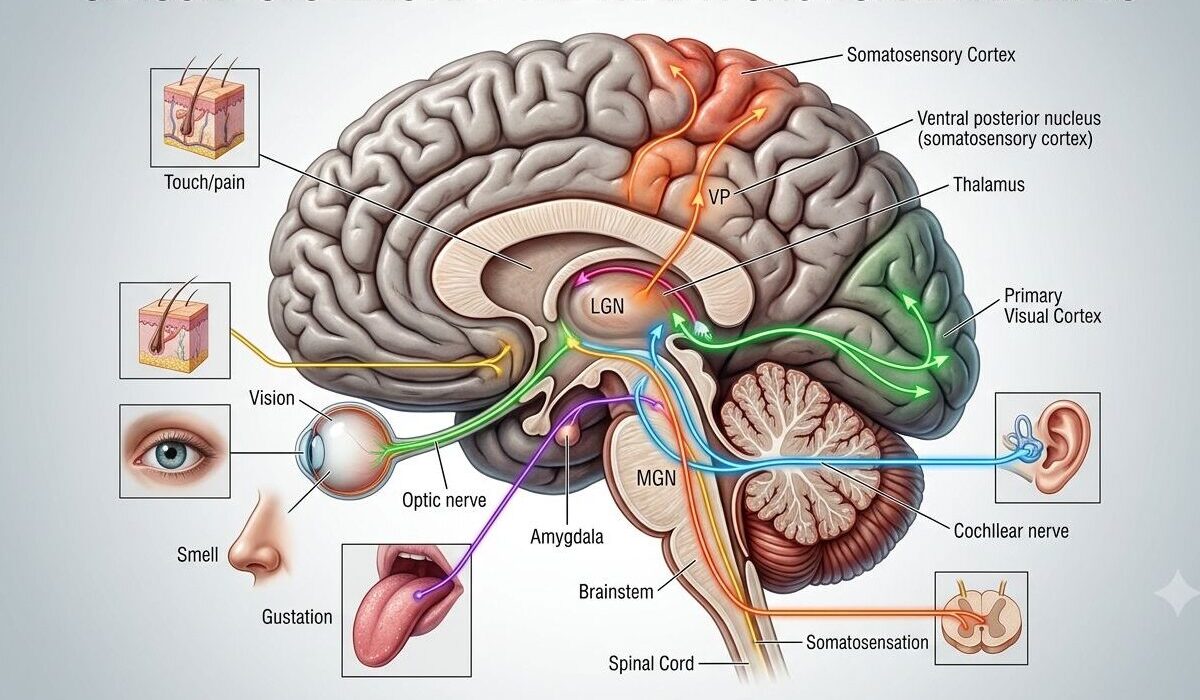
Sensory systems are not isolated; they are intricately connected to central nervous system function and systemic regulation. The olfactory system, for example, has a direct anatomical connection to the limbic system, allowing scent-based stimuli to influence emotional responses, memory, and autonomic activity almost immediately.
Research shows that olfactory input can modulate stress responses, alter mood states, and impact cognitive performance. Auditory stimulation has been associated with changes in neural activity and emotional regulation, while tactile input—such as therapeutic touch—can activate parasympathetic responses and support relaxation.
While these findings are not new, their translation into clinical environments is evolving. Patient outcomes, comfort, and overall experience are increasingly recognized as essential components of care, expanding the role of sensory-informed strategies in healthcare delivery.
Clinical Adoption and Evolving Healthcare Models
Over the past decade, healthcare systems have begun exploring the integration of sensory-based therapeutics within broader integrative care models. This shift reflects a growing understanding that recovery is influenced not only by direct medical interventions but also by environmental and sensory factors.
Post-operative care has become a key area of interest. Patients recovering from surgery often experience pain, anxiety, inflammation, and sleep disruption. While pharmacological treatments remain essential, concerns related to cumulative drug exposure and side effects have prompted interest in complementary, non-invasive approaches.
Olfactory interventions, including the use of essential oils, have been studied in this context. Lavender essential oil, for example, has been widely explored for its calming properties. Preliminary and small-scale studies suggest potential antiseptic, antimicrobial, anti-inflammatory, and antioxidant effects; however, larger, well-controlled clinical trials are needed to consistently validate these findings across diverse patient populations.
These developments reflect a broader shift toward integrating sensory-informed approaches into conventional care—not as replacements, but as complementary strategies that may support overall treatment outcomes.
Pharmacokinetics and Pharmacodynamics of Sensory-Based Compounds
Advancing sensory-based therapeutics in clinical practice requires a clearer understanding of pharmacokinetic (PK) and pharmacodynamic (PD) considerations related to active botanical constituents.
Essential oils and similar compounds consist of complex mixtures of bioactive molecules, including terpenes, esters, aldehydes, and phenolic compounds. These molecules are believed to interact with biological systems, although many mechanisms remain under active investigation.
From a pharmacokinetic perspective, the route of administration plays a critical role. Inhalation may allow volatile compounds to enter the respiratory system and reach systemic circulation via the alveoli. Topical application involves absorption through the skin, influenced by molecular size, lipid solubility, and skin condition.
Pharmacodynamically, certain compounds have been observed in preclinical and early-stage studies to interact with neurotransmitter pathways or exhibit anti-inflammatory and antimicrobial activity. While these findings provide a promising scientific basis, further clinical research is necessary to establish consistent therapeutic effects and standardized dosing parameters.
Understanding these mechanisms is essential for developing safe, effective, and evidence-informed clinical applications.
Psychological and Cognitive Implications
In addition to physiological effects, sensory-based therapeutics demonstrate meaningful psychological and cognitive impacts. Studies indicate that ambient odors can influence anxiety levels in clinical environments, potentially improving patient comfort during medical procedures. Certain aromas have also been associated with enhanced cognitive performance and mood regulation.
These findings are particularly relevant in high-stress healthcare settings, where anxiety can directly affect both patient experience and outcomes. By addressing the sensory environment, clinicians can help create conditions that support relaxation, improve perception of care, and contribute to recovery.
Challenges and Considerations
Despite promising advancements, several challenges must be addressed to ensure responsible implementation.
Standardization remains a key concern. The composition of botanical products can vary significantly depending on sourcing, extraction methods, and formulation. Consistency and quality control are critical for clinical use.
While current research provides valuable insights, larger and more robust clinical studies are needed to further validate efficacy and safety across diverse patient populations. Strengthening the evidence base will be essential for broader clinical acceptance.
Education is another important factor. Healthcare professionals must be equipped with accurate, evidence-based knowledge to appropriately integrate sensory-based approaches into patient care. This includes understanding contraindications, potential interactions, and best practices for application.
Future Directions and Innovation
The future of sensory-based therapeutics lies in interdisciplinary collaboration and technological integration. Advances in digital health and wearable technologies may enable more personalized and adaptive sensory interventions.
For example, real-time biometric data could be used to tailor sensory inputs – such as scent or sound – based on individual physiological responses. This level of precision has the potential to enhance both effectiveness and patient experience.
Continued collaboration among researchers, clinicians, and industry professionals will be critical in advancing this field. By combining scientific rigor with innovative application, sensory-based therapeutics can become a meaningful component of modern healthcare.
Conclusion
The integration of sensory systems into clinical practice represents a natural progression in healthcare. By revisiting established biological principles through a contemporary, evidence-informed lens, providers can expand patient care in ways that are both effective and human-centered.
Sensory-based therapeutics offer an opportunity to bridge traditional scientific understanding with modern integrative approaches. As research advances and clinical applications become more refined, these interventions are positioned to play an increasingly important role in the future of healthcare.
Author Bio

Shanna Bynes Bradford, Clinical Researcher, Master Aromatherapist, and Founder of Grow Out Oils
Shanna Bynes Bradford is a Clinical Researcher, Master Aromatherapist, and Founder of Grow Out Oils. Her work focuses on the intersection of botanical science, sensory-based therapeutics, and integrative healthcare. With a background in clinical research and formulation development, she collaborates with laboratories and healthcare professionals to support safety validation, product testing, and evidence-informed innovation within the cosmetic and aromatherapy industries. She is affiliated with the American College of Healthcare Sciences as a graduate ambassador and continues to advocate for responsible, research-driven approaches to plant-based therapeutics, clinical skincare formulation, and medical aesthetics education.
Feature image shows Sensory Systems and the Brain: Functional Pathways