
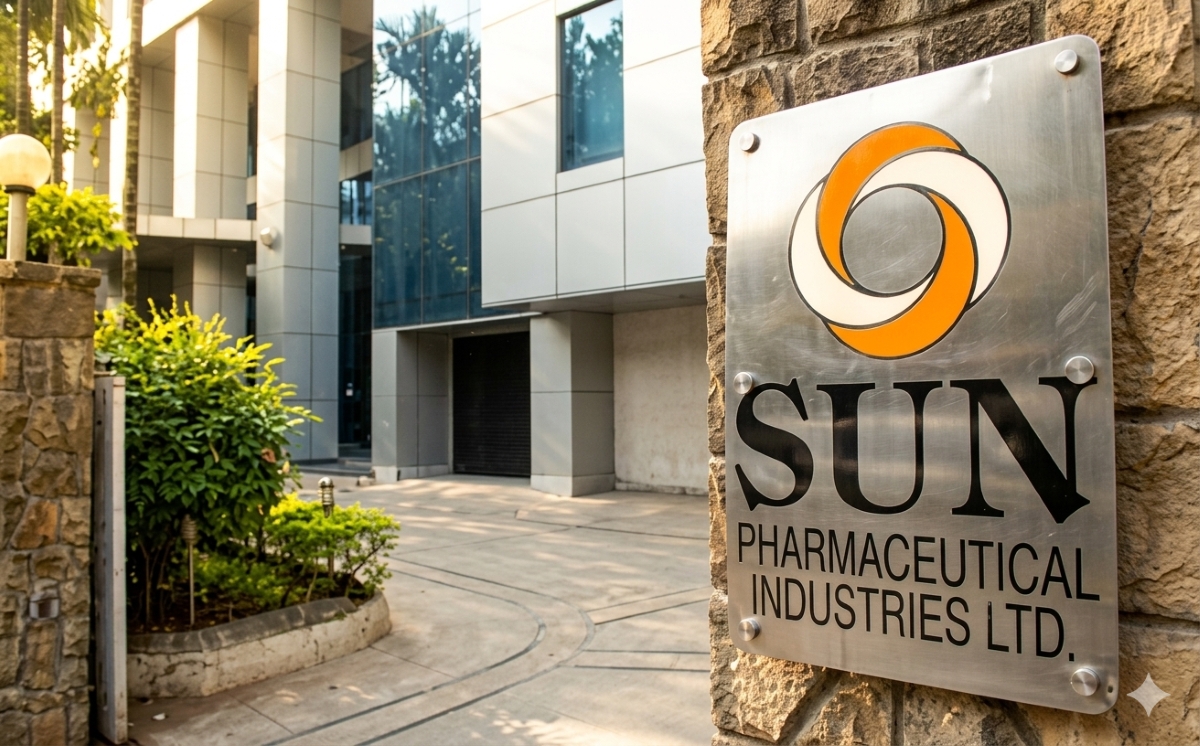
India’s largest pharmaceutical company, Sun Pharmaceutical Industries, has agreed to acquire New Jersey-based Organon & Co. in an all-cash transaction valued at $11.75 billion, marking the largest acquisition ever undertaken by an Indian biopharmaceutical company. The deal, announced on 27 April 2026, will see Sun Pharma pay $14.00 per share for all outstanding Organon stock, representing a 103% premium to Organon’s unaffected closing share price on 9 April 2026, prior to media speculation about the transaction.
The agreement has been approved by the boards of both companies and is expected to close in early 2027, pending regulatory clearances and a vote by Organon stockholders. If completed, Organon will be delisted from the New York Stock Exchange and will cease to be an SEC reporting company.
A Deal That Doubles Sun Pharma’s Scale
Sun Pharma, already the dominant player in the Indian generics market, reported revenues of approximately $6.2 billion for 2025. The acquisition of Organon, which posted identical revenues of $6.2 billion and adjusted EBITDA of $1.9 billion for the year ended 31 December 2025, will effectively double the company’s top-line scale. The combined entity is expected to generate revenue of $12.4 billion, propelling it into the top 25 pharmaceutical companies globally.
The transaction is also set to make Sun Pharma the seventh-largest seller of biosimilars worldwide and a top-three player in global women’s health, a segment in which Organon has built a substantial commercial footprint since its spinoff from Merck in 2021.
Dilip Shanghvi, Executive Chairman of Sun Pharma, framed the acquisition as central to the company’s long-term strategy.
“This transaction represents a significant opportunity for Sun Pharma to build on its vision of Reaching People and Touching Lives,” he said in a joint statement. “Organon’s portfolio, capabilities and global reach are highly complementary to our own, and we believe that bringing the two organisations together can create a stronger and more diversified platform.”
In a candid address to media in Mumbai, Shanghvi also acknowledged the scale of what Sun Pharma is taking on. “I am happy, excited, and also a little bit anxious. It’s a large transaction that we are entering into,” he said, adding that while the company is “debt-averse,” it is “not risk-averse.” He noted that an acquisition of this magnitude “generally would be difficult to get if all times are normal.”
Organon: From Merck Spinoff to Acquisition Target
Organon was established in 2021 as a standalone company following its separation from Merck, known as MSD outside the United States and Canada. Its portfolio spans more than 70 products, including biosimilars, and it operates across 140 countries. Key revenue markets include the United States, Europe, China, Canada, and Brazil, with manufacturing supported by six facilities located across the European Union and emerging markets.
The company’s Executive Chair, Carrie Cox, said the transaction had followed a comprehensive strategic review.
“Following a comprehensive review of strategic alternatives, our Board determined that this all-cash transaction offers compelling and immediate value to Organon stockholders,” she said. “We believe Sun Pharma is well positioned to support Organon’s businesses, employees and patients globally, and to further advance our commitment to delivering impactful medicines and solutions.”
Beyond its commercial footprint, Organon brings a pipeline with genuine growth potential. VTAMA (tapinarof cream), acquired as part of Organon’s $1.2 billion purchase of Dermavant Sciences in 2024, generated $128 million in its first full year on market and holds FDA approval for both plaque psoriasis and atopic dermatitis in adults and children. Patent protection runs to 2036, and an international rollout is planned from 2026, giving Sun Pharma a near-term growth asset with significant ex-US upside. Nexplanon, the market-leading contraceptive implant, and Follistim, used in fertility treatment, are expected to anchor the combined company’s expanded innovative medicines group. The biosimilars segment, while relatively modest at around 11% of Organon’s revenues, has been growing at approximately 13% annually, providing an established commercial and regulatory platform that Sun Pharma can now use as a launchpad into a biosimilars market projected to reach $70 billion by 2035.
Organon’s appeal to Sun Pharma lies not only in its women’s health franchise but also in its biosimilars infrastructure and its established presence in markets where Sun Pharma has historically had limited reach, notably China. Shanghvi specifically identified entry into the Chinese market and gaining a foothold in the global biosimilars business as two of the primary strategic gains from the acquisition.
Financing, Debt, and Market Reaction
The acquisition will be financed through a combination of Sun Pharma’s internal cash reserves and committed bank financing. Organon carried $8.6 billion in debt at the end of 2025, partially offset by a cash balance of $574 million. Post-transaction, Sun Pharma has guided for a net debt-to-EBITDA ratio of 2.3 times, with a stated commitment to reducing that leverage as rapidly as possible.
“This debt, even though large in terms of the overall size, is still going to be 2.3 times the combined company EBITDA, and we have a focused effort towards finding a way to minimise the debt by repaying it as early as possible,” Shanghvi said.
Markets responded positively to the announcement. Sun Pharma’s shares rose by 7% on the day, while Organon’s stock jumped 17%, reflecting the substantial premium on offer. The $14.00 per share price represents a 24% premium to Organon’s closing price on the Friday immediately preceding the deal and a 103% premium to its unaffected price earlier in the month.
If completed, the deal will be by far the largest acquisition Sun Pharma has ever made, dwarfing even the $4 billion Ranbaxy deal of 2014 in both scale and strategic ambition.
Strategic Logic and Analyst Perspectives
From a valuation standpoint, the deal is priced at roughly 6.2 times Organon’s 2025 EBITDA and 1.9 times revenue. Analysts have noted that this sits at the lower end of comparable large-scale pharmaceutical transactions in recent years, many of which have been struck at EBITDA multiples ranging from the low teens to upwards of 20 times.
Analysts at AltG Investment noted that the subdued multiple reflects Organon’s sizeable inherited debt burden and its modest growth trajectory since its Merck spinoff, both of which have weighed on the company’s valuation. However, they also observed that the pricing discipline shown by Sun Pharma could support value creation over the medium to long term, particularly as it gains scale in biosimilars and specialty medicines.
Bhavesh Shah, Managing Director and Head of Investment Banking at Mumbai-based Equirus Capital, offered a measured assessment.
“Deals like this tend to be strategically positive but financially nuanced,” he said, noting that such acquisitions “can be value accretive over the medium to long term” when they strengthen portfolio depth and market reach, but cautioned that in the near term they typically bring “higher leverage, integration costs and execution risks.”
Kirti Ganorkar, Managing Director of Sun Pharma, sought to address integration concerns directly.
“This transaction is a logical next step in strengthening Sun Pharma’s global business,” he said. “Our immediate priorities will be business continuity, disciplined integration and responsible value creation. We see strong potential in leveraging Organon’s talent pool.” He also signalled that revenue synergies from cross-selling and new product launches were expected to materialise over the coming years.
Decades in the Making: The Architecture of Indian Pharma’s Global Push
To understand what the Organon deal represents, it helps to look at how Sun Pharma itself has been built. Founded by Dilip Shanghvi in 1983 with a focus on psychiatry generics, the company grew steadily through disciplined acquisitions: Taro Pharmaceuticals in 2010, Ranbaxy in 2014 in a landmark $4 billion deal, and Checkpoint Therapeutics in 2025, which added an immunotherapy for advanced skin cancer to its oncology portfolio. Each deal extended Sun Pharma’s reach into new geographies or therapeutic segments. The Organon acquisition follows this same logic, but at a scale that none of its predecessors approached.
That acquisition strategy has run in parallel with a deliberate pivot away from generics. Sun Pharma has shifted from a pure-play generics model to a specialty-led strategy, reducing exposure to US generic pricing pressure while strengthening higher-value franchises. Global specialty revenue exceeded $1.2 billion by early 2026, with the specialty segment contributing approximately 20% of total revenue, up from a much smaller base just a few years earlier. The company is ramping up key specialty launches in the US, including UNLOXCYT for advanced cutaneous squamous cell carcinoma and LEQSELVI for severe alopecia areata, with management framing both as part of a sustained innovation-led growth strategy rather than opportunistic product additions.
The Organon deal accelerates this trajectory significantly. Elara Securities has described the transaction as a “step-change” in Sun’s long-term strategy, accelerating its transition towards a globally diversified, innovation-driven pharmaceutical company with multiple growth engines across specialty, branded generics, and biosimilars. Crucially, it also provides something Sun Pharma could not easily build on its own: a ready commercial infrastructure. At the core of the strategy is the ability to use Organon’s established commercial front-end across 140 markets to expand in underpenetrated regions while creating a ready platform to launch in-licensed products, a process that would have taken years to replicate organically.
China is perhaps the most telling example of what that infrastructure unlocks. Ganorkar described China as a “very exciting story,” pointing to a $150 billion pharmaceutical market growing at 5-7% per year, where Organon already holds a sizeable $800 million business anchored in established brands with strong physician loyalty. Sun Pharma has sought a meaningful Chinese presence for years. Through Organon, it arrives with an established base rather than starting from scratch.
Sun Pharma is not alone in this ambition. Across India’s pharmaceutical industry, the direction of travel is consistent. Dr. Reddy’s Laboratories has been building a consumer healthcare presence across more than 30 markets, acquiring the global Nicotinell brand from Haleon in 2024 for £500 million and adding branded assets in women’s health and the central nervous system segment. Cipla has been strengthening its respiratory portfolio. The pattern is coherent: Indian companies that built their foundations on off-patent generics are systematically acquiring the commercial reach, branded portfolios, and therapeutic depth that characterise the major Western pharmaceutical groups.
Implications for Global Pharma
The acquisition reflects broader ambitions among emerging-market pharmaceutical companies to build genuinely global platforms, moving beyond their traditional roles as suppliers of off-patent generics. Sun Pharma has been deliberately shifting its portfolio towards specialty and innovative medicines, and the Organon deal accelerates that transition significantly, with innovative medicines projected to account for 27% of the combined company’s revenue.
The combined company will have a presence in 150 countries, with 18 markets each generating over $100 million in annual revenue, creating one of the most geographically diversified platforms in the global pharmaceutical industry. Organon adds depth in women’s health, biosimilar capabilities, and crucial market access, particularly in China, where Sun Pharma has sought to expand. The combined company will operate a portfolio spanning biosimilars, established branded generics, and specialty medicines across more than 140 countries.
The transaction includes a $120 million termination fee payable by Organon under certain scenarios, alongside standard no-shop and fiduciary-out provisions. Upon closing, Organon will be wholly owned by Sun Pharmaceutical Holdings USA, a subsidiary of Sun Pharmaceutical Industries Limited.
What makes the Sun Pharma-Organon deal significant is not simply its size, though the $11.75 billion price tag is record-breaking for an Indian acquirer. It is what the deal signals about the trajectory of the Indian pharmaceutical industry as a whole. For decades, that industry’s global role was defined by volume and cost efficiency: supplying affordable generics to regulated markets, often invisibly. The companies doing that work were rarely acquiring former subsidiaries of Merck. They were not entering the top 25 pharmaceutical companies globally. They were not building specialty oncology pipelines.
That is changing, and the Organon deal is the clearest statement of intent yet. Whether Sun Pharma can manage the integration, reduce the debt burden quickly enough, and extract the synergies it has promised are legitimate questions that will be answered over the next several years. But the direction of the Indian pharmaceutical industry, measured by where its capital is going and what it is buying, is no longer in doubt.