
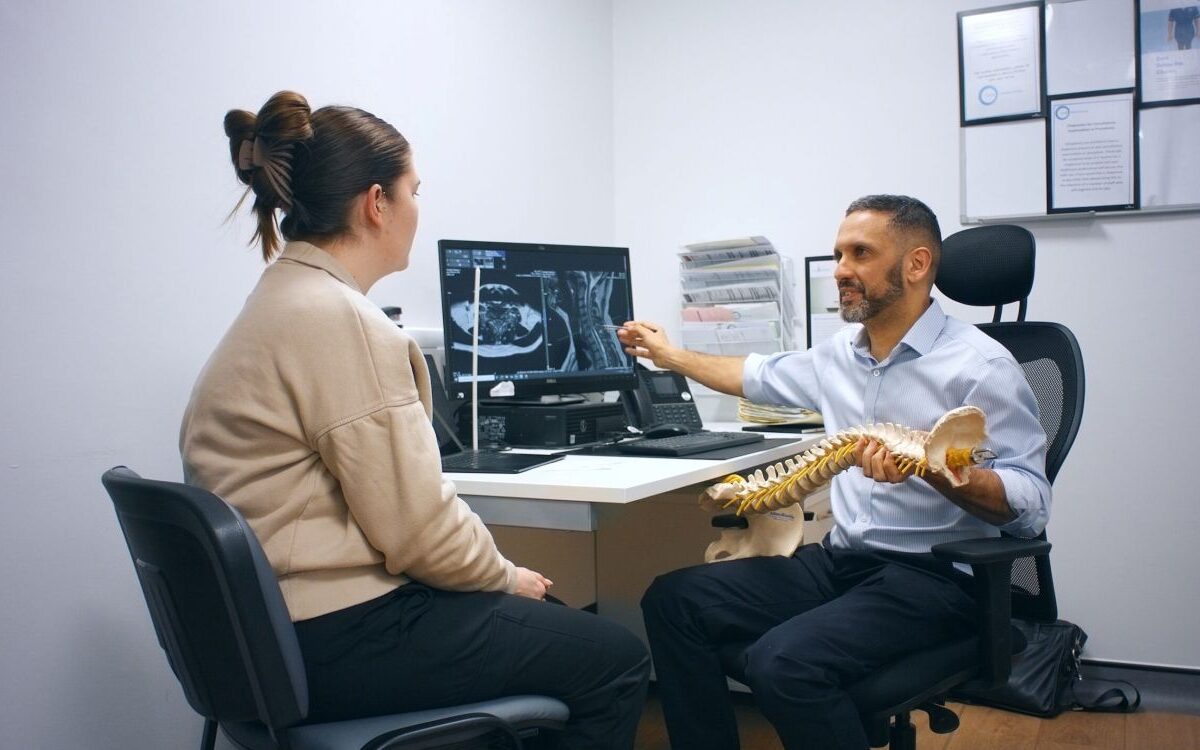
In an era dominated by high-resolution diagnostics, the field of spinal care faces a profound paradox: while our ability to visualise cellular and structural anatomy has never been more advanced, the clinical efficacy of spinal interventions has not risen in tandem. Instead, the abundance of modern magnetic resonance imaging (MRI) has triggered an unintended epidemic of over-treatment, driven by the compulsion to correct radiological anomalies rather than treating the functional patient.
To restore efficiency and improve patient outcomes, the spinal care community must urgently pivot away from treating structural scans and re-prioritise objective, symptom-led clinical judgement.
The Historical Explosion of the ‘Incidentaloma’
To understand how spine care reached this point, we must look back to the structural shifts in diagnostics over the last few decades. In the late 1990s and early 2000s, MRI scanners within the UK healthcare ecosystem were a scarce commodity, reserved strictly for cases displaying clear, severe neurological indications. Consequently, requests were highly targeted, and spine surgery existed largely as a modest subspecialty of orthopaedics and general neurosurgery.
When MRI technology became universally abundant in regional district hospitals, spine care exploded into a highly specialised field. However, this diagnostic influx created a perfect storm. Clinicians suddenly possessed highly detailed images showing natural, age-related wear and tear in the discs and facet joints of patients presenting with generic back pain.
The erroneous assumption that these visible variations were the root cause of pain led to an era where extensive metalwork was thrown unnecessarily into patients’ spines. The long-term data revealed terrible results, forcing the global spinal community to undergo intense scrutiny and radically re-evaluate its metrics for surgical intervention.
The Pathophysiology of Nerve Tolerance vs. Chemical Inflammation
The fundamental flaw of an over-reliance on imaging is that structural compression does not directly correlate with clinical pathology. Human nerves possess a remarkable, frequently underestimated tolerance for mechanical deformation.
In clinical practice, it is entirely common to observe massive disc protrusions compressing a nerve root on an MRI, yet the patient presents with no sciatica, no radicular pain, and entirely normal motor function.
The transition from an asymptomatic structural variation to acute radicular pain is rarely a matter of pure mechanical occlusion; rather, it is a biochemical event. When the outer fibrous lining of a disc – the collagen-based annulus fibrosus – wears thin and tears, the internal nucleus pulposus herniates, releasing a potent cascade of inflammatory chemicals, including prostaglandins, histamines, and cytokines. It is this noxious chemical mixture that stings and irritates the adjacent nerve tissue, generating severe pain and secondary muscle spasms.
Crucially, this inflammatory response is also the body’s natural mechanism for repair. Over time, the body washes away these chemical irritants, and the tear heals naturally using scar tissue formed from collagen fibres, though these are laid down in a disorganised pattern rather than the structured layers of the original disc lining. Though the disc may permanently lose some water content and appear dark or dehydrated on a subsequent MRI, its long-term physiological function remains entirely intact.
Redefining the Boundaries of Surgical Triggers
For a clinical audience, defining the exact boundary between an incidental radiological finding and an absolute indication for surgical decompression must rest entirely on neuro-functional criteria, not the geometric size of a herniation. A minimal, strategically placed disc bulge can cause excruciating pain and progressive motor weakness if it severely pinches a nerve root, whilst a massive extrusion away from the nerve may require nothing more than watchful waiting.
The primary trigger for surgical decompression should be a progressive neurological deficit. If a patient presents with clear, demonstrable weakness in the extremity – such as a drop foot or loss of triceps extension – surgery is indicated to preserve existing motor pathways and optimise functional recovery.
Conversely, when a patient presents with subjective numbness or fluctuating pain without motor deficit, the data supports conservative management. Sensory changes alone are notoriously unpredictable; relieving mechanical pressure does not guarantee the restoration of normal sensation, as the underlying nerve microvasculature adapts dynamically over time.
For pain isolated from motor deficit, the first line of defence must remain conservative: targeted physiotherapy, simple analgesia, and epidural steroid injections to suppress the acute chemical inflammation.
Radiculopathy vs. Myelopathy: Structural Vulnerability
A critical distinction must also be made when diagnosing individual nerve root compression (radiculopathy) versus central spinal cord compression (myelopathy). While the branches of individual nerve roots can tolerate significant localised compression before failing, the central spinal cord – the primary trunk of the central nervous system – is highly vulnerable.
Compression of the spinal cord, particularly within the cervical spine, impacts multiple nerve pathways simultaneously, often manifesting through subtle, easily overlooked systemic symptoms rather than localised pain.
Early clinical indicators of myelopathy include a general disruption of balance, an unsteady or tandem gait, and a loss of fine motor dexterity in the hands – such as difficulty buttoning a shirt or changes in handwriting.
Paradoxically, an MRI may show notable narrowing of the central canal in a patient who remains highly functional. Therefore, meticulous objective physical testing – such as assessing tandem walking and upper limb clumsiness – must dictate clinical decisions, as structural imaging consistently fails to contextualise the true operational state of the central nervous system.
Cultivating Systemic Healthcare Efficiency
The modern trend of patients bypassing primary care to purchase private, direct-to-consumer MRI scans has intensified these challenges. Patients frequently copy detailed, jargon-heavy radiological reports into public AI chatbots, misinterpret standard age-related changes as catastrophic conditions, and enter consultations in a state of severe anxiety.
As spinal care professionals, our primary objective must be to dismantle this anxiety by re-educating both patients and the wider medical community. Taking a comprehensive, open-ended medical history remains the single most effective diagnostic tool in medicine, yielding around 80% of a correct diagnosis long before a scan is ever viewed.
MRIs are merely secondary tools meant to confirm a specific clinical hypothesis. By championing a multidisciplinary, goal-oriented model that judges success by a patient’s mobility and quality of life rather than the aesthetic perfection of their spine, we can eliminate unnecessary surgical morbidity, optimise clinical pathways, and drastically improve healthcare efficiency across the sector.
Author Bio

Mr Anthony Ghosh, Consultant Spinal Neurosurgeon and a UK authority in spine care, trained in London and adapted his microsurgical skills from vascular neurosurgery to make spine surgery less invasive. Practising in Central London, Kent and Essex, Mr Ghosh has also built a large and engaged audience via his YouTube channel, continuing his mission to educate, empower, and keep people moving.