

Precision medicine is no longer a futuristic concept. Genomic panels, pharmacogenomic testing, advanced biomarker analysis, and individualized risk stratification tools are all available today. Yet for the vast majority of patients walking into a primary care office, none of these tools will be part of their visit. The gap between what precision medicine can do and what most patients actually receive is not a technology problem — it is a structural one, embedded in the very model through which most healthcare is delivered.
As a physician practicing direct primary care with a focus on preventive and longevity medicine, I see this disconnect every day. I also see a path forward. One that does not require waiting for the next breakthrough, but rather rethinking how we deliver the breakthroughs we already have.
Precision Medicine Is Available but Not Accessible
The tools of personalized care have matured rapidly. The NIH’s All of Us Research Program has enrolled over 850,000 participants, with more than 15,000 researchers producing over 1,000 peer-reviewed publications using its data. Pharmacogenomic panel testing has been shown to reduce clinically relevant adverse drug reactions by approximately 30%. A 2025 analysis of six decades of adverse drug reaction reports in the United Kingdom found that up to 1 in 11 medication side effects could potentially be avoided through pharmacogenomic-guided prescribing, and that testing just three genes could help prevent 75% of avoidable side effects.
These are not marginal gains. They represent a fundamental shift in how we can approach patient safety, disease prevention, and therapeutic precision.
Yet a 2026 poll of physicians revealed that only 21% actively integrate precision medicine into their practice despite 42% believing it holds major potential for improving patient outcomes. Cost and reimbursement issues were cited by 36% as the primary obstacle, followed by access to testing (21%), insufficient evidence and guidelines (20%), and training gaps (17%).
The science is advancing much faster than the system that delivers it.
The Structural Problem in Primary Care
The average primary care physician manages a panel of 1,800 to 2,500 patients. A family physician would need an estimated 21.7 hours per workday to deliver recommended care to a panel of 2,500. In reality, face-to-face visit time averages 8 to 12 minutes.
In that window, a physician is expected to address acute complaints, manage chronic conditions, reconcile medications, coordinate referrals, and complete documentation. We are also expected to somehow discuss whether the patient might benefit from a genomic panel, an advanced lipid analysis, or a pharmacogenomic test. It simply does not happen. Not because clinicians do not want it to, but because the system does not allow it.
Insurance-driven care compounds the problem. Most payors will not cover advanced biomarker panels or genomic testing until a patient is already symptomatic or meets a disease-state threshold. This is, by definition, reactive medicine. We wait for the milk to get spilled in order to clean it up, not simply move the milk away from the riskiest spot on the counter.
Where Biomarkers Can Change the Trajectory
One of the most underutilized areas in precision medicine is routine biomarker-driven wellness assessment. Consider the Homeostatic Model Assessment of Insulin Resistance (HOMA-IR), a simple calculation using fasting glucose and fasting insulin. Research has demonstrated that elevated HOMA-IR is an early predictor of new-onset type 2 diabetes and chronic kidney disease in non-diabetic individuals, often flagging metabolic dysfunction years before fasting glucose or hemoglobin A1c becomes abnormal.
Yet fasting insulin is not part of a standard metabolic panel. Most patients will never have it measured unless they are already diabetic. The same applies to markers like high-sensitivity C-reactive protein, advanced lipid subfractionation, and hormonal baselines — all of which can reveal trajectories long before disease manifests.
In my practice, I routinely track these markers longitudinally. A patient presents with normal fasting glucose, normal A1c, and a clean standard metabolic panel. By conventional metrics, they are healthy. But an advanced panel reveals an elevated HOMA-IR, rising fasting insulin, and early markers of systemic inflammation. That patient is neither healthy nor optimized. They are on a trajectory toward metabolic disease that standard screening would not catch for another five to ten years. Early intervention at this stage can alter that trajectory entirely.
This is precision medicine in its most practical form: not exotic gene therapies, but smarter use of accessible tools.
A System Designed to Fail Patients
Let’s be blunt about what this means in human terms. Right now, somewhere in America, a patient is about to receive a prescription that their own DNA could have told us would not work — or worse, would cause harm. We have the test. It costs less than the emergency room visit that may follow. And we are not running it.
A 45-year-old woman is being told her labs look “normal” while her fasting insulin climbs silently toward a metabolic cliff. A man in his fifties is cycling through his third antidepressant in 18 months (each one a guess) when a pharmacogenomic panel could have identified the right medication on day one. These are not hypothetical patients. They are in every practice, in every city, every single day.
And patients are beginning to sense it. They know something is missing, that a 15-minute visit and a basic metabolic panel cannot possibly represent the best modern medicine has to offer. So they turn elsewhere: to direct-to-consumer testing companies with no clinical oversight, to wellness influencers peddling unvalidated panels and pseudoscientific interpretations, to corners of the internet where bad information fills the vacuum that we left open. The irony is devastating — patients are seeking precision medicine, just not from us. Every day that we fail to integrate the best available tools into clinical practice, we are not just leaving value on the table. We are abdicating our position of trust and handing it to people who have no business holding it.
We have mapped the human genome. We can sequence a person’s DNA for under $200. We can calculate their insulin resistance from a $15 blood draw. And the dominant model of American primary care still operates as though none of this exists. That is not a gap — it is a chasm.
Direct Primary Care as Proof It Does Not Have to Be This Way
The direct primary care model is not a theoretical alternative. It is functioning proof that precision medicine can work in everyday clinical settings today, not in some distant pilot program.
In DPC, patients pay a monthly membership fee directly to their physician, bypassing insurance for primary care entirely. Panel sizes shrink to 200–700 patients. Visit times expand to 30–60 minutes. The physician stops catering to billing codes and starts answering to the patient. Research confirms what should be obvious: physicians practicing DPC report improved patient outcomes, deeper relationships, and the ability to actually get to the root of clinical problems.
When I removed the insurance intermediary from my practice, the transformation was immediate. I ordered a pharmacogenomic panel for a patient who had suffered through years of failed antidepressants — not because a payor approved it, but because it was the obvious clinical decision that should have been made years earlier. I began tracking metabolic biomarkers quarterly, showing patients their own trend lines — turning invisible risk into something they could see, understand, and act on. Compliance improved. Outcomes improved. Trust improved.
A DPC membership often costs less than a monthly cell phone bill. The barrier to this kind of care is not money. It is a system so entrenched in its own inefficiency that it cannot see the patients it is failing.
The Question We Can No Longer Avoid
There is a final gap that may be the most consequential of all: patients do not know what they are missing. Most have no idea that pharmacogenomic testing exists, that a simple blood draw could reveal metabolic disease a decade before it appears on a standard panel, or that “normal labs” may be masking early dysfunction. This is an information asymmetry with life-or-death consequences — and it will not be solved by journal publications or policy papers. It will be solved by clinicians who step into the public conversation and make precision medicine concepts accessible to the people whose lives depend on them.
Precision medicine does not need another decade of breakthroughs. The tools exist. The evidence base is robust. Programs like the NIH’s All of Us initiative continue expanding. Pharmacogenomic evidence strengthens with every major study. Biomarker science grows more accessible and affordable by the year.
What is missing is not science. What is missing is the will to redesign a system that profits from keeping patients reactive, uninformed, and dependent on a model built for a pre-genomic era.
We can sequence a genome in hours but cannot get a fasting insulin level on a routine wellness panel. We can identify drug-gene interactions that prevent suffering but cannot get a pharmacogenomic test covered until after a patient has already been harmed. We publish thousands of precision medicine papers each year while the average primary care visit remains too short to discuss any of them.
That is where we are. It is not where we have to stay. For those of us practicing in models that prioritize the patient over the payor, the future of precision medicine is not a distant promise — it is already here. The question is how long the rest of the system will force patients to wait for what is already possible.
Author Bio
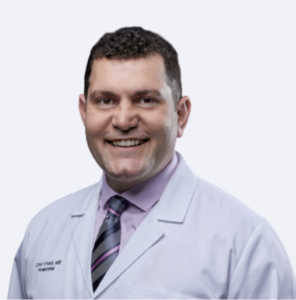
Dr. Zaid Fadul, MD, FAAFP, CEO of Bespoke Concierge MD
Dr. Zaid Fadul, MD, FAAFP, is the CEO of Bespoke Concierge MD, where he focuses on preventative, personalized, and longevity-focused care. He is board certified in Family Medicine and Addiction Medicine and is a Fellow of the American Academy of Family Physicians. A Harvard-trained leader in healthcare systems, Dr. Fadul integrates primary care, functional medicine, and advanced diagnostics to help patients optimize long-term health and performance. He also serves as a U.S. Air Force Reserve flight surgeon, working in high-performance environments that require precision, resilience,