

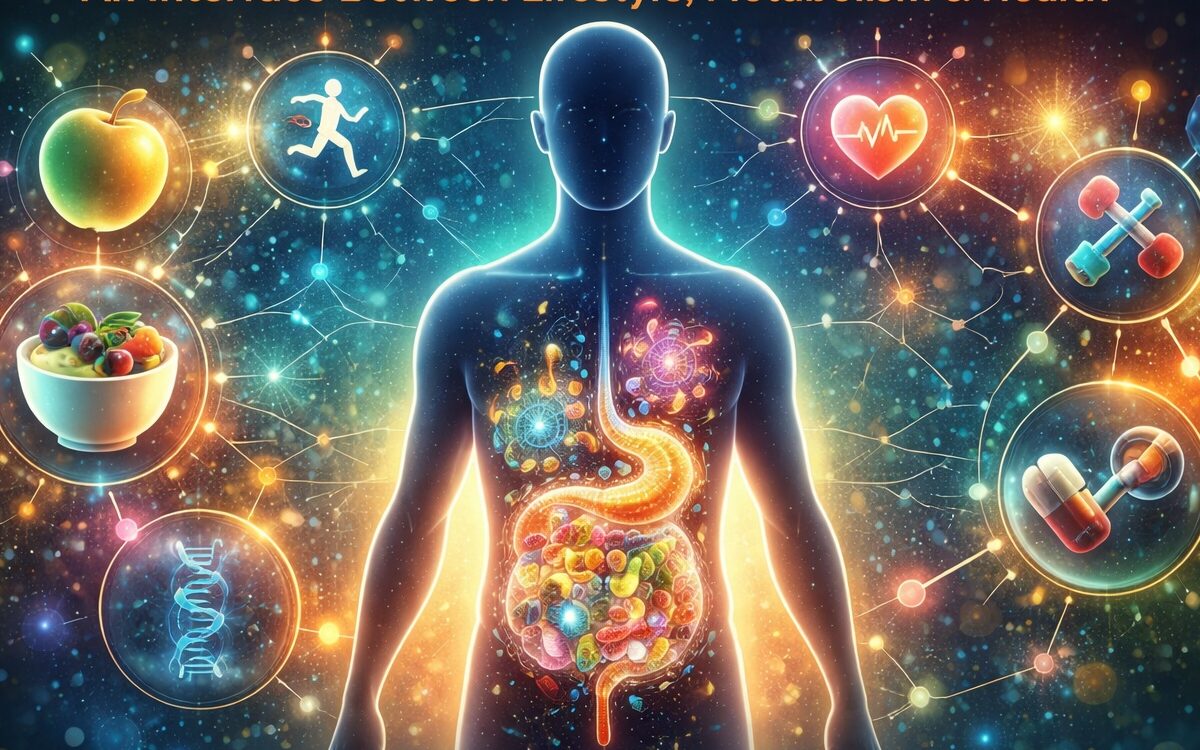
For much of modern medicine, microorganisms have been largely viewed through a narrow lens, as agents of infection to be identified and then eliminated. This perspective, whilst undeniably important, captures only part of the story. Over the past two decades, advances in sequencing technologies and systems biology have revealed something far more complex and indeed more fascinating too. The vast majority of microorganisms associated with the human body are actually not harmful, but instead form an integral and highly interactive component of our biology¹.
The human microbiome, which encompasses bacteria, viruses, fungi and other microorganisms, represents a dense and metabolically active ecosystem within us all. Current estimates suggest that the number of microbial cells within the human body is broadly comparable to the number of human cells², and when viewed from a genetic perspective, the scale becomes even more striking, with microbial genes outnumbering human genes by over 100-fold³. This expanded genetic capacity enables metabolic and regulatory functions that humans alone would be unable to perform.
Most of these microorganisms reside within the gastrointestinal tract, particularly in the colon, where environmental conditions favour microbial growth. However, rather than existing as a static entity, the microbiome is continuously shaped by a range of influences, including diet, environment, medication use, lifestyle behaviours and ageing⁴. In this sense, it’s perhaps more useful to think of the microbiome not as an organ in the traditional sense, but as a dynamic ecosystem, one in which diversity and balance are central to stability and resilience.
Early Life and Microbial Programming
The foundations of our microbiome are laid down very early in life. Colonisation begins around birth, with the exact method of delivery playing a big role in determining the initial microbial exposure. Infants born vaginally are typically colonised by maternal microbial populations, whereas those delivered by Caesarean section acquire a different microbial profile⁵. These early differences appear to have longer-term implications as well however. For example, observational studies have reported associations between Caesarean delivery and an increased risk of allergic disease, asthma, and certain metabolic conditions⁶ later in life. While these relationships are complex and influenced by multiple factors, they highlight the importance of early microbial exposure in shaping immune health and metabolic development. Breastfeeding further refines this development process, with human milk containing specialised oligosaccharides that are not needed by the infant, but instead selectively nourish beneficial microbial populations⁷. In doing this, they contribute to the development of both the microbiome and the developing immune system during a critical window of ‘immune education’⁸. Over the first few years of life, this relatively simple microbial community expands and stabilises into a more diverse and adult-like configuration⁹.
Microbial Metabolism and Host Integration
One of the most significant contributions of the microbiome lies in its ability to metabolise dietary nutrients that would otherwise remain inaccessible to us. Dietary fibres, resistant starches, and various plant-derived compounds, for example, pass largely undigested through the upper gastrointestinal tract and reach the colon, where they are fermented by these microbial communities¹⁰. This process generates healthy compounds called short-chain fatty acids (SCFAs), including acetate, propionate and butyrate, which play important roles in our physiology. Butyrate, in particular, serves as a primary energy source for colonocytes and supports the structural integrity of the gut barrier¹¹. Acetate and propionate, once absorbed into the circulation, are involved in the regulation of lipid metabolism, glucose homeostasis and appetite signalling¹². In addition, microbial activity contributes to the synthesis of small amounts of certain micronutrients, including vitamin K and selected B vitamins¹³. The microbiome is truly a metabolic factory synthesising many different compounds, all of which play essential roles affecting our health.
Barrier Function and Inflammatory Regulation
The intestinal barrier is a thin, but highly specialised lining of the gut, designed to protect the body while carefully regulating what is allowed to pass into the bloodstream. It’s essentially a thin, highly selective lining of cells, supported by mucus and immune defences, acting as a kind of ‘gatekeeper’ that allows nutrients through, while blocking potentially harmful substances. Under healthy conditions, this barrier is tightly regulated, allowing the absorption of required nutrients, while limiting the passage of potentially harmful substances into the bloodstream. The microbiome plays an important role in maintaining this balance, in part through the production of these short-chain fatty acids¹¹. But, when microbial balance is disrupted, however, barrier function can be compromised, thereby leading to increased intestinal permeability, which in turn then allows bacterial components, such as lipopolysaccharides (LPS), to enter the circulation, where they can trigger immune activation¹⁴. This can then in turn contribute to low-grade systemic inflammation, a process now recognised as a key driver of many chronic conditions, including cardiovascular disease, type 2 diabetes and various neurodegenerative disorders¹⁵.
Metabolic Regulation and Energy Balance
The microbiome also appears to influence metabolic health in more direct ways as well. Differences in microbial composition have been consistently observed between individuals with obesity and those who are lean, with reduced diversity often associated with unhealthy metabolic profiles¹⁶. Experimental studies have provided further insight into this relationship. For example, in animal models, the transfer of microbiota from obese donors to germ-free lean recipients has been shown to induce weight gain, even in the absence of increased caloric intake¹⁷. These findings suggest that the microbiome can significantlyinfluence energy extraction, storage and utilisation, as well as interacting with hormonal regulators such as leptin and ghrelin¹⁸. Some researchers now suggest that differences in the microbiome may help explain why some people respond differently to the same diet, influencing how energy is extracted, stored, and regulated. While overall caloric intake remains important of course, the microbiome may partly determine how those calories are processed and how they affect body weight.
At the same time, it is important to recognise that these effects are not driven by individual microbial species, but rather by the overall composition and functional capacity of the microbial community.
The Gut–Brain Axis
Another area of growing interest is the interaction between the microbiome and the central nervous system. The now well-known ‘gut–brain axis’ describes a two way communication network, involving neural, endocrine and immune pathways¹⁹. Through this network, microbial activity can influence brain function, while psychological factors such as stress can also play a role in altering microbial composition²⁰, affecting appetite and even fat storage.
Certain microbial species are involved in the modulation of neurotransmitters, including serotonin and gamma-aminobutyric acid (GABA)²¹. Experimental studies have demonstrated that transferring microbiota from animals displaying anxious behaviour into otherwise healthy animals can induce similar behavioural patterns²². While these findings do not suggest necessarily that the microbiome alone determines mental health, they do point to a meaningful interaction between gut and brain function.
Lifestyle, Environment and Microbial Diversity
Despite its adaptability, the microbiome is sensitive to disruption or ‘dysbiosis’. Antibiotic use, while often necessary, can significantly reduce microbial diversity and alter community composition²³. This is why probiotics are often considered following antibiotic use, with the aim of supporting the recovery of microbial balance, although their effects can vary. In addition, modern lifestyles may contribute to a gradual reduction in microbial exposure, a concept sometimes described as the loss of “missing microbes” ²⁴. Diet seems to be by far the biggest driver here and is likely the most influential modifiable factor. Diets rich in diverse plant-based foods support microbial diversity and the production of beneficial metabolites, such as the short chain fatty acids, whereas diets low in fibre and high in processed foods are associated with less favourable microbial profiles²⁵. Polyphenol-rich foods further contribute to better microbial activity and metabolic regulation²⁶. Other lifestyle factors also play a role. For example, regular physical activity has been associated with increased microbial diversity²⁷, while poor sleep and chronic stress can both disrupt microbial balance and circadian rhythms²⁰.
Emerging Therapeutic Approaches
One of the more striking developments in this field is the use of faecal microbiota transplantation (FMT), in which microbial communities from a healthy donor are introduced into a recipient with the aim of restoring microbiome balance. This approach has been shown to be highly effective in the treatment of recurrent Clostridium difficile infection²⁸. Beyond this specific application, research is exploring the potential role of FMT in a range of other conditions, including inflammatory bowel disease (IBD) and various metabolic disorders²⁹. Whilst promising, this area still remains in its early stages, and further work is needed to understand long-term outcomes and appropriate clinical use.
Conclusion
Taken together, these findings point towards a fundamental shift in how we understand our own human biology. The microbiome is not just a passive collection of microorganisms, but an active and responsive component of physiological regulation. It reflects, and is shaped by, the way we live, from the foods we eat to the very habits we practice each day.
As research continues to develop, the microbiome is likely to become an increasingly important focus in both prevention and treatment strategies. The challenge moving forward is not to attempt to control this system in isolation, but to better understand how to support it through broader lifestyle and environmental approaches.
About Dr Max Gowland

Dr Max Gowland
Dr Max Gowland is a UK biochemist with over 30 years’ experience in nutrition and health science, with a specialist interest in ageing and longevity. He specializes in helping people stay active and healthy in later life. A recognized media commentator, Dr Max is passionate about evidence-based nutrition, longevity and the impact ageing has on our bodies.
Discliamer: Dr Gowland is the founder of Prime Fifty, a nutritional supplement company. This article was written independently and does not promote any commercial products.