
For decades, longevity has been a frontier of scientific exploration, pushing the boundaries of what we believe is possible for human health and lifespan. While incremental progress has been made in understanding the biology of aging, we are now on the cusp of a new era—one defined by radical technologies that could reshape medicine as we know it. I see two areas in particular that are poised to move from the laboratory to the clinic: 3D biofabrication and the artificial womb.
These technologies represent a tangible shift toward a “replacement” paradigm, where failing organs and tissues are no longer a life sentence but components that can be repaired or replaced. The common thread weaving these two frontiers together is the immense biological challenge of vascularization—the creation of intricate networks of blood vessels essential for any complex tissue to survive.
3D Biofabrication: From Lab Bench to Bedside
Organ failure remains a leading cause of death for individuals over 65, with more than 100,000 people currently on transplant waiting lists in the United States alone. Thirteen patients die each day waiting for an organ. 3D biofabrication offers a transformative solution: the ability to print functional, living tissues and, eventually, entire organs. This technology is rapidly maturing, with significant milestones signaling its clinical viability.
One of the most persistent hurdles in creating thick, complex tissues has been the inability to embed a functional vascular network. Without blood supply, cells starve and die. Recent breakthroughs are now solving this problem. Researchers at Harvard’s Wyss Institute have developed a novel 3D bioprinting method called “coaxial sacrificial writing in functional tissue” (co-SWIFT) [1]. This technique enables the printing of interconnected, multi-layered blood vessels—complete with endothelial cells forming their inner lining—directly within living cardiac tissue. In a landmark experiment, cardiac tissue printed with these vessels began to beat synchronously after five days of perfusion, demonstrating that the tissue was healthy and functional.
This academic progress is being matched by commercial momentum. United Therapeutics, a public benefit corporation, in partnership with 3D Systems, has developed some of the most complex 3D-printed biological structures to date, including a human lung scaffold capable of gas exchange in animal models [2]. The company is actively developing computational models to inform the design of its 3D-printed lungs and pursuing regulatory engagement with the FDA as part of its “Print to Perfusion” program. While a fully printed lung for human transplant is still on the horizon, United Therapeutics has already achieved a separate regulatory milestone: FDA clearance for the first human clinical trial of a bioengineered organ through its UKidney xenotransplantation program. These parallel efforts underscore the accelerating convergence of bioengineering and regulatory readiness.
The commercial pipeline extends to startups as well. Companies like Frontier Bio have developed tissue-engineered blood vessels that demonstrate zero thrombosis, significant cell infiltration, proper endothelium formation, and seamless integration with adjacent tissue in large animal studies—a dramatic improvement over conventional synthetic vascular grafts, which experience failure rates as high as 65%. These results suggest that the field is approaching a tipping point where biofabricated vascular structures can reliably outperform their synthetic predecessors.
The Artificial Womb: Engineering the Origins of Life
While 3D biofabrication aims to replace what is broken, the concept of the artificial womb—or ectogenesis—seeks to create a controlled environment for life to develop outside a natural uterus. Once the realm of science fiction, this technology is now a serious focus of research, driven by many of the same principles of tissue and vascular engineering.
The development of a functional artificial womb hinges on recreating the complex, vascularized environment of the uterine wall. The endothelium—the inner lining of blood vessels—is the critical interface for nutrient and gas exchange. The ability to engineer this layer at scale is paramount.
The Wyss Institute at Harvard is pioneering work in this space. A program led by the renowned geneticist Professor George Church, supported by a $1.5 million grant from The Colossal Foundation, is integrating genome engineering and synthetic biology to develop scalable systems that can support embryonic development outside a natural uterus [3]. The research was initially funded with an eye toward wildlife conservation—providing a means to grow embryos of endangered species in safe, controllable environments without surrogate mothers. But its implications reach far beyond conservation. It could one day offer a lifeline for extremely premature infants, revolutionize reproductive biology, and extend the window of fertility.
It is worth acknowledging that ectogenesis raises important ethical questions that the scientific community is actively grappling with. Scholars and bioethicists have raised concerns around reproductive autonomy—including who has the right to decide whether a fetus should be placed in an artificial womb—as well as questions about how the technology might redefine legal and social concepts of viability, parenthood, and consent. Others have pointed to issues of equitable access and the risk that, without thoughtful regulatory frameworks, artificial womb technology could deepen existing societal inequalities rather than alleviate them. These are not reasons to halt research, but they underscore the need for development to proceed hand-in-hand with robust ethical deliberation and inclusive policy dialogue.
The convergence of these fields is striking. The vascularization breakthroughs demonstrated by co-SWIFT—engineering multi-layered, endothelialized blood vessel networks within living tissue—represent precisely the type of foundational capability that artificial womb development will require. Building a functional, vascularized uterine environment demands the same mastery of endothelium tissue engineering that is now enabling printed organs to survive and function. This convergence is not coincidental; it reflects a broader technological trajectory in which advances in one domain of tissue engineering accelerate progress across others.
The Road Ahead
The journey from a “moonshot” idea to a clinical reality is long and demanding. Yet, the progress in 3D biofabrication and artificial womb technology demonstrates that these fields are advancing faster than many anticipated. Regulatory bodies are engaging—as evidenced by United Therapeutics’ FDA milestones—and both public and private capital are fueling the transition from academic research to commercial viability.
What unites these two seemingly disparate frontiers is a single biological insight: that mastering vascularization is the key to manufacturing, repairing, and regenerating complex living systems. If the current trajectory holds, we may be entering an era in which organ failure is no longer a terminal diagnosis, and the boundaries of human development are no longer fixed by biology alone. The scientific, ethical, and regulatory challenges remain substantial—but so does the potential to fundamentally improve human health.
Author Bio
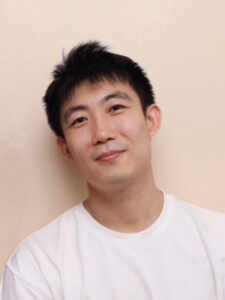
Boyang Wang, Founder of Immortal Dragons
Boyang Wang is the founder of Immortal Dragons, a longevity fund based in Singapore. He holds a Bachelor’s degree in Computer Science from the National University of Singapore and attended Yale University for graduate studies in Computer Science before leaving to pursue entrepreneurship. Prior to founding Immortal Dragons, he established several technology startups. He also currently serves as a senior venture fellow at Healthspan Capital.
Conflict of Interest Disclosure: The author is the founder and managing partner of Immortal Dragons, a purpose-driven longevity investment fund. Immortal Dragons has made investments in companies operating in the 3D biofabrication space, including Frontier Bio. The views expressed in this article are the author’s own and should not be construed as investment advice. Readers should be aware of this financial interest when evaluating the perspectives presented herein.