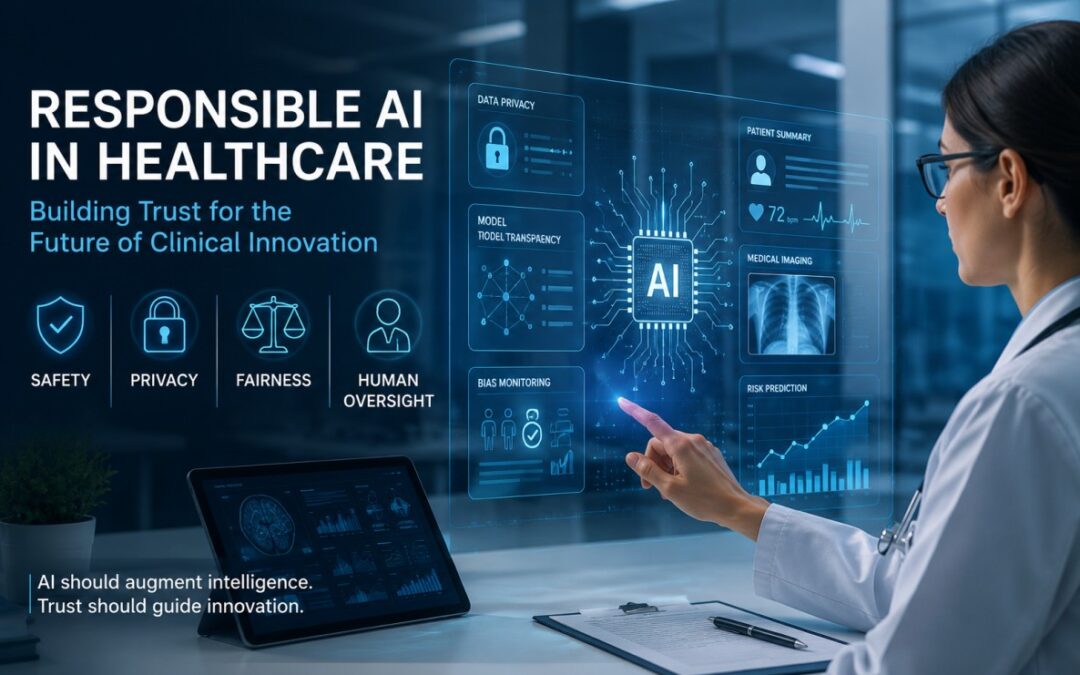


Artificial intelligence is transforming healthcare at a remarkable pace. From clinical documentation and predictive analytics to patient engagement and operational automation, AI is being positioned as a powerful force for improving how care is delivered.
But there is one major problem the industry continues to underestimate: AI is only as effective as the data behind it.
Today, many healthcare organizations are investing in advanced AI solutions while still operating within fragmented data environments. Systems remain disconnected. Information is trapped in silos. Patient records are scattered across EHRs, specialty platforms, imaging systems, billing applications, portals, and third party tools that were not built to work together seamlessly.
This creates a serious gap between innovation and infrastructure.
AI has extraordinary potential, but it cannot independently solve healthcare’s data fragmentation problem. In fact, when data is incomplete, inconsistent, or disconnected, AI can amplify the problem rather than fix it.
Before healthcare can fully realize the promise of AI, it must first address the foundation beneath it: interoperability.
The Hidden Problem Behind Healthcare Innovation
For years, healthcare leaders have been working to improve efficiency, care coordination, and decision making. Yet one foundational issue continues to slow progress: interoperability.
Many of the applications still used across healthcare were built years ago, long before today’s digital expectations. They were not designed to easily connect with modern technologies, exchange data seamlessly, or support the level of integration healthcare now requires.
As a result, Clinicians spend valuable time searching for patient information across multiple platforms. Administrative teams manually re enter data between systems. Patients repeat medical histories during every transition of care. Leaders attempt to make strategic decisions using incomplete or inconsistent datasets.
These are not minor inconveniences. They affect care quality, staff productivity, patient trust, and organizational performance.
AI does not automatically solve these challenges.
If the systems feeding AI tools are fragmented, then the intelligence generated from them will also be fragmented. A sophisticated algorithm cannot produce reliable insight from unreliable data.
Healthcare does not simply have an AI adoption challenge. It has a data connectivity challenge.
Why Interoperability Matters More Than Ever
In healthcare, having data is not enough. The real value comes when the right information reaches the right person at the right moment.
Interoperability is the ability of healthcare systems, applications, and technologies to securely exchange, understand, and use data across organizations and platforms.
At its best, interoperability creates a connected healthcare ecosystem where providers have access to the right information at the right time, enabling faster decisions, stronger collaboration, and better patient outcomes.
This becomes increasingly critical as healthcare grows more complex.
Patients today move across multiple care environments including hospitals, urgent care centers, specialists, telehealth platforms, outpatient facilities, pharmacies, and rehabilitation providers. Without interoperable systems, continuity of care suffers.
A physician treating a patient should not have to piece together fragmented records from multiple systems just to understand medication history, prior diagnoses, or recent lab work. A patient should not have to act as the bridge between disconnected providers.
Interoperability removes those barriers by creating connected workflows and unified access to information. It transforms data from static records into actionable intelligence.
More importantly, interoperability creates the environment where AI can actually succeed.
AI Without Interoperability Creates Risk
There is understandable excitement around AI’s ability to improve healthcare efficiency, reduce burnout, and support decision-making. However, many organizations are implementing AI solutions before resolving the underlying interoperability gaps that directly impact data quality.
When AI is built on fragmented data, it does not create clarity. It can create risk.
An AI tool may be highly advanced, but if it is trained on incomplete datasets can produce inaccurate recommendations. Inconsistent terminology across systems can distort predictive analytics. Duplicate records can skew patient insights. Data silos can prevent AI tools from capturing the full clinical picture necessary for safe and effective decision-making.
In healthcare, these are not small operational inconveniences. They directly affect patient care, compliance, financial performance, and organizational trust.
The industry cannot afford to treat interoperability as a secondary initiative while prioritizing AI adoption. The two must evolve together.
This is why the most important AI question is not simply:
“How quickly can we implement it?”
It is:
“Is our data foundation strong enough to support it responsibly?”
That shift in thinking is critical.
Interoperability Is Not Just a Technical Issue
One of the biggest misconceptions in healthcare is that interoperability is simply a technology problem.
It is not.
Interoperability is a leadership priority, a collaboration requirement, and a strategic business responsibility.
Successful interoperability requires alignment between technology teams, clinical leadership, operational stakeholders, compliance officers, and executive decision makers. It requires organizations to move beyond short term fixes and build long term infrastructure designed for scalability and collaboration.
It also requires trust.
Healthcare organizations must trust that systems can securely exchange sensitive information while maintaining compliance, protecting patient privacy, and preserving data integrity. Vendors must prioritize open collaboration rather than closed ecosystems. Leadership teams must recognize that true transformation requires investment in foundational systems, not just front-end innovation.
Technology alone does not create connected healthcare. Strategic alignment does.
The Human Impact of Connected Systems
While interoperability is often discussed in technical language, its greatest impact is deeply human.
When systems communicate effectively, clinicians spend less time navigating administrative friction and more time focusing on patients. Care coordination improves. Delays decrease. Duplicate testing is reduced. Patients experience smoother transitions between providers and greater confidence in their care journey.
Interoperability also helps reduce clinician burnout, which continues to be one of healthcare’s most urgent workforce challenges. Physicians and nurses should not spend hours managing disconnected workflows when technology should be simplifying those processes.
Digital transformation should never be about technology for technology’s sake. It should be about building systems that better support people, improve care experiences, and help healthcare teams work more effectively.
AI can absolutely play a powerful role in that future, but only when built on connected, reliable, interoperable foundations.
The Future of Healthcare Depends on Collaboration
The future of healthcare will not be defined by how quickly organizations adopt AI. It will be defined by how well they build connected ecosystems where data, technology, and people can work together more effectively.
Interoperability is no longer optional. It is the infrastructure that modern healthcare depends on.
Organizations that prioritize interoperability today will be better positioned to leverage AI responsibly tomorrow. They will operate more efficiently, deliver stronger patient outcomes, improve workforce experience, and adapt faster to the evolving demands of healthcare innovation.
The conversation around AI in healthcare is important, but we cannot overlook the foundational work still required beneath it.
Because before healthcare can become truly intelligent, it first has to become truly connected.
Author Bio

Anita Nayak, Founder and CEO of ClinDCast
Anita Nayak is a healthcare technology leader, speaker, and founder of ClinDCast, a Florida-based healthcare IT firm specializing in interoperability and digital transformation. With a foundation in IT engineering, she has built ClinDCast into a trusted partner for leading healthcare organizations, helping hospitals improve efficiency, streamline data, and enhance patient outcomes.
Under her leadership, the company drives advancements in system connectivity, data integration, and digital health strategies that align with the future of patient-centered care. Anita is frequently invited to share her insights on the role of technology in transforming healthcare delivery and strengthening operational resilience.
Beyond her role as CEO, Anita is passionate about mentorship and advancing STEM. She leads pro bono training programs at the University of South Florida, advocates for inclusion in technology, and speaks nationally on healthcare innovation, interoperability, and leadership. Her work reflects a commitment to integrity and making a positive impact in both healthcare systems and communities.