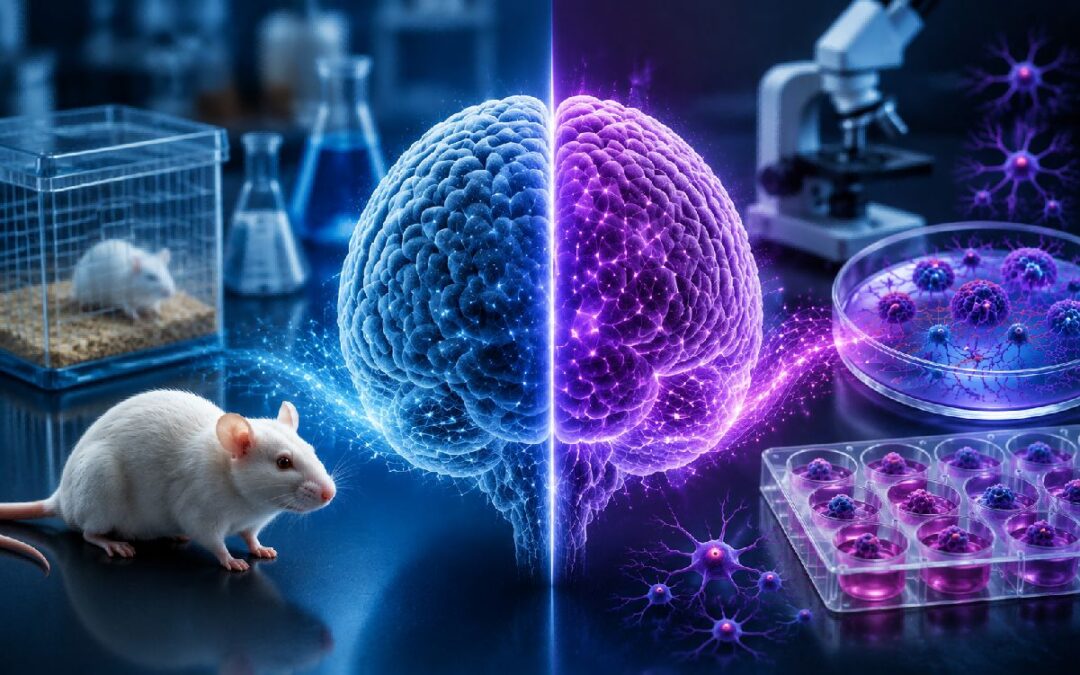
While animal models have played a central role in safety assessment and biological research for decades, advances in cellular biology, computational modelling, and micro physiological systems are prompting scientists to explore new ways of generating human-relevant data. Here, Matt Stevenson, Scientific Substantiation Senior Manager at Imperial Brands Science, examines how Toxicity Testing in the 21st Century (TT21C) is helping to reshape biological testing by focusing on the mechanisms that drive toxicity and disease, and what this could mean for future product development and consumer safeguarding.
As scientific understanding of human biology continues to evolve, researchers are increasingly interested in methodologies capable of providing mechanistic insight into biological responses. Collectively known as New Approach Methodologies (NAMs), these approaches are contributing to a broader shift towards human-relevant science.
Why biological testing is evolving
Animal models have supported scientific research for decades, helping researchers investigate safety, efficacy, and disease mechanisms before products progress into wider evaluation. However, as scientific understanding advances, there is growing recognition that biological responses can vary significantly between species, creating challenges in research and data-gathering when attempting to predict how findings may translate to humans.
Alongside this, scientists are seeking to understand whether substances cause particular biological effects, and the mechanisms responsible for driving that response. As therapies and products become more sophisticated, there is increased demand for methodologies capable of providing deeper insight into the biological pathways associated with toxicity and disease.
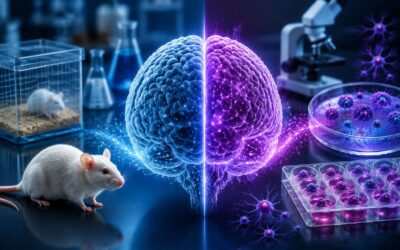
For example, researchers at Imperial College London are exploring organ-on-chip systems capable of modelling human tissue under laboratory conditions. By recreating aspects of human physiology, these systems can help investigate how biological pathways respond to drug exposure and generate more human-relevant data than traditional models alone. As these technologies continue to evolve, they are becoming an increasingly valuable component of evidence generation across multiple scientific disciplines.
What is TT21C and why does it matter?
This broader shift towards mechanistic toxicology is embodied by the principles of TT21C. Developed by the US National Research Council (NRC) in response to rapid advances in in-vitro science and technology, it seeks to enhance understanding of how substances interact with biological systems and contribute to adverse health outcomes.
Rather than focusing solely on whether a substance causes an adverse outcome, TT21C seeks to understand the biological pathways that potentially lead to such an outcome. This allows researchers to investigate the mechanisms underpinning toxicity and disease, helping to build a more detailed understanding of biological responses.
Traditional toxicology often relies on observing biological effects in whole organisms. While these approaches are still valuable, TT21C complements them by incorporating methodologies capable of examining cellular and molecular events in greater detail. By investigating the pathways involved in toxicity, researchers can generate evidence that may help explain why a biological response occurs, rather than simply confirming it has occurred.
This emphasis on mechanistic understanding has helped drive the development and adoption of several human-relevant testing approaches. Collectively known as NAMs, these technologies form a key part of the TT21C framework and are increasingly used to support modern safety assessment and scientific research.
Understanding NAMs
Rather than representing a single technology, NAMs encompass a broad range of scientific tools designed to generate biological data in ways that complement traditional testing approaches.
These methodologies include advanced cellular assays, organ-on-chip systems, high-content screening, omics technologies, and computational toxicology. While each serves a different purpose, they both help researchers investigate biological responses at cellular, molecular, and systems levels.
For example, human cell-based assays can be used to explore how cells respond to chemical exposure under controlled conditions, while organ-on-chip technologies can recreate early key events of diseases within laboratory environments. Similarly, computational approaches can help identify patterns within large biological datasets and support predictive modelling of toxicological responses.
NAMs are not intended to provide a single solution to every question but rather offer researchers a toolkit of complementary approaches that can help generate deeper insight into the biological mechanisms associated with toxicity and disease.
For example, the European Commission (EC) has unveiled a roadmap to phase out animal tests in chemical safety assessments across the EU, which includes more focus on NAMs. Similarly, the US Food and Drug Administration recently issued draft guidance intended to help manufacturers validate NAMs based on human-centric data instead of outmoded animal-based models.
Opportunities and challenges
Interest in TT21C and NAMs continues to grow, but their successful adoption depends on more than technological innovation. Researchers, industry, and regulators must be confident that the data generated is robust, reproducible, and suitable for its intended purpose.
Validation remains an important consideration. New methodologies must demonstrate they can reliably generate meaningful biological insights, particularly when supporting safety assessment and regulatory decision making. This requires ongoing evaluation, standardisation and collaboration across research organisations, industry, and regulatory bodies.
Many scientists view TT21C as an opportunity to strengthen the overall evidence base rather than replacing existing approaches. Combining traditional methodologies with human-relevant tools allows researchers to draw upon multiple sources when investigating biological responses, helping to build a more comprehensive understanding of toxicity and disease.
As scientific understanding of human biology continues to evolve, researchers are increasingly exploring methodologies capable of generating more detailed and human-relevant insights into toxicity and disease. Through TT21C and the development of NAMs, advances in biological testing are helping to expand the range of tools available to scientists. While challenges around validation and adoption remain, these approaches have the potential to contribute to future product development and consumer safeguarding by supporting a deeper understanding of biological responses.
The approach continues to gain momentum. In the UK, for example, last year the UK Government announced plans to support the phasing out of animal testing in science under a new plan to deliver on their manifesto commitment, unveiled by Science Minister Lord Vallance. The roadmap – supported by £75 million in funding – backs researchers to seize on new and developing opportunities to replace certain animal tests, currently still used by many researchers and industry to determine product safety.
Author Bio