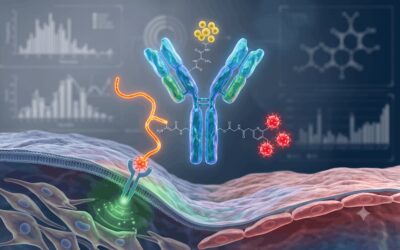
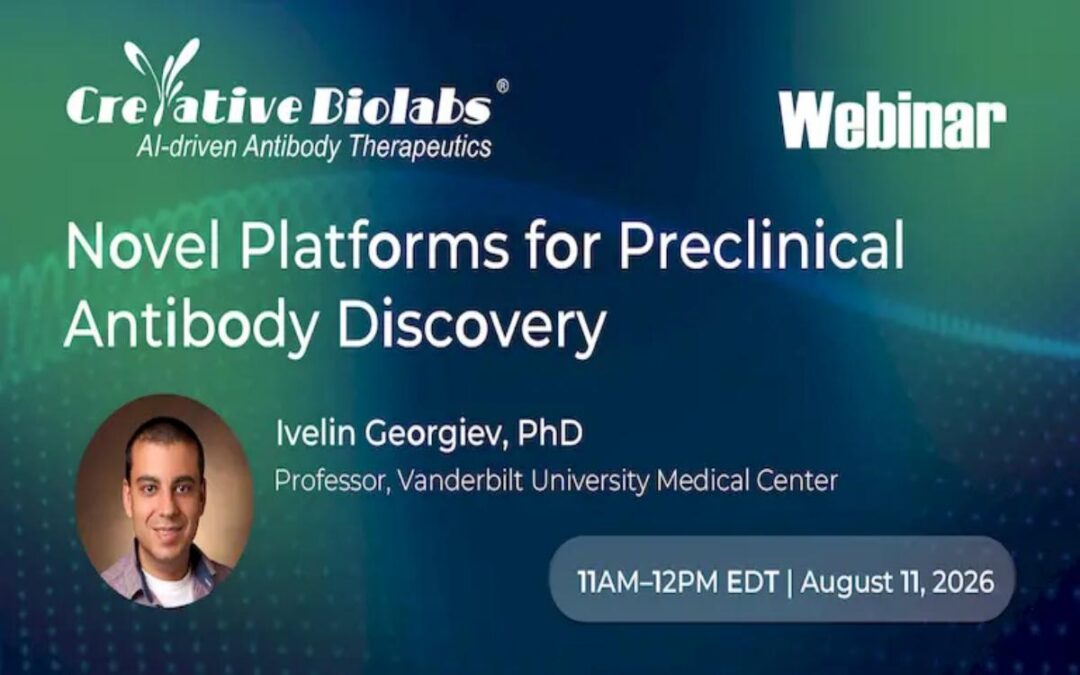
Antibody library screening is widely used to identify antibody fragments, such as scFv, Fab, and single-domain antibodies, from large molecular repertoires. Compared with immunization-dependent approaches, library screening can be especially useful for challenging...
CAR-T Therapy Reaches Solid Tumours for the First Time
China's National Medical Products Administration (NMPA) approved satricabtagene autoleucel (satri-cel) on 22 June 2026, making it the world's first CAR-T cell therapy approved for a solid tumour. Developed by Shanghai-based CARsgen Therapeutics, satri-cel is cleared...
Why Regenerative Medicine May Reshape the Future of Spinal Fusion
The repair and replacement of bone is a major clinical problem. The need for efficient treatments of spinal injuries, has become increasingly common and remains a significant challenge in the field of orthopedics. Regenerative medicine in bone repair is the use of...
CRISPR Gene Editing 2026: Rare Diseases, Cancer and Autoimmune
CRISPR gene editing in 2026 is no longer a technology to watch. It is a technology delivering results. Across three distinct disease areas, rare inherited conditions, haematologic and solid cancers, and autoimmune disease, clinical programmes are accumulating...
Biotech IPO Surge: 2026’s First Half Beats 2025
The biotech IPO surge has turned 2026 into a comeback year, and one statistic captures it: in the first six months, biopharma companies raised more from initial public offerings than the entire sector managed across the whole of 2025. After a punishing multi-year...
Why AI May Increase Cognitive Burden Before Reducing It
It seems that artificial intelligence is being proposed as an answer to what could be considered as one of the most serious problems facing the life sciences sector – the problem of information overload. There has never been as much data, documentation, literature,...
Why AI May Increase Cognitive Burden Before Reducing It
It seems that artificial intelligence is being proposed as an answer to what could be considered as one of the most serious problems facing the life sciences sector – the problem of information overload. There has never been as much data, documentation, literature,...
Improving Oncolytic Virus Development for Cancer Immunotherapy Research
Oncolytic virus development is gaining increasing attention in cancer immunotherapy research because of its ability to combine direct tumor cell killing with immune activation. Unlike conventional therapeutic strategies that focus on one pathway or one target,...
Importance of Targeted Radiotherapeutics in Treating CNS Cancers
Radiation therapy is one of the important tools in the fight against cancer. About 50% of all cancer patients receive radiation therapy. Few modalities have had the same lasting impact across such a broad range of tumor types. In central nervous system (CNS) oncology,...
The Scaling Crisis in Cell and Gene Therapy
There are FDA-approved therapies on the market today that can permanently resolve a disease in a single administration, for a price of one to three million dollars. The reimbursement system responsible for covering that cost was built around medications that people...
The Sourcing Channel Moved East
A record year of out-licensing pulled the West's early pipeline sourcing toward Shanghai and Suzhou. The discount that started it is already being competed away. What outlasts it is a two-source model for global pharma innovation. For most of the past decade, a...
Kailera Therapeutics IPO: A $625M Signal for Biotech
When Kailera Therapeutics priced its initial public offering on 16 April 2026, it did more than raise money. The Kailera Therapeutics IPO set a new benchmark for an industry that had spent the better part of three years in the wilderness. Priced at $625 million, it...
Biotech’s Missing Ingredient: Execution
Biotech has never lacked scientific innovation. What the industry continues to underestimate is how difficult it is to turn promising science into an actual therapy that reaches patients. Over the last several years, I have seen strong assets struggle for reasons...
Hallmarks of Ageing as a Framework: How the Research Field is Evolving
When López-Otín and colleagues published “The Hallmarks of Aging” in Cell in 2013, they did something the field of biogerontology had quietly needed for decades: they created a framework. Nine interconnected processes, from genomic instability and telomere attrition...
Biotech M&A 2026: Every $1B+ Deal so Far and What is Driving Them
The biotech M&A 2026 market has entered what many analysts are already calling a breakout year. In the first four months of 2026 alone, pharma and biotech companies have signed deals worth approximately $84 billion, and the pipeline of transactions shows no sign...
Using AI to Translate Fragmented Evidence into Formulation Logic
Thesis Early-stage life science development is increasingly constrained not by lack of data, but by fragmented, multi-scale evidence that resists straightforward interpretation. AI systems can assist in structuring this complexity – through literature triage,...
Invisible Architect: How Infrastructure Drives Life Sciences Growth
In the high-stakes world of drug discovery and biomanufacturing, the spotlight typically shines on breakthrough modalities, venture rounds, and FDA milestones. Yet, behind every clinical success is a physical environment that either accelerated the science or quietly...
Why “Hot” Therapeutic Areas Break Traditional Benchmarks
In fast-moving areas like radiopharmaceuticals and precision immunology, the biggest portfolio risk is often not uncertainty itself, but false certainty created by mismatched benchmarks. As life sciences enters a more disciplined cycle, one pattern shows up across...