
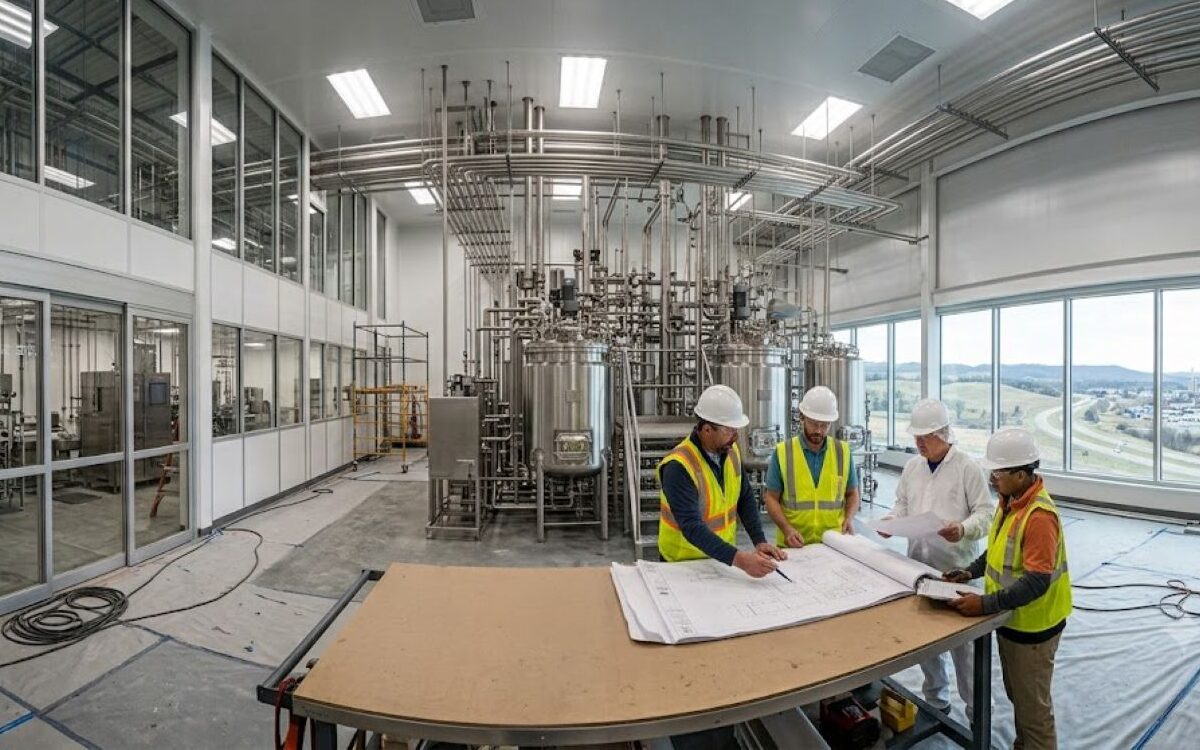
The United States Food and Drug Administration has selected seven pharmaceutical and biotechnology companies for its FDA PreCheck Program, a pilot initiative designed to accelerate the establishment of new domestic drug manufacturing facilities. Announced on 7 August 2025 and launched on 1 February 2026, the programme represents one of the most significant regulatory interventions in recent years aimed at reducing America’s dependence on overseas pharmaceutical production. With more than half of all pharmaceuticals distributed in the US manufactured abroad, and only 11 per cent of the manufacturers producing active pharmaceutical ingredients (APIs) for FDA-approved products based domestically, the FDA PreCheck Program addresses what officials have described as a national security vulnerability embedded in the country’s drug supply chain.
How the FDA PreCheck Program Took Shape
The origins of the FDA PreCheck Program trace back to Executive Order 14293, “Regulatory Relief to Promote Domestic Production of Critical Medicines,” signed on 5 May 2025. The order directed the FDA to streamline its review processes for domestic pharmaceutical manufacturing while eliminating unnecessary regulatory barriers and maximising review timeliness. Industry stakeholders had long argued that regulatory uncertainty was among the most significant deterrents to building new manufacturing capacity on American soil, where facility construction can take years and cost billions of dollars before a single product reaches the market.
The scale of the imbalance is set out in the FDA’s own programme documentation. As of 2025, approximately 53 per cent of branded drug products and 69 per cent of generic drug products distributed in the US were manufactured outside the country. Among manufacturers producing APIs for FDA-approved products, 11 per cent were based in the United States, against 22 per cent in China and 44 per cent in India.
Then FDA Commissioner Marty Makary framed the initiative as a direct response to structural weaknesses in the pharmaceutical supply chain.
“Our gradual overreliance on foreign drug manufacturing has created national security risks,” Makary stated in the August 2025 announcement. “The FDA PreCheck initiative is one of many steps FDA is taking that can help reverse America’s reliance on foreign drug manufacturing and ensure that Americans have a resilient, strong, and domestic drug supply.”
The programme’s design was shaped by extensive industry consultation, including a public meeting held on 30 September 2025 that focused specifically on the challenges of onshoring drug and biological products manufacturing. Federal Register comments submitted during this period reflected broad industry support for the concept of earlier regulatory engagement during facility planning and construction phases.
How the Programme Works
The FDA PreCheck Program operates through a two-phase structure that fundamentally reorders the traditional relationship between facility construction and regulatory review.
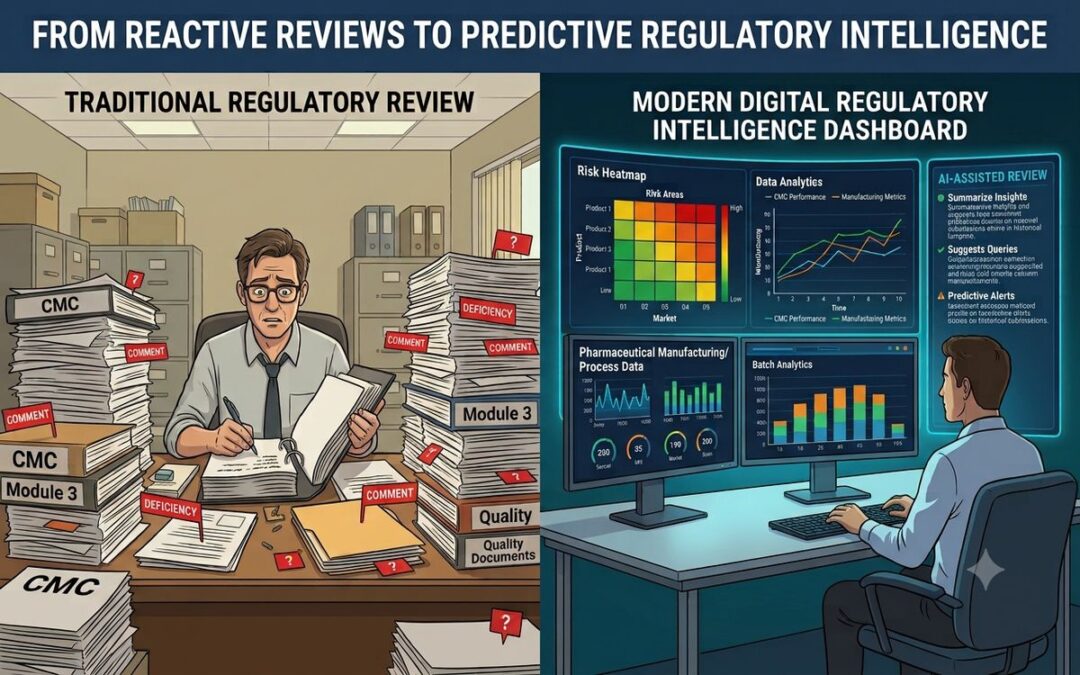
Under the conventional pathway, manufacturers typically build and equip facilities before engaging with the FDA through formal drug applications. This sequence means that regulatory feedback on manufacturing processes, equipment, and quality systems often arrives late in the development cycle, sometimes requiring costly modifications to facilities that are already operational.
The PreCheck model inverts this timeline. In Phase 1, designated as the Facility Readiness phase, selected manufacturers receive early technical guidance from the FDA before their facilities become operational. This phase includes Pre-Operational Reviews (POR), which are structured across four elements: a design review of facility and pharmaceutical quality system concepts; a pre-construction review following design modifications; an equipment installation and qualification review; and a pre-production review assessing overall operational readiness.
Phase 1 also puts an existing regulatory tool to new use. The Type V Drug Master File (DMF) is a long-established mechanism for submitting FDA-accepted reference information under 21 CFR 314.420(a)(5), and the agency is explicit that it is not a new instrument. What changes under PreCheck is how it is handled. The FDA normally reviews a DMF only when it is referenced in a regulatory submission, but under the pilot it intends to assess Type V DMFs actively and provide feedback as the facility develops. The file functions as a central repository for facility-specific information that can then be referenced across multiple product applications. Operating under a “Qualify Once, Reference Many” principle, it is intended to eliminate redundant submissions of facility data, reducing administrative burden for both manufacturers and regulators.
Phase 2, the Application Submission phase, builds upon the knowledge base established during Phase 1. It includes Chemistry, Manufacturing, and Controls (CMC) facility meetings that provide manufacturers with early feedback on data requirements, as well as expedited inspection timelines. The FDA has indicated that this front-loaded approach could eliminate up to 14 months from traditional review cycles, though the agency has noted that overall timelines remain dependent on multiple factors including user fee programme requirements.
Each participant receives a dedicated FDA point of contact, regular milestone check-ins, and structured post-site-visit meetings. Importantly, the Phase 1 site visits are explicitly not classified as formal inspections, though they use compliance programme standards to assess facility readiness.
Seven Companies, Seven Facilities
The FDA received more than 80 participation requests during the application window, which ran from 1 February to 1 March 2026. Following a review process that included finalist notifications in April and final material submissions in May, the agency announced its selection of seven participants on 29 June 2026, under Acting Commissioner Kyle Diamantas, who succeeded Makary after his resignation the previous month.
The selected cohort spans a diverse cross-section of pharmaceutical manufacturing, from traditional small molecule production to advanced cell and gene therapies.
Eli Lilly and Company was chosen for its drug substance (API) manufacturing facility in Lebanon, Indiana. Regeneron Pharmaceuticals was selected for a Saratoga Springs, New York site producing biotechnology drug substance, sterile injectables, and novel protein therapeutics. FUJIFILM Biotechnologies secured a place for its commercial-scale cell culture biomanufacturing site in Holly Springs, North Carolina.
The cohort also includes several smaller and specialist manufacturers. Cellares Corporation, based in Bridgewater, New Jersey, is developing a facility for cell-based gene therapy products targeting oncology and haematology. Amneal Pharmaceuticals was selected for a Long Island, New York plant producing small molecule sterile liquids for pain management, respiratory, and ophthalmic applications. Kyowa Kirin earned its place with a biotechnology drug substance facility in Sanford, North Carolina, focused on rare disease treatments. Kriya Therapeutics rounds out the group with a Durham, North Carolina facility for AAV-based gene therapy products addressing chronic disease conditions.
The geographic concentration in the eastern United States is notable, with five of the seven facilities located in North Carolina or New York. The therapeutic diversity is equally significant, reflecting the FDA’s stated priority of supporting facilities that manufacture critical medications across multiple treatment areas.
Industry Response and Strategic Implications
The FDA had capped the initial cohort at seven from the outset, citing the resource commitment the pilot would demand, so the ratio of more than 80 applicants to seven places reflects the deliberate size of the programme as much as its selectivity. The volume of applications nonetheless underscores the level of industry interest. For participating companies, the benefits extend beyond faster regulatory timelines. Early engagement with the FDA during the design and construction phase can reduce the risk of costly facility modifications, improve investor confidence, and provide greater certainty around product launch timelines.
Eric Fulmer, Senior Vice President of Global Quality at Cellares, highlighted the transformative potential of the programme’s timing.
“PreCheck moves that conversation up by several years, to a time before a facility is even in operation, which is taking it off the critical path,” Fulmer noted.
Beyond the selected participants, the programme also carries implications for the broader pharmaceutical supply chain debate. The COVID-19 pandemic exposed significant vulnerabilities in global pharmaceutical supply networks, with shortages of critical medicines and active ingredients highlighting the risks of concentrated overseas manufacturing. The FDA PreCheck Program represents a regulatory, rather than purely financial, approach to incentivising domestic production.
Participating companies must commit to actively manufacturing products at their assessed facilities for a minimum of three years following FDA approval of the products made there during the pilot, a requirement designed to ensure that the programme generates sustained domestic manufacturing capacity rather than short-term regulatory advantages.
Quality Oversight and the Broader Regulatory Landscape
The FDA PreCheck Program sits within a wider suite of regulatory reforms aimed at modernising pharmaceutical manufacturing oversight. Alongside the PreCheck initiative, the FDA has introduced the Advanced Manufacturing Technologies Designation Program, which provides expedited assessment of innovative manufacturing technologies.
The Pre-Operational Review process embedded within Phase 1 represents a notable evolution in the FDA’s approach to quality oversight. Rather than assessing compliance at a single point in time through a pre-approval inspection, the POR framework enables ongoing dialogue throughout the facility development lifecycle. This continuous engagement model aligns with the FDA’s broader shift towards risk-based and data-driven quality assurance.
Nevertheless, the programme is not without its limitations and open questions. The pilot is restricted to new facilities, meaning that expansions or upgrades to existing manufacturing sites do not qualify. The initial cohort of seven participants is small relative to the scale of the domestic manufacturing challenge, and the FDA has not yet published detailed plans for expanding the programme beyond this pilot phase.
Kalie E. Richardson, a Director at Hyman, Phelps & McNamara who advises pharmaceutical manufacturers on regulatory compliance and enforcement, has identified a further constraint in how eligibility is drawn. The FDA generally treats separate buildings in close proximity as part of a single facility where they belong to the same business and could be covered by one inspection. Because the pilot refers throughout to new facilities rather than new buildings, a new building on an existing campus would presumably fall outside its scope. Richardson also notes that while the agency has signalled that lessons from this cohort will shape the programme’s development, it has published no timeline for further cohorts.
How Europe and the UK Compare
There are also questions about how the programme will interact with international regulatory frameworks. Facilities built under the FDA PreCheck Program will still need to meet the requirements of other regulatory authorities if their products are intended for global markets, and there is no formal mutual recognition arrangement linking PreCheck assessments to equivalent processes in the European Union, United Kingdom, or other major regulatory jurisdictions.
Europe is pursuing the same objective as the FDA PreCheck Program, but through different instruments. The European Union’s principal response is the Critical Medicines Act, on which the Council and Parliament reached a provisional agreement on 12 May 2026, following the Commission’s original proposal in March 2025. Where PreCheck is a regulatory mechanism, the Act is largely an industrial one. It establishes a framework of strategic projects intended to create, modernise and expand manufacturing capacity across the Union, supported by faster permitting and access to national and EU funding, alongside an EU preference approach that allows procurement authorities to reward suppliers according to the share of medicines and active ingredients manufactured within the bloc. The text still requires formal adoption by both institutions.
A closer conceptual parallel to the FDA PreCheck Program sits within the EU Pharmaceutical Package, which has been politically agreed but is not yet in force. Among its provisions is a platform technology master file: a standalone dossier assessed once and subsequently referenced by multiple product applications. The scope differs, since the European mechanism covers platform technologies rather than manufacturing facilities, but the underlying logic of assessing something once and reusing that assessment closely mirrors the Qualify Once, Reference Many principle behind the Type V DMF. Most provisions of the Package are expected to apply only from around 2028.
The United Kingdom has no equivalent facility programme. The MHRA and the FDA announced a liaison programme on 15 June 2026, placing dedicated liaison staff in each agency to support scientific exchange on medicines, medical devices and emerging technologies. Both regulators were explicit that they retain independence and will continue to reach their own decisions, so the arrangement stops well short of the mutual recognition of facility assessments that manufacturers building for multiple markets would value.
What Comes Next
The seven selected participants have now entered the Phase 1 Facility Readiness process, with dedicated FDA contacts assigned and kickoff meetings under way. The timeline for Phase 2 activities will depend on individual facility construction schedules and product development milestones.
The programme’s success will ultimately be measured not just by the speed of regulatory review, but by whether it catalyses a meaningful increase in domestic pharmaceutical manufacturing capacity. The US pharmaceutical industry has seen a decades-long trend of manufacturing migration to lower-cost jurisdictions, and reversing that pattern requires sustained policy commitment alongside regulatory innovation.
For the broader life sciences sector, the FDA PreCheck Program offers a potential template for how regulatory agencies can actively support industrial policy objectives without compromising quality or safety standards. Industry is already moving in the same direction, as seen in the CDMO sector’s pivot towards US manufacturing.
Whether this pilot evolves into a permanent and expanded FDA PreCheck Program will depend on the outcomes achieved by these first seven participants, and on the political will to sustain the initiative through future administrations. For now, the pilot stands as one of the most ambitious attempts by any major regulatory agency to actively shape where and how medicines are made.