
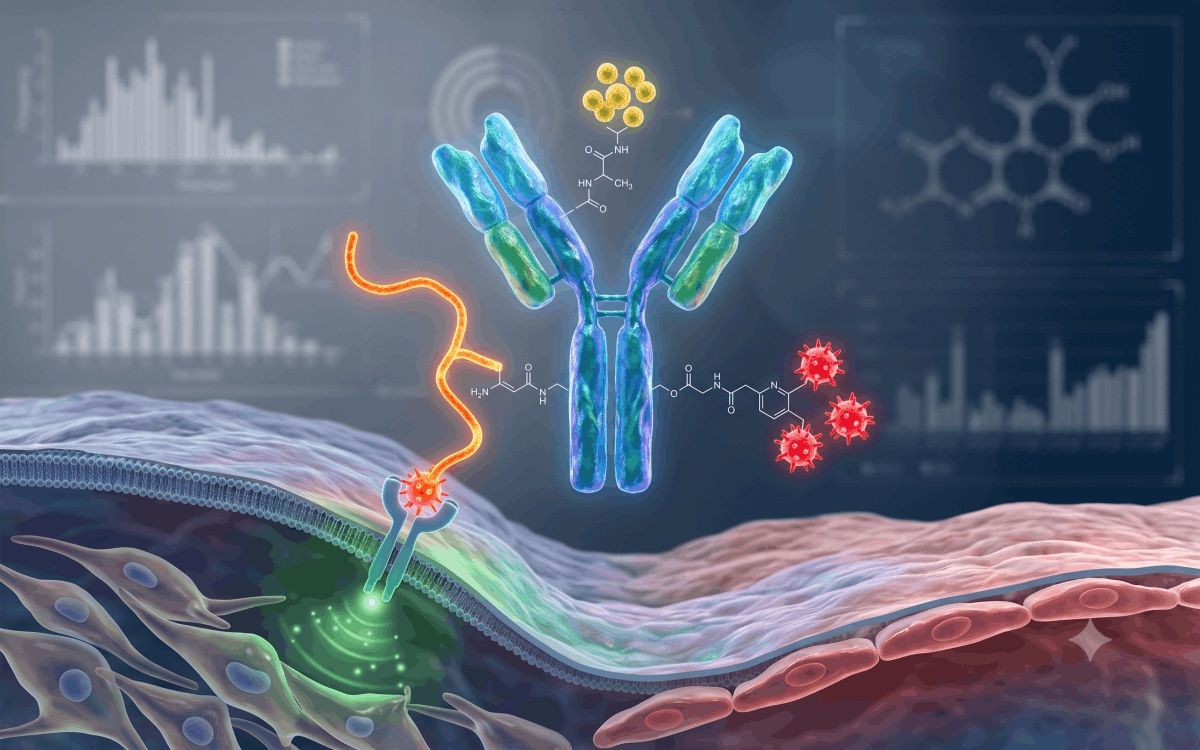
For over two decades, the narrative surrounding targeted biologics has been dominated by antibody-drug conjugates (ADCs) armed with cytotoxic small molecules designed to destroy cancer cells. While oncology remains a primary target for biologics, the therapeutic payload paradigm is undergoing a fundamental transformation. By replacing traditional cytotoxic payloads with functional oligonucleotides, high-molecular-weight biopolymers, and targeted immune agonists, biopharma research is extending antibody-mediated delivery far beyond classical oncology. These non-traditional modalities—collectively referred to as Unconventional Targeted Conjugates (UTCs)—are overcoming structural and pharmacological barriers that have historically limited targeted drug delivery. By bridging targeted biological recognition with specialized mechanism-of-action molecules, these therapies address severe unmet needs in genetic disorders, ocular diseases, and immunologically unresponsive tumor microenvironments.
Nucleic acid therapeutics, including small interfering RNA (siRNA) and antisense oligonucleotides (ASOs), can regulate gene expression through mechanisms such as RNA degradation, translation modulation, or splice alteration. However, their broader clinical translation has been challenged by rapid renal clearance, limited systemic stability, and restricted tissue distribution. Clinically validated delivery strategies have often focused on liver targeting, including N-acetylgalactosamine (GalNAc)-mediated engagement of the asialoglycoprotein receptor (ASGPR) on hepatocytes. However, achieving efficient delivery to extrahepatic tissues remains considerably more challenging.
Antibody-oligonucleotide conjugates (AOCs) aim to overcome these biodistribution limitations by utilizing monoclonal antibodies as targeted delivery vehicles. By engaging specific cell-surface receptors, such as the transferrin receptor 1 (TfR1), AOCs facilitate receptor-mediated endocytosis into selected extrahepatic tissues, including skeletal muscle, with emerging approaches exploring delivery to the central nervous system. Optimizing AOC performance requires balancing several crucial variables, including lysine or sulfhydryl conjugation chemistry, precise control of oligonucleotide-to-antibody ratio (OAR) to preserve pharmacokinetic clearance rates, and robust chemical linkers that remain stable in systemic circulation while releasing functional payload inside the cytosol. To address these multidisciplinary hurdles, researchers increasingly rely on integrated workflows in antibody-oligonucleotide conjugates, uniting custom sequence synthesis with site-specific conjugation and intracellular cleavage validation to ensure efficient tissue targeting and desired gene modulation outcomes.
While AOCs focus on genetic precision, antibody-biopolymer conjugates (ABCs) address key challenges associated with pharmacokinetic durability and tissue residence time. Chronic retinal vascular diseases, including neovascular age-related macular degeneration (nAMD) and diabetic macular edema (DME), commonly rely on anti-VEGF biologics; however, conventional antibody fragments may require frequent intravitreal administration due to limited ocular retention.
ABCs address this challenge by covalently attaching antibodies or antibody fragments to hydrophilic, high-molecular-weight biopolymers, such as phosphorylcholine-based polymers. This structural modification increases molecular size and hydrodynamic radius, supporting prolonged ocular residence while maintaining target-binding characteristics. Published studies of high-molecular-weight antibody-biopolymer conjugates, including molecules such as KSI-301, have investigated extended ocular exposure profiles associated with polymer-enhanced antibody architectures. These approaches are designed to support longer-lasting intraocular activity and may reduce dosing frequency compared with conventional antibody fragment formats.
Achieving reproducible ABC development requires precise control over polymer design, conjugation chemistry, and analytical characterization. Specialized bioconjugation service platforms, such as those offered by Creative Biolabs, provide support for site-directed polymer conjugation strategies and analytical characterization workflows to support the advancement of long-acting biologic candidates during early-stage research and evaluation.
In oncology, immune checkpoint inhibitors have transformed clinical outcomes, yet many solid tumors remain non-responsive due to an immunosuppressive or immunologically “cold” tumor microenvironment. Systemic administration of potent innate immune agonists—such as toll-like receptor (TLR7/8) agonists or stimulator of interferon genes (STING) agonists—may trigger systemic inflammatory responses, severely narrowing their therapeutic window.
Immune-stimulating antibody conjugates (ISACs) are being explored as a targeted approach to deliver immune activators directly to tumor-associated antigens or stromal markers. Following tumor localization and payload release, these conjugates are designed to promote localized activation of myeloid immune populations, including antigen-presenting cells, potentially enhancing immune recognition within the tumor microenvironment while minimizing systemic exposure.
Beyond target selection, effective ISAC design requires careful optimization of conjugation architecture. The selection between cleavable linkers, which enable intracellular payload release, and non-cleavable linkers, which depend on antibody degradation pathways, can influence payload availability, local activity, and overall molecular stability. Additionally, drug-to-antibody ratio optimization remains essential for balancing immune stimulation capacity with favorable developability characteristics.
Translating these complex molecules into preclinical candidates requires robust screening frameworks. Modern methodologies in antibody-immunostimulant conjugates allow researchers to evaluate candidate molecules across 3D tumor-immune co-culture models and evaluate localized immune activation and linker stability prior to in vivo translation.
The evolution of targeted biologics has expanded far beyond traditional cytotoxic drug delivery. By combining antibody specificity with functional oligonucleotides, high-molecular-weight biopolymers, and targeted immune modulators, non-traditional antibody conjugates are opening new possibilities for addressing long-standing delivery challenges. As bioconjugation technologies and analytical platforms continue to advance, these versatile modalities are expected to contribute increasingly to the development of next-generation targeted biologics.
Author Bio
Dr. Emily R. Coleman is a senior scientist at Creative Biolabs with expertise in immunology, oncology research, antibody engineering, and translational biotherapeutic development. Her work focuses on translating complex biological mechanisms into practical experimental strategies for next-generation therapeutic discovery.
At Creative Biolabs, she provides scientific insight across antibody discovery and development, gene and cell therapy research, bioconjugation, and translational assay design. She is particularly interested in improving the connection between mechanistic biology and predictive preclinical models to support therapeutic development across complex disease areas, including immune-related and neurodegenerative disorders.