
Two deals announced within days of each other this month read, on their own, like routine deal flow news. South Korea’s Alteogen signed its seventh platform licensing agreement with a global pharmaceutical company. Fujifilm and Taiho Pharmaceutical agreed to build what will become Japan’s first end-to-end antibody-drug conjugate manufacturing service. Taken together, they point to something more structural. APAC biopharma innovation has moved well beyond the region’s traditional role as a low-cost manufacturing base. For decades, Western pharmaceutical companies looked to Asia to make drugs cheaply and to sell into large, fast-growing markets. Increasingly, they are looking to Asia for a different reason. That is where the science now originates, and where the infrastructure to manufacture the hardest drug classes is being built.
APAC biopharma innovation: the old narrative is dead
For most of the past two decades, pharmaceutical technology flowed largely one way. It moved from laboratories in Cambridge, Massachusetts, and South San Francisco outward into Asian markets. That flow has reversed. China alone recorded 135.7 billion US dollars in cross-border out-licensing deals in 2025, up from 51.9 billion US dollars the year before, according to figures from the Chinese National Medical Products Administration. South Korea logged 14.5 billion US dollars in technology out-licensing over the same year. That is nearly triple the 5.5 billion US dollars recorded in 2024, according to the Korea Pharmaceutical and Bio-Pharma Manufacturers Association. Japan, meanwhile, is not chiefly exporting licensed assets. It is building the physical infrastructure needed to manufacture next-generation biologics domestically for the first time. None of this looks like a temporary discount window. It looks like a structural repositioning of where global drug development actually happens.
The shift matters most for readers tracking APAC biopharma innovation because it changes where due diligence effort needs to sit. A business development team that treats the region as a single homogeneous market will miss the point. South Korea, China, Japan, Singapore and India are each building distinct, complementary strengths. The companies moving fastest to secure access are the ones treating each market on its own terms.
South Korea: from biosimilars to platform technology
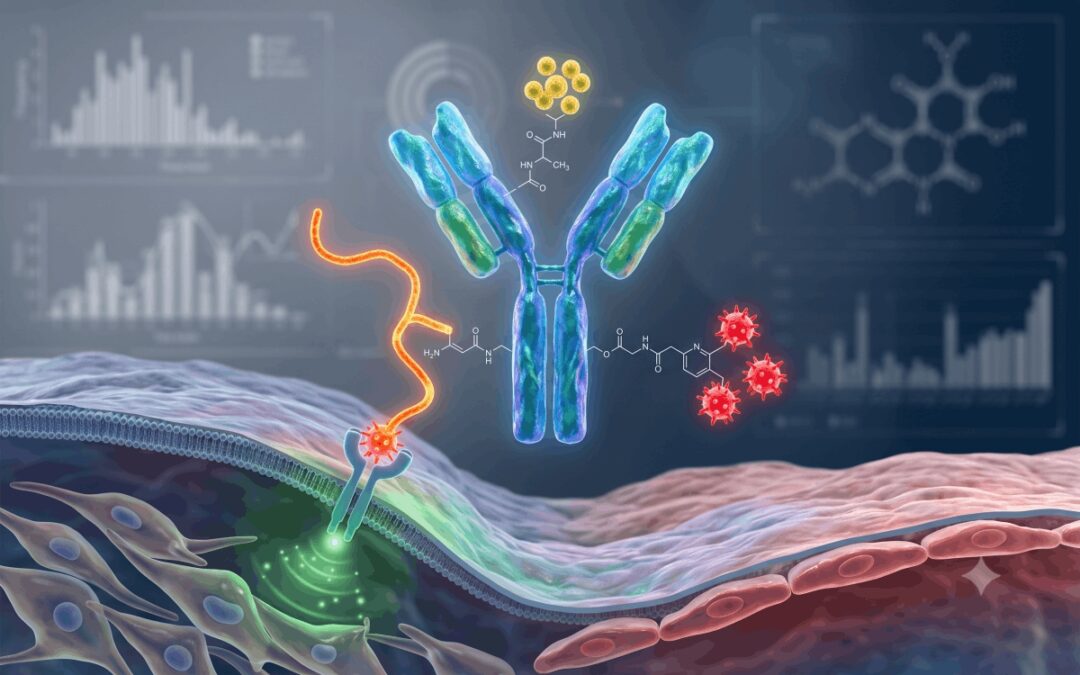
The most significant shift in South Korean biotech is not any single drug candidate. It is the emergence of platform technology itself as an export category. Daejeon-based Alteogen has built its Hybrozyme platform around this idea. The technology converts biologics normally administered by intravenous infusion into more convenient subcutaneous formulations, and it has become one of the country’s most sought-after technology exports. By early August 2026, Alteogen had licensed Hybrozyme to six global pharmaceutical companies, including Merck, AstraZeneca, Sandoz, Daiichi Sankyo and Biogen, alongside GSK’s Tesaro subsidiary. Its seventh deal was announced on 5 August 2026 with an undisclosed global partner. The agreement is worth up to 365 million US dollars in upfront and milestone payments, plus royalties on net sales. Alteogen chief executive Tae-Yon Chun said the company intends to keep expanding its platform business through strategic global partnerships.
Alteogen is not an isolated case. ABL Bio has licensed its blood-brain barrier shuttle platform to GSK in a deal worth up to 2.7 billion US dollars. Hanmi Pharmaceutical struck a separate licensing agreement with Eli Lilly, worth up to 1.26 billion US dollars, for sonefpeglutide, a long-acting GLP-2 candidate for short bowel syndrome. South Korean biotech built its early reputation on biosimilars and contract manufacturing, through companies such as Samsung Biologics and Celltrion. Its newer exports look different. They increasingly consist of enabling technology rather than individual molecules. The government has backed the shift with policy. A National Bio Committee was established as a presidential advisory body in January 2025. It has set out plans to cut drug development timelines and mobilise a dedicated one trillion won fund to support early-stage biotech investment.
China: the world’s antibody-drug conjugate laboratory
China’s role is different, in scale and in kind. Chinese biopharmaceutical companies now account for close to 90 per cent of global antibody-drug conjugate licensing activity, according to industry tracking from Vision Lifesciences and other deal analysts. The country’s out-licensing surge has drawn landmark agreements with Bristol Myers Squibb, AstraZeneca, Pfizer and GSK, among others. Western venture investors have followed the deal flow rather than waited for it. MPM BioImpact, for one, opened a Singapore office in 2024 as part of a wider push into Asia-Pacific biotech investment.
This growth has not been free of friction. US-China tensions, including scrutiny linked to the 2024 BIOSECURE Act, have complicated some transactions. Buyers have increasingly favoured licensing structures that grant rights outside China rather than outright acquisitions of Chinese biotechs. That geopolitical overlay is a genuine complicating factor for dealmakers. It has not, however, stopped the flow of transactions, nor reversed the wider pattern of APAC biopharma innovation reshaping where early pipeline assets originate. Life Science Daily News has covered the pricing dynamics of China’s licensing boom in detail elsewhere, including how quickly the upfront-payment discount that first drew Western buyers to Chinese assets is being competed away.
Japan: building the infrastructure
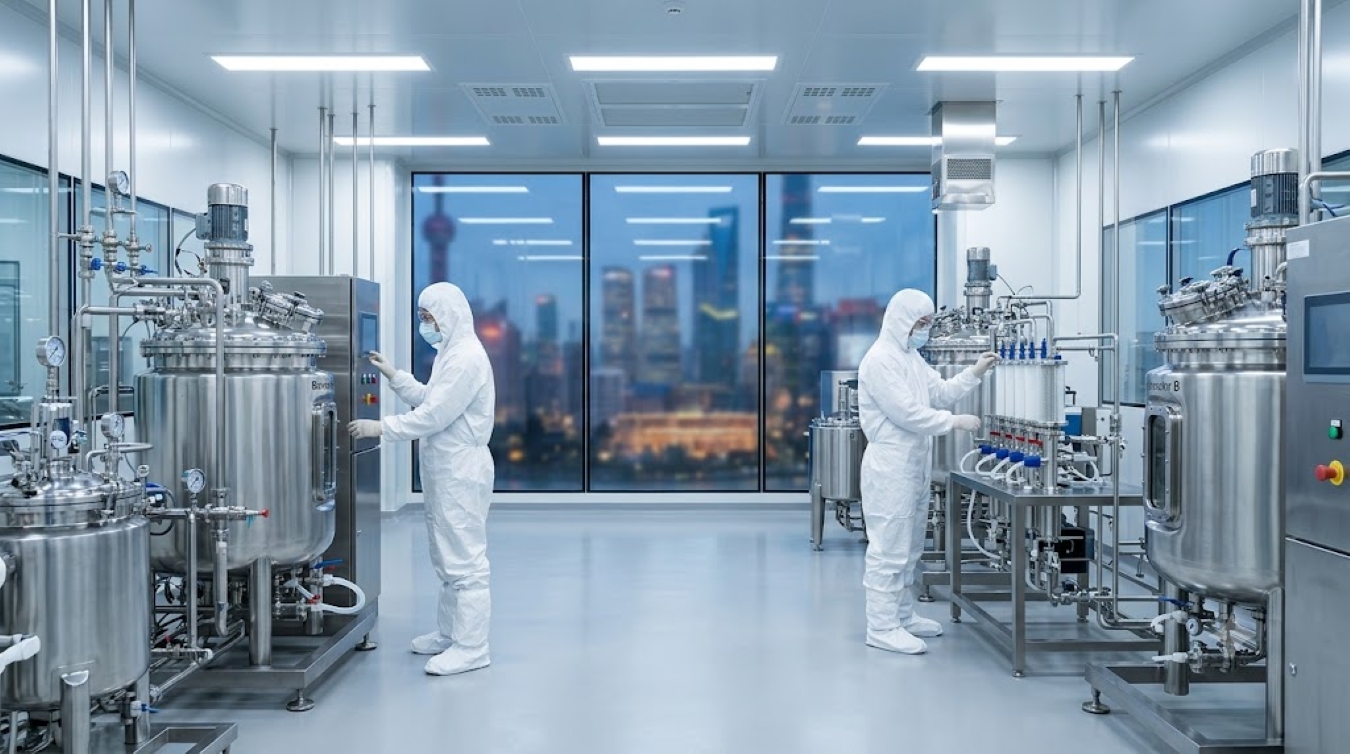
Japan’s contribution to APAC biopharma innovation looks different again. Rather than licensing out platform technology, Japan is positioning itself as the manufacturing backbone for next-generation biologics. Fujifilm and Taiho Pharmaceutical announced a strategic partnership on 3 August 2026 to develop manufacturing technology for next-generation antibody-drug conjugates. The work centres on Taiho’s AraLinQ conjugation platform, developed through its Araris Biotech subsidiary. Fujifilm’s group company, Fujifilm Toyama Chemical, plans to launch what the company describes as Japan’s first integrated antibody-drug conjugate manufacturing service in 2027. The service will cover antibody production, payload conjugation and final drug product manufacturing under a single roof. It builds on a separate antibody drug plant Fujifilm completed at its Toyama Second Factory in December 2025, also scheduled to become operational in 2027.
Japan is not alone in placing this bet. AstraZeneca is building its own end-to-end antibody-drug conjugate manufacturing site in Singapore. The 1.5 billion US dollar greenfield facility is the company’s largest first-stage investment to date, spans 58 acres, and is expected to begin operations by 2029. Read together, the Fujifilm and AstraZeneca projects suggest that antibody-drug conjugate manufacturing capacity, not just drug discovery, is becoming a genuine point of competition across the region. Both projects respond to the same underlying constraint. Antibody-drug conjugates are notoriously difficult to manufacture at scale. They require antibody production, cytotoxic payload synthesis, precise conjugation chemistry and sterile fill-finish to be coordinated across what has historically been a fragmented, multi-site supply chain. Bringing that entire process under one roof, as both Fujifilm and AstraZeneca are attempting, is as much a bet on manufacturing science as it is on any single drug candidate.
Singapore and India: the emerging roles
Singapore and India occupy complementary positions in this wider picture. Singapore has committed 37 billion Singapore dollars to its five-year Research, Innovation and Enterprise 2030 plan, covering the period from 2026. Human Health and Potential is named as one of four priority domains, alongside manufacturing, urban solutions and the digital economy. That national research commitment sits alongside Singapore’s growing base of specialised biomanufacturing plants, including AstraZeneca’s forthcoming facility.
India, historically the world’s largest supplier of generic medicines by volume, is now pushing into biologics. The country’s Union Budget for 2026 to 2027 introduced Biopharma Shakti, a 10,000 crore rupee programme worth roughly 1.1 billion US dollars over five years. It is aimed explicitly at building domestic capacity to manufacture biologics and biosimilars, alongside new pharmaceutical research institutes and a modernised drug regulator. It marks an explicit attempt to move India’s pharmaceutical sector from a volume-led generics model toward higher-value biologics manufacturing.
What it means for Western pharma
The strategic question facing Western drug developers is no longer whether APAC can produce world-class biopharmaceutical innovation. It plainly can, across discovery, platform technology and now manufacturing infrastructure. The real question is which access route makes sense for a given company and a given asset. Licensing remains the dominant model. It lets buyers acquire rights to a specific molecule or platform without the operational complexity of owning assets on the ground. Outright acquisition of Asian biotechs remains comparatively rare, constrained in China’s case by geopolitical scrutiny. Manufacturing partnerships offer a third route. Fujifilm’s tie-up with Taiho and AstraZeneca’s build in Singapore both secure capacity for complex modalities such as antibody-drug conjugates, without betting on a single company’s pipeline.
Each route carries a different risk and return profile. Companies that have built standing diligence capability across South Korea, China, Japan, Singapore and India are better placed to judge which route suits which opportunity. What is no longer credible is treating APAC as an occasional sourcing destination, to be revisited only when a deal happens to surface. Capital is now moving through the region at scale, from Alteogen’s platform deals to Fujifilm’s manufacturing build-out to India’s biologics push. This is a shift that looks set to shape global biopharma dealmaking for the rest of the decade.