Imperial College London, University of Oxford and GSK Launch £11 Million Centre to Build Digital Twins of Human Organs
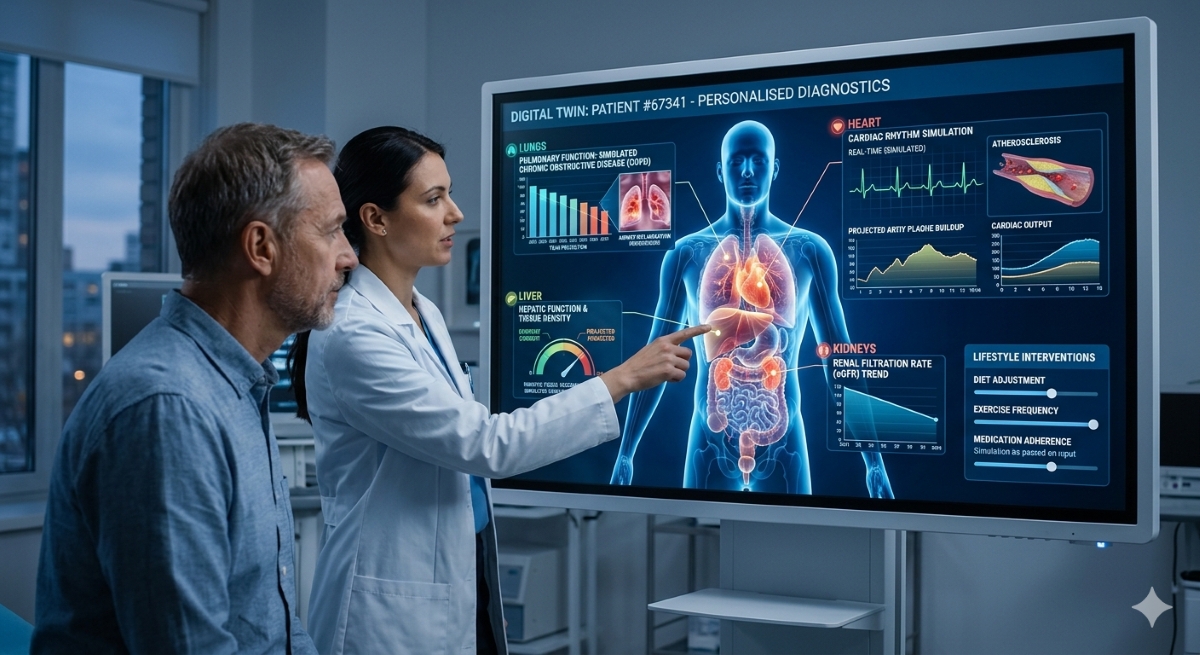
A new research centre backed by £11 million in funding has been established by Imperial College London, the University of Oxford and GSK to develop computer models, known as digital twins, of human organs. The Modelling-Informed Medicine Centre, or MiMeC, will focus on building detailed virtual replicas of the lungs, liver and kidneys to advance understanding of disease and accelerate the development of new medicines.
The centre represents a new UK hub for research in the emerging field of modelling-informed medicine, an approach that uses computational techniques to simulate how organs function in health and disease. By creating digital twins of these three organs, the partnership aims to provide researchers and drug developers with powerful tools to predict how diseases progress and how potential therapies might perform before they enter clinical trials.
What are digital twins in medicine?
The concept of a digital twin originated in engineering and manufacturing, where virtual copies of physical systems have long been used to test designs, predict failures and optimise performance. In medicine, the principle is the same but the subject is far more complex. A digital twin of a human organ is a computer model that replicates the structure, function and behaviour of that organ using data drawn from clinical studies, imaging, genomics and other biological sources.
These models can simulate how an organ responds to disease, to a drug, or to changes in a patient’s condition. For pharmaceutical companies, this offers the prospect of testing therapeutic hypotheses computationally before committing to expensive and time-consuming laboratory and clinical studies. For clinicians, digital twins could eventually help to personalise treatment decisions by predicting how an individual patient’s organ might respond to a particular intervention.
The lungs, liver and kidneys have been selected as the initial focus for MiMeC because diseases affecting these organs represent a significant burden on global health and because they are targets for a large proportion of the pharmaceutical industry’s drug development pipeline. Chronic obstructive pulmonary disease, asthma, liver fibrosis, chronic kidney disease and other conditions affecting these organs account for millions of deaths worldwide each year.
An open-source approach
One of the distinguishing features of MiMeC is its commitment to developing open-source models. Rather than building proprietary tools that remain locked within a single company or institution, the centre intends to make its computational models freely available to the wider research community. This approach is designed to encourage collaboration, enable independent validation of the models, and maximise their impact across academia and industry.
The decision to pursue an open-source strategy reflects a growing recognition within the life sciences sector that the complexity of human biology demands collective effort. No single organisation possesses all the data, expertise or computational resources needed to build truly comprehensive organ models. By making its outputs available to others, MiMeC aims to accelerate progress across the field and establish common standards for how digital twins are developed and used in drug discovery.
The centre will draw on the complementary strengths of its three founding partners. Imperial College London brings expertise in biomedical engineering, computational modelling and data science. The University of Oxford contributes world-leading capabilities in structural biology, pharmacology and clinical research. GSK, one of the world’s largest pharmaceutical companies headquartered in the UK, provides deep experience in drug development, access to proprietary clinical datasets, and an understanding of the practical requirements that computational models must meet if they are to be useful in real-world drug discovery programmes.
Addressing challenges in drug development
The pharmaceutical industry faces well documented challenges in bringing new medicines to market. The process typically takes more than a decade and costs in excess of £1 billion per approved drug, with high rates of failure at every stage. A significant proportion of drug candidates that show promise in laboratory studies go on to fail in clinical trials, often because their effects on human organs prove different from what was predicted using conventional preclinical methods.
Digital twins offer the potential to reduce this attrition by providing a more accurate and detailed picture of how drugs interact with human biology before clinical testing begins. If a computational model of the liver can predict that a drug candidate is likely to cause toxicity, for example, that compound can be deprioritised or modified before it reaches human volunteers. Similarly, if a model of the lungs can identify which patient subgroups are most likely to benefit from a particular therapy, clinical trials can be designed more efficiently, improving the chances of success.
GSK has been investing in computational approaches to drug development for several years, and the company’s involvement in MiMeC signals a deepening commitment to modelling-informed medicine as a core part of its research strategy. The centre’s focus on organs that are central to GSK’s therapeutic portfolio, including respiratory and liver diseases, suggests that the partnership is closely aligned with the company’s commercial priorities as well as its scientific ambitions.
The role of mechanistic modelling
MiMeC’s approach is rooted in mechanistic modelling, a method that seeks to represent the underlying biological processes driving disease rather than relying solely on statistical correlations in data. While machine learning and other data-driven techniques have attracted considerable attention in recent years, mechanistic models offer a distinct advantage in that they can explain why a particular outcome occurs, not merely predict that it will.
For drug development, this explanatory power is critical. Regulators, clinicians and patients all require a clear understanding of how a medicine works and why it is expected to be safe and effective. Mechanistic models can help to provide this understanding by simulating the chain of biological events that links a drug’s action at the molecular level to its effects on organ function and, ultimately, on patient health.
The challenge lies in building models that are sufficiently detailed and accurate to be useful, while remaining tractable enough to run on available computational infrastructure. MiMeC will bring together mathematicians, engineers, biologists and clinicians to tackle this challenge, combining expertise in differential equations, fluid dynamics, cell biology, pharmacology and clinical medicine.
Wider significance for the UK life sciences sector
The launch of MiMeC adds to a growing portfolio of collaborative research initiatives between UK universities and the pharmaceutical industry. The UK government has identified life sciences as a strategic sector for economic growth, and partnerships of this kind are seen as essential to maintaining the country’s competitive position in global drug development.
The centre also contributes to a broader shift within the industry towards what is sometimes described as in silico medicine, the use of computer simulations to complement or, in some cases, replace traditional laboratory experiments and animal studies. Regulatory agencies including the Medicines and Healthcare products Regulatory Agency (MHRA) in the UK and the US Food and Drug Administration (FDA) have shown increasing openness to accepting computational evidence as part of drug approval submissions, creating a favourable environment for the kind of work MiMeC will undertake.
The potential benefits extend beyond drug discovery. Digital twins of organs could also be used to improve medical device design, to support surgical planning, and to enhance the teaching of anatomy and physiology. In the longer term, as models become more sophisticated and as the data available to build them grows richer, it may become possible to create personalised digital twins that reflect the unique biology of individual patients, opening the door to genuinely precision-driven healthcare.
Building the foundations
The £11 million funding package will support the recruitment of researchers, the acquisition of computational resources, and the development of the centre’s initial suite of organ models. Work is expected to begin with the construction of foundational models of lung, liver and kidney function, which will then be progressively refined and extended as new data becomes available and as the centre’s modelling capabilities mature.
The collaboration between Imperial, Oxford and GSK is structured to ensure that academic rigour and industrial relevance are maintained in parallel. Researchers at both universities will lead the scientific development of the models, while GSK will contribute data, domain expertise and feedback on the practical utility of the tools being created. The open-source model means that other universities, research institutes and companies will be able to contribute to and benefit from the work as it progresses.
For the UK’s life sciences ecosystem, MiMeC represents a significant statement of intent. By bringing together two of the country’s leading research universities with one of its largest pharmaceutical companies, the centre has the potential to establish the UK as a global leader in modelling-informed medicine and to demonstrate how computational approaches can transform the way new treatments are discovered and delivered.