

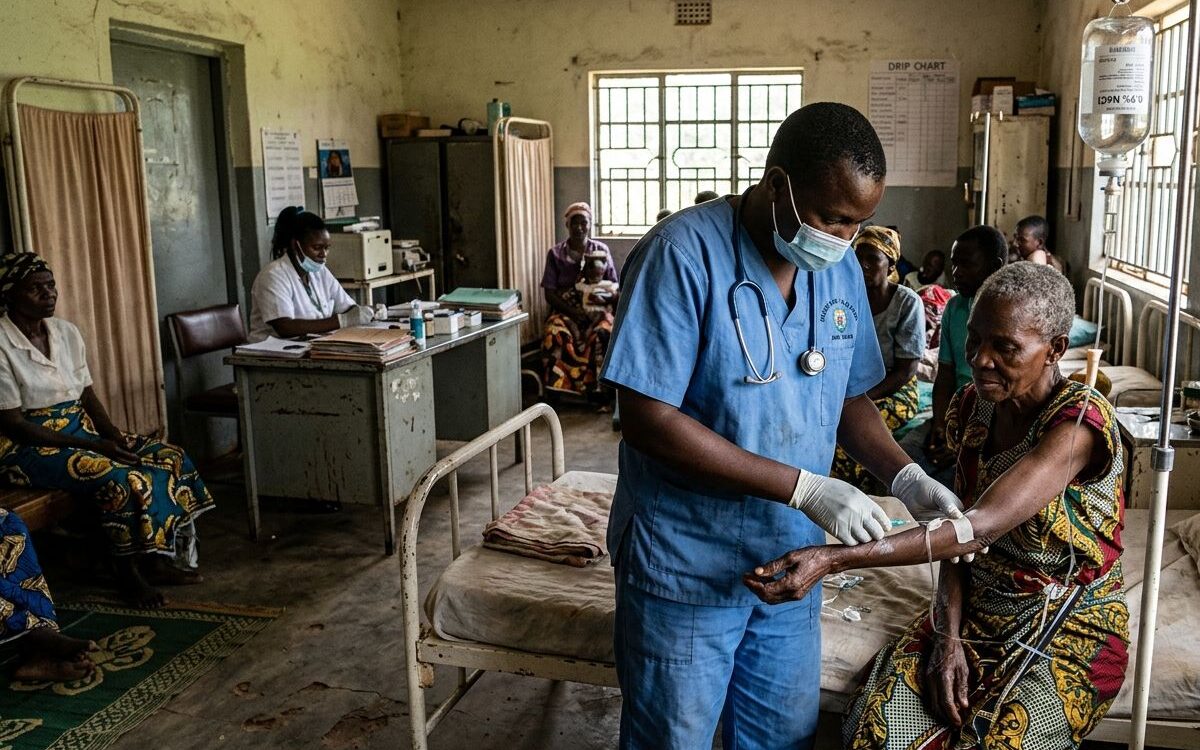
For the life sciences sector, the global nursing shortage is not a background public health concern. It is a clinical trial staffing problem, a pharmaceutical market access problem, and a real-world evidence problem. The WHO’s 2025 State of the World’s Nursing report puts the deficit at 5.8 million nurses worldwide, and the regions feeling it hardest are precisely the ones the industry most needs to reach.
The Final Link in the Pharmaceutical Value Chain
Every drug that receives regulatory approval eventually meets a nurse. It is nurses who administer infusions in oncology wards, manage dosing protocols in chronic disease clinics, enrol and monitor participants in clinical trials, and counsel patients on adherence. They are, in practical terms, the final link in the pharmaceutical value chain. And globally, that link is fracturing.
Clinical trial timelines are extending. Market access strategies in low- and middle-income countries are stalling. Real-world evidence programmes are constrained by health systems that lack the workforce to generate reliable data. The common denominator in each of these challenges is the same: there are not enough nurses, and the shortage is concentrated in the markets where growth opportunities are greatest and patient need is most acute.
The WHO’s 2025 State of the World’s Nursing report, published jointly with the International Council of Nurses (ICN) on 12 May 2025, provides the most comprehensive audit of the global nursing workforce to date. Drawing on data from all 194 WHO member states, it confirmed that the global nursing workforce grew from 27.9 million in 2018 to 29.8 million in 2023. Yet a deficit of 5.8 million nurses persists, down only modestly from 6.2 million in 2020, with projections placing the shortfall at 4.1 million by 2030 under optimistic scenarios.
The distribution of that shortage is where the life sciences industry should pay closest attention. 78% of the world’s nurses are concentrated in countries representing just 49% of the global population. The global nurse-to-population ratio is 37.1 per 10,000, but Europe has roughly five times more nurses than Africa and the Eastern Mediterranean, and high-income countries have ten times the nurse density of low-income ones. By 2030, approximately 69% of the total projected global shortfall will be borne by the African and Eastern Mediterranean regions alone, the same regions where pharmaceutical companies are most actively pursuing commercial expansion and where the burden of treatable disease is highest.
Pam Cipriano, President of the International Council of Nurses, was direct:
“The report clearly exposes the inequalities that are holding back the nursing profession and acting as a barrier to achieving universal health coverage.”
The Clinical Trial Pipeline Depends on Nurses Too
The pharmaceutical industry’s relationship with the nursing workforce is more intimate than many boardrooms acknowledge. Clinical research nurses (CRNs) are foundational to trial operations: they screen and enrol participants, manage protocols, collect data, and ensure patient safety throughout the study period. They are, in most cases, the primary point of contact between a trial and its participants.
CRNs typically build their skills in hospital settings before transitioning to research roles, which means the pipeline for clinical research staffing flows directly from the general nursing workforce. As Kathi Enderes, Senior Vice President of Research at The Josh Bersin Company, told Pharmaceutical Executive:
“Chief HR officers say this is the biggest business problem they are facing. When they can’t get nurses on staff, they have to rely on travel nurses, who have much higher salaries compared to regular nurses.”
Enderes noted that some organisations experienced post-pandemic turnover rates of 60 to 70%, against pre-pandemic rates of 17 to 20%. As experienced nurses leave the workforce, the pool from which clinical research teams recruit contracts. Sponsors and contract research organisations are already beginning to feel this: longer site activation timelines, higher staffing costs, and in some cases, reduced capacity to run trials concurrently. For biotechs operating on tight capital runways, any increase in trial costs or delays to data readout carries direct commercial consequences.
The Access to Medicine Foundation’s 2024 Index found that only 43% of clinical trials take place in the 113 low- and middle-income countries (LMICs) covered by its analysis, despite those countries being home to 80% of the global population. The nursing workforce crisis, concentrated precisely in these regions, is one structural reason why clinical research footprints remain skewed toward wealthier markets, limiting both the diversity of trial populations and the speed with which approved therapies reach underserved patients.
Market Access Depends on Health System Capacity
Beyond clinical development, the nursing shortage has direct implications for pharmaceutical market access in LMICs, a strategic priority for much of the industry. A drug registered in a country is not the same as a drug that reaches patients. Between registration and uptake sits a health system, and at the operational core of that system are nurses.
In regions where nurse-to-population ratios are critically low, health systems lack the capacity to absorb new therapeutics at scale. Vaccination programmes stall without nurses to administer them. Non-communicable disease management, which is increasingly on the pharmaceutical industry’s strategic radar as the LMIC burden of diabetes, cardiovascular disease and oncology grows, depends on nurses for screening, medication management and patient follow-up. Where nurse density is insufficient, even well-priced and appropriately registered medicines sit underutilised.
The 2024 Access to Medicine Index noted that momentum in licensing activity has stalled, with only two new non-exclusive voluntary licensing agreements identified, compared to six in 2022. This suggests that the systemic barriers to LMIC market access, of which health workforce capacity is a central element, are not being adequately addressed. For life sciences companies seeking to expand their commercial footprint into emerging markets, the nursing shortage is not a peripheral concern. It is a market access bottleneck.
Burnout, Brain Drain and the Retention Deficit
Understanding why the global nursing shortage persists requires looking beyond numbers and into the working conditions that drive nurses out of the profession. According to the ICN, nearly two-thirds of national nursing associations reported increased workforce pressures since 2021, and almost half observed rising numbers of nurses leaving the sector. Early-career attrition is particularly acute: data from South Korea found that more than a quarter of newly qualified nurses left within their first year, with many exiting within six months.
The COVID-19 pandemic was an accelerant, not a cause. More than 100,000 nurses left the workforce in the United States alone between 2020 and 2021, and surveys suggest that up to 40% of those who remained were weighing early exit within the following years. The consequences are visible at ward level: higher infection rates, longer waiting times, closed maternity units, and experienced staff stretched across too many patients.
Wages compound the problem. In many countries, nurses’ pay has not kept pace with inflation, eroding economic security at precisely the point when healthcare demand is rising. A third of countries worldwide still lack formal policies to protect nurses from workplace violence. These conditions feed a self-reinforcing cycle: as nurses leave, workloads increase for those who remain, accelerating further departures and depleting the experienced senior staff who would otherwise mentor the next generation.
International migration then distributes this attrition unevenly. One in seven nurses globally is foreign-born. In high-income countries, that figure rises to 23%, compared with just 1% in lower middle-income countries. High-income nations, including the UK, the United States and Gulf Cooperation Council states, are drawing nursing talent from precisely the markets where pharmaceutical companies are most eager to expand, often without compensating source nations for the training investment they have made.
Demographic Pressure and Advanced Practice Roles
The age profile of the nursing workforce adds a further layer of complexity. Globally, 33% of nurses are under 35, suggesting reasonable succession potential at a headline level. But the 2025 SoWN report identifies 20 countries, most of them high-income, where retirement rates are projected to outpace new entrants. In these settings, the loss of experienced practitioners will compound existing capacity pressures and reduce the mentorship available to early-career nurses, increasing the probability of further attrition.
Advanced practice nursing represents one area of genuine structural progress. Around 62% of countries now report the existence of advanced practice nursing roles, up from 53% in 2020. These practitioners can extend healthcare reach in settings with limited physician availability, including in primary care environments where pharmaceutical adherence and chronic disease monitoring are increasingly important. However, in many LMICs, graduates of expanded bachelor’s programmes encounter a mismatch between their qualifications and the roles available to them, creating educational investment without commensurate workforce return.
Declarations Without Reform: The Policy Gap
The most uncomfortable finding in the 2025 report is not a data point but a pattern. Despite decades of international warnings, binding commitments and policy frameworks, the structural conditions that create and perpetuate the shortage remain largely unchanged. Research published in 2025 through SAGE Open Medicine described the global policy response as one of “ambitious declarations without structural reform”, citing chronic under-investment in nursing education, underdeveloped workforce planning, and pay conditions that continue to drive attrition.
Governance gaps are a critical part of this failure. Nursing perspectives are routinely absent from the health system decisions that most directly affect their working conditions. Leadership development programmes for nurses are reported in 66% of countries, but only 25% of low-income countries. Without nurses in positions of policy influence, the recommendations of international reports tend to remain exactly that.
Dr Hanan Balkhy, Regional Director of WHO’s Eastern Mediterranean Region, offered a stark assessment:
“Progress is off-track, and without targeted action, nursing workforce gaps will persist beyond 2030, especially in the most vulnerable regions.”
For the life sciences industry, this policy inertia carries a direct cost. Clinical trial infrastructure cannot scale in regions without stable nursing workforces. Pharmaceutical market access strategies in LMICs are undermined by health systems that lack the capacity to administer, monitor and report on the medicines they receive. And as the industry increasingly looks to real-world evidence from diverse populations to support regulatory and commercial goals, the absence of functional health systems in high-burden regions limits what can be observed and measured.
What the Industry Can Do
The nursing shortage is not the pharmaceutical industry’s problem to solve alone. But the data make clear it is not a peripheral concern either. For sponsors, CROs and market access teams, the shortage creates tangible operational friction, and that friction will intensify as the decade progresses. The question is whether the industry engages with it strategically or waits until it becomes a crisis that is harder and more expensive to manage.
On clinical research, the most immediate lever is building structured relationships with clinical research nurses before the competition for this workforce becomes acute. Enderes’ research is explicit on this point: organisations that invest in CRN training pipelines, career progression pathways and site staff wellbeing now will be better positioned when the broader nursing shortage fully reaches the research sector. For sponsors running multi-site global trials, this means reassessing site selection criteria to include workforce sustainability alongside traditional metrics such as patient volume and investigator experience.
On market access in LMICs, the strategic case for health workforce investment is direct. Pharma companies cannot build commercial positions in markets where health systems lack the capacity to administer, monitor and report on medicines. Supporting nursing education, working with governments on workforce planning, and structuring partnerships that strengthen local health infrastructure are not only ethically aligned with universal health coverage goals, they are preconditions for sustainable market access. The Access to Medicine Foundation’s 2024 Index is clear that companies prioritising access planning in countries where they also conduct trials see better outcomes. The nursing workforce is central to making both activities viable.
The WHO’s 2025 State of the World’s Nursing report frames the next five years as the final strategic window within the Sustainable Development Goals era. For the life sciences sector, that window matters commercially as well as morally. Medicines developed for global populations require global health systems capable of delivering them. And at the centre of those systems, as they have always been, are nurses.