
When López-Otín and colleagues published “The Hallmarks of Aging” in Cell in 2013, they did something the field of biogerontology had quietly needed for decades: they created a framework. Nine interconnected processes, from genomic instability and telomere attrition through to stem cell exhaustion and altered intercellular communication, were laid out as a unified framework for understanding how organisms decline with age. A decade on, that paper has become one of the most cited works in modern biology, and it has done more than describe ageing. It has reshaped how the entire field approaches it.
In 2023, the same authors revised and expanded the framework to twelve hallmarks, adding disabled macroautophagy, chronic inflammation, and dysbiosis. The expansion reflected a substantive shift: ageing is no longer being studied as a sequence of isolated breakdowns but as a network of interacting cellular and systemic failures. That conceptual move is now driving where the science, the capital, and increasingly ,where the regulators are heading.
The financial case for the field has grown alongside the conceptual one. Industry analysts put the global longevity therapeutics market in the tens of billions of dollars and rising, and the wave of capital into companies such as Altos Labs, Calico, BioAge and Retro Biosciences reflects a recalibration of how serious investors view biological ageing as a tractable target. Geroscience, the discipline that links the biology of ageing to chronic disease, articulated by Kennedy and colleagues in 2014, has moved from a niche term to the explicit basis for trial design at institutions including the National Institute on Aging and the Buck Institute.
From Description to Intervention
The hallmarks framework did three useful things at once. It gave researchers a shared vocabulary, it gave funders a structured way to evaluate where investment was meaningful, and it gave drug developers a target list. The 2013 paper made an explicit argument that addressing any single hallmark was unlikely to be sufficient, because each hallmark feeds the others. Telomere attrition feeds genomic instability. Mitochondrial dysfunction drives cellular senescence. Senescent cells secrete factors that disturb intercellular communication and stoke chronic inflammation.
That insight is where the field has matured most visibly in the past five years. The first generation of anti-ageing interventions tended to be single-target: a senolytic for senescent cells, an NAD+ precursor for mitochondrial decline, a telomerase activator for telomere attrition. Each had a logical biological rationale, and several produced encouraging early data. But results have been modest in isolation, and the field has begun to converge on a more pragmatic consensus: the hallmarks are interconnected, and so meaningful interventions probably need to be too.
Multi-Targeted Intervention as the Working Theory
The argument for multi-targeted approaches is not merely intuitive. It rests on the architecture of the framework itself. López-Otín and colleagues organise the twelve hallmarks into three tiers: primary hallmarks, which represent the underlying causes of damage; antagonistic hallmarks, which are the cell’s compensatory responses gone wrong; and integrative hallmarks, which are the systemic consequences. Targeting one node in this network may shift others, but it rarely resolves the wider dysregulation.
This is why combination strategies are increasingly prominent in both academic and commercial pipelines. The TAME trial (Targeting Aging with Metformin), led by Nir Barzilai at Albert Einstein College of Medicine, was conceived around metformin precisely because metformin appears to act on multiple hallmarks simultaneously: nutrient sensing, mitochondrial function and inflammation. Senolytic combinations such as dasatinib plus quercetin, in human trials at the Mayo Clinic, were designed because no single senolytic agent appears sufficient to clear the heterogeneous population of senescent cells in human tissue. James Kirkland and colleagues have argued for combination approaches in this space since the earliest senolytic work.
In the nutraceutical space, the same logic is now driving formulation design. A peer-reviewed study published in Aging in March 2025, on which I was a co-author, tracked 51 adults aged 54–84 over twelve months on a three-part nutraceutical formulation designed against multiple hallmarks at once, DNA instability and telomere attrition through to cellular senescence, nutrient sensing and macroautophagy. Participants showed statistically significant changes in grip strength, body composition, stem-cell turnover (measured via the epiTOC2 mitotic clock), and several epigenetic biomarkers of ageing including the PC Horvath pan-tissue clock and DamAge. No single ingredient drove the result; the rationale was the combination. The study had clear limitations, single arm, no placebo, modest size, and the authors said as much. But the design itself reflects a wider pattern: the entire premise assumed multi-target action, because the hallmarks framework predicts that single-target action would be insufficient.
Larger pharmaceutical efforts are arriving at the same conclusion. Altos Labs, Calico and BioAge are all building pipelines that interrogate multiple hallmarks rather than chasing one. Partial cellular reprogramming, where transient expression of Yamanaka factors resets epigenetic age in adult cells, is very interesting because it seeks to reprogram the layer upstream of the primary drivers of aging. Lifestyle interventions, often dismissed as too soft for serious trial design, are also re-emerging in the literature. Caloric restriction, time-restricted eating and structured exercise each touch several hallmarks at once, which may explain why they continue to outperform many narrowly targeted compounds in long-term human cohorts.
Biomarkers Have Made the Field Investable
The hallmarks framework would have remained largely academic without a parallel revolution in measurement. Steve Horvath’s 2013 epigenetic clock, published the same year as the original hallmarks paper, gave the field something it had never had: a quantitative readout of biological age from a tissue sample. Subsequent clocks, PhenoAge from Morgan Levine and colleagues, GrimAge from Ake Lu and Horvath, and the third-generation DunedinPACE from Daniel Belsky’s group, sharpened the tools considerably. DunedinPACE, in particular, measures the pace of ageing rather than its accumulated burden, and has become the de facto standard for short and medium-term intervention trials.
Newer multi-omic clocks such as OMICmAge integrate DNA methylation with clinical biomarkers and proteomic data, producing biological age estimates that map more cleanly onto disease incidence and mortality. Causal clocks (CausAge, DamAge and AdaptAge) attempt to separate damage-driven ageing from adaptive responses, a critical distinction for working out whether an intervention is reversing harm or merely altering compensatory signals.
This matters commercially. Investors and pharmaceutical partners need quantitative endpoints. Ageing itself is not a recognised indication at the EMA, MHRA or FDA, so trials must hang on disease-specific outcomes. Validated biomarkers of biological age give sponsors a way to design trials, demonstrate biological activity and build a regulatory case, even if the formal indication remains, for now, age-related disease.
The Regulatory Question
For all the scientific momentum, the regulatory environment remains the gating factor. None of the major regulators currently classify ageing as a disease. The TAME trial was deliberately structured to test whether metformin could delay the onset of multiple age-related conditions, on the basis that this is a regulatory pathway already understood. Whether ageing itself becomes an indication is a question that will likely be answered not by a single regulatory decision but by accumulating evidence that interventions targeting the hallmarks change clinical trajectories.
Several jurisdictions are moving faster than others. Singapore has taken an active interest in healthy ageing as a national research priority. The UK, through UKRI and the Medical Research Council, has funded substantial work on the biology of ageing through institutions including the Babraham Institute and the MRC Laboratory of Medical Sciences. ARIA, the UK’s Advanced Research and Invention Agency, has signalled interest in ageing biology. The wider European pharmaceutical industry has begun to discuss frameworks for healthspan-extending therapies, and the recent NHS focus on prevention and multimorbidity sits naturally alongside a geroscience-led research agenda.
What the Next Phase Looks Like
Three notions are likely to define the next five years.
First, integration. The clean separation between primary, antagonistic and integrative hallmarks is useful but targeting the interfaces between each layer will be interesting. There are areas that logically lead to easier intervention, chronic inflammation that drives stem-cell exhaustion, dysbiosis that worsens proteostasis, mitochondrial dysfunction that triggers senescence, each sit at the boundaries between hallmarks. Expect more research targeting those interfaces specifically.
Second, stratification. Biological age varies enormously between people of the same chronological age, and some hallmarks are more deranged in some individuals than in others. The field is moving towards stratified interventions, where biomarker profiles guide which hallmark or combination of hallmarks to address. This is closer to oncology’s mature approach than to the one-size-fits-all model that has dominated lifestyle and supplement messaging.
Third, longer trials with biomarker endpoints. Work published in GeroScience in 2024 by McGee and colleagues showed that a combination nutritional supplement reduced epigenetic age only in older adults whose epigenetic age was already elevated, a result that would have been invisible without biological age measurement, and which underscores why biomarker-driven stratification matters. The implication for trial design is clear: ageing studies will increasingly need to enrich for participants who have measurable biological-age elevation at baseline, rather than recruiting on chronological age alone. That shift will, over time, also reshape how supplement and pharmaceutical products are positioned, marketed and reimbursed.
A More Disciplined Field
The hallmarks framework has done what frameworks should do: imposed enough structure to allow disagreement to become productive. Researchers can now argue about whether a particular hallmark is upstream or downstream of another, whether the twelve are sufficient, whether causal clocks are picking up real biology or methodological artefacts. That is a healthier state of affairs than the field had in 2010, when ageing research was still partly defined against itself, fighting older caricatures of immortality medicine.
What has not changed is the underlying claim that animated the framework in the first place. Ageing is the largest single risk factor for the diseases that dominate health systems in developed economies. Addressing ageing biology, with multi-targeted interventions guided by validated biomarkers, is the most plausible route to reducing that burden. The hallmarks framework is the scaffolding on which that argument now rests, and it is holding up well.
The next phase of the field is likely to be defined by a combination of interventions rather than monotherapies. Follow the biomarker companies, because they are building the infrastructure that will make ageing trials commercially and regulatorily viable. Watch how regulators respond to the next round of trial readouts. And treat single-target ageing therapies with appropriate scepticism.
Author Bio
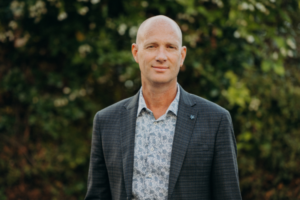
Greg Macpherson, BPharm
Greg Macpherson is a renowned futurist, biotechnologist, pharmacologist, and author who has spent more than a decade researching ageing at a cellular level, focusing on why lifespan continues to rise while healthspan, the years we live free from disease, decline and chronic fatigue, has not kept pace.
His work explores the biological drivers of ageing across multiple systems in the body, including mitochondrial function, inflammation, cellular repair and metabolic resilience. Through this research, he has identified key hallmarks of ageing that may be measurable, modifiable and, in some cases, reversible, shifting longevity science from theory into intervention.
This work has informed the development of SRW Laboratories, the research-led nutraceutical company he founded, which focuses on translating longevity science into practical applications.
The research behind this approach is gaining industry recognition, including a 2025 Healthspan Innovator Award from NutraIngredients, alongside a recently published study exploring biological age reduction over a 12-month period.