AstraZeneca China Obesity Drug Deal: A $18.5 Billion Bet on the Future of Weight Management
AstraZeneca announced on 30 January 2026, what has quickly become known as the AstraZeneca CSPC obesity deal, a landmark licensing and collaboration agreement with China’s CSPC Pharmaceutical Group potentially worth up to $18.5 billion, securing exclusive global rights outside China to a portfolio of once-monthly injectable weight management drug candidates. The deal, which includes a $1.2 billion upfront payment, is the largest licensing agreement ever struck with a Chinese pharmaceutical company and represents one of the boldest single moves in the rapidly escalating global race to compete in the obesity market.
The Deal in Detail
Under the terms of the agreement, AstraZeneca gains exclusive global rights outside of mainland China, Hong Kong, Macau, and Taiwan to CSPC’s once-monthly injectable weight management portfolio, comprising eight programmes in total, the full scope of the AstraZeneca CSPC obesity deal. The financial structure breaks down as follows: $1.2 billion is payable upfront, up to $3.5 billion in development and regulatory milestone payments could follow across all programmes, and a further $13.8 billion in potential sales milestone payments if the drugs reach commercialisation, representing the balance of the total deal value beyond the upfront and development milestones.
The four active programmes will initially be advanced by CSPC through completion of Phase I clinical studies. AstraZeneca will then assume responsibility for further development and commercialisation in all territories outside China. The transaction is expected to close in the second quarter of 2026, subject to regulatory approvals and customary conditions. CSPC retains full rights in the Greater China region and, following successful regulatory approval, AstraZeneca holds the option to co-commercialise the products there.
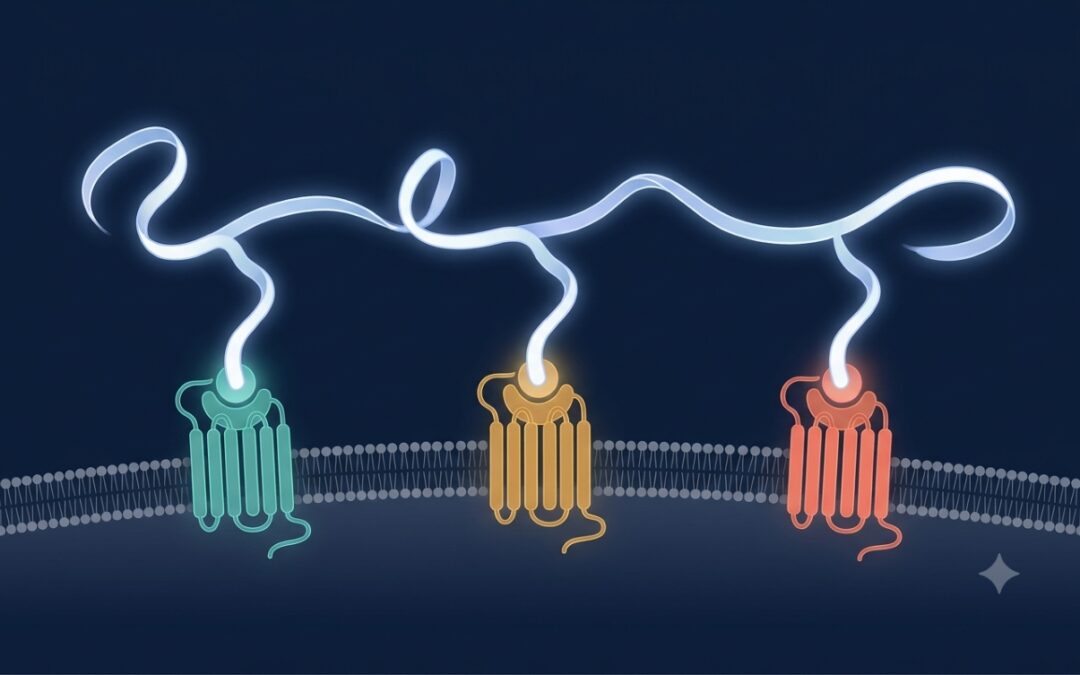
The lead asset is SYH2082, a long-acting dual agonist of the GLP-1 receptor and glucose-dependent insulinotropic polypeptide receptor, described as clinical-ready and progressing into Phase I trials. The remaining three active programmes are preclinical candidates with differing mechanisms designed to deliver extended therapeutic benefits for people living with obesity and weight-related conditions. Four additional programmes will be co-developed under the same technology platforms.
The Technology at the Heart of the Agreement
Central to the deal is CSPC’s proprietary LiquidGel once-monthly dosing platform technology, a sustained-release formulation that enables injectable medicines to deliver therapeutic levels of drug over a full month, significantly extending the interval between doses compared with the weekly injections that currently dominate the market. The significance of this cannot be overstated in a therapeutic area where patient adherence is one of the primary barriers to long-term treatment success. AstraZeneca also gains access to CSPC’s AI-driven peptide drug discovery engine and holds rights to apply the LiquidGel technology across its own internal development programmes.
Sharon Barr, Executive Vice President and Head of BioPharmaceuticals R&D at AstraZeneca, described the strategic importance of what the deal brings to the company’s pipeline. “This strategic collaboration advances our weight management portfolio by delivering novel assets which complement our existing programmes,” she said. “It will provide access to CSPC’s proprietary AI-enabled peptide capabilities and platform technology, which have the potential to transform the treatment of obesity, helping to address adherence and convenience as key barriers to long-term therapeutic success.”
A Relationship Built Over Time
This is not the first time AstraZeneca has turned to CSPC. The two companies have been building a deepening strategic relationship over several years. In 2024, AstraZeneca paid CSPC $100 million for a preclinical cardiovascular disease drug candidate. In June 2025, the relationship expanded further with a potential $5.3 billion deal focused on AI-enabled research and the discovery of new oral drugs for a range of chronic diseases. The January 2026 obesity deal represents the third and by far the largest chapter in this collaboration, demonstrating that what began as an exploratory partnership has become a cornerstone of AstraZeneca’s external innovation strategy.
Dongchen Cai, Chairman of CSPC’s board, reflected the mutual confidence that has developed between the two organisations. “We are very excited to further expand and strengthen our strategic partnership with AstraZeneca into the area of weight management,” he said. “We hope this win-win collaboration will deliver the next generation of treatments that build upon the emerging science, using our technology platforms and AstraZeneca’s complementary capabilities and reach, to realise global health benefits for people in need of improved weight management.”
Timing and Context: China at the Centre of AstraZeneca’s Strategy
The announcement arrived just one day after AstraZeneca committed to invest $15 billion in China through 2030, a pledge made during UK Prime Minister Sir Keir Starmer’s official visit to the country. That broader investment programme is designed to reinforce AstraZeneca’s cell therapy and radioconjugate platforms, extend drug discovery and clinical development capacity, and grow the company’s Chinese workforce and manufacturing footprint across existing and planned sites. In the $15 billion announcement, AstraZeneca name-checked CSPC as one of the leading biotechs in China that would benefit from the wider investment.
The back-to-back announcements underline how central China has become to AstraZeneca’s global growth strategy. The country is already AstraZeneca’s second-largest market after the United States, and the company has invested heavily in local manufacturing and research infrastructure over the past decade. The new CSPC deal is the most tangible expression yet of how that strategic commitment is translating into scientific and commercial opportunity.
Competing in a $100 Billion Market
The obesity drug market is currently dominated by Novo Nordisk and Eli Lilly, whose GLP-1 based treatments Ozempic, Wegovy, and Zepbound have reshaped both the pharmaceutical industry and public health expectations around weight management. Industry analysts project the global obesity drug market will reach at least $100 billion annually by 2030, with more recent forecasts from Morgan Stanley placing the figure closer to $130 billion, a trajectory that has prompted virtually every major pharmaceutical company to accelerate its search for competitive treatments.
AstraZeneca’s existing obesity pipeline includes elecoglipron, a small molecule oral GLP-1 receptor agonist, as well as two weekly injectable candidates and a number of preclinical assets. The AstraZeneca CSPC obesity deal adds eight further programmes anchored by a once-monthly injectable technology that, if successful, would offer a meaningful clinical differentiation from the current weekly standard. The potential $18.5 billion total deal value surpasses the $12.5 billion alliance between GSK and Jiangsu Hengrui Pharmaceuticals, which had previously been the largest licensing deal struck with a Chinese pharmaceutical company.
For CSPC, a Shijiazhuang-based company listed on the Hong Kong Stock Exchange, the agreement represents a validation of its platform technologies and a route to global commercialisation for assets that would otherwise be constrained to the Chinese market. The AstraZeneca CSPC obesity deal also reflects a broader maturation in the relationship between Western pharmaceutical companies and Chinese biotechnology, a dynamic that is reshaping how the global industry sources innovation.