In the medical field, being “authorized” and “qualified” are two very different things. Authorized generally indicates you have the legal right to practice. Qualified means you have the expertise, experience, and skill needed to practice effectively. The distinction...
Beyond the Injection: The Future of Holistic GLP-1 Care
The rise of GLP-1 medications has changed the conversation around obesity faster than almost anything we have seen in modern medicine. What was once dismissed as a simple issue of “willpower” is finally being recognised as something far more biologically complex....
CagriSema: Strong Obesity Data, but can it Beat Tirzepatide?
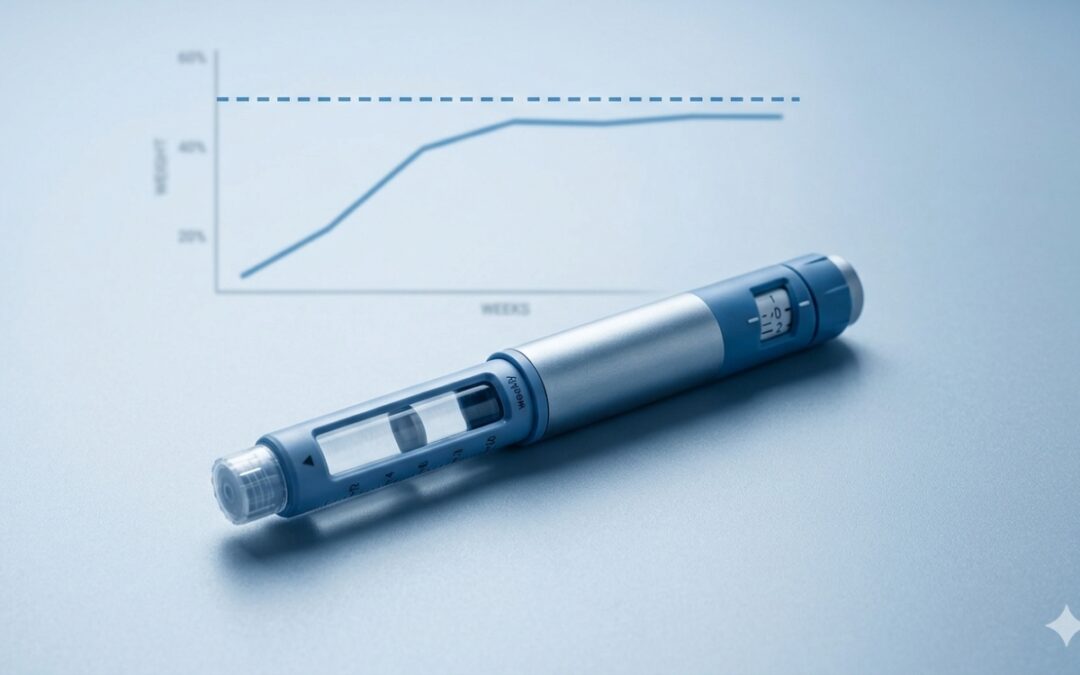
CagriSema, the once-weekly obesity therapy from Novo Nordisk, has spent more than a year as the most closely watched candidate in metabolic medicine. The combination of cagrilintide and semaglutide promised weight loss beyond what either molecule could achieve alone....
Will Artificial Intelligence Replace Medical Science Liaisons?
What Global Surveys of Medical Affairs Professionals Reveal Artificial intelligence (AI) is rapidly transforming the pharmaceutical industry, prompting many Medical Affairs professionals to ask whether some roles may eventually become obsolete. Headlines regularly...
GLP-1 Uptake by Country: Where Ozempic and Mounjaro are Booming in 2026
The global market for glucagon-like peptide-1 (GLP-1) receptor agonists has entered a new phase. What began as a breakthrough in type 2 diabetes management has become one of the defining pharmaceutical stories of the decade. In 2025, the GLP-1 receptor agonist market...
AI’s Next Leap in Biopharma: From Acceleration to Intelligence in Partnership
Artificial intelligence has already changed the rhythm of discovery in biopharma. Algorithms can screen millions of molecules, identify trial candidates, and forecast supply chains with extraordinary speed. Yet speed is not the same as progress. The next chapter of AI...
AI’s Next Leap in Biopharma: From Acceleration to Intelligence in Partnership
Artificial intelligence has already changed the rhythm of discovery in biopharma. Algorithms can screen millions of molecules, identify trial candidates, and forecast supply chains with extraordinary speed. Yet speed is not the same as progress. The next chapter of AI...
What GLP-1 Patients Don’t Know About Muscle Loss and Why It Matters
GLP-1 receptor agonists are transforming obesity treatment. But the clinical conversation about lean muscle preservation is lagging behind the prescribing rate, and that gap has real consequences for patients, says Omar el-Gohary. There is a version of the GLP-1...
Foundayo vs Rybelsus: The Oral GLP-1 Guide for 2026
The oral GLP-1 market has changed faster in the past six months than in the previous six years. Where once Rybelsus stood alone as the only GLP-1 pill available, patients and clinicians must now navigate three distinct oral products, each with a different molecule, a...
The GLP-1 Drug Pipeline: Every Candidate to Watch in 2026
The GLP-1 drug pipeline has become one of the most consequential and closely watched in modern pharmaceutical history. In 2026, the class of glucagon-like peptide-1 receptor agonists is no longer defined solely by Ozempic and Wegovy. A new generation of oral tablets,...
Base Editing vs CRISPR: What’s the Difference and Why Does it Matter?
In May 2026, a single intravenous infusion reduced LDL cholesterol by up to 62% in patients with a genetic condition that no statin could adequately control. No repeat dosing was required. No serious adverse events were reported. The therapy, VERVE-102, was not a...
PDUFA Date Explained: FDA Drug Approval Deadlines
Every time a pharmaceutical company submits a new drug to the US Food and Drug Administration, a clock starts. That clock ends on the PDUFA date. For anyone working in life sciences, whether in regulatory affairs, clinical research, investment, or commercial planning,...
CRISPR-GPT: Stanford’s AI Tool That Automates Gene Editing
A team of researchers from Stanford University School of Medicine, Princeton University, the University of California Berkeley, and Google DeepMind has developed CRISPR-GPT, an AI gene editing system designed to automate and dramatically simplify CRISPR-based gene...
Modernizing Safety: The Predictive Power of In Vitro Toxicology
As global regulators and scientific communities continue to push for more predictive, human-relevant, and ethical approaches to safety testing, in vitro toxicology has emerged as a critical component of modern drug development. Once seen primarily as an early...
Turning AI Skeptics into AI Advocates Through High-Integrity Data
For years, biopharma has accumulated vast volumes of data. Now, as the industry races toward an AI-driven future, that data must become a true strategic asset. Recent research shows that while 95% of biopharma companies are actively pursuing AI initiatives in...
Oral vs Injectable GLP-1s: The 2026 Weight Loss Drug Shift
The arrival of two approved oral GLP-1 weight loss therapies in the space of four months has fundamentally redrawn the obesity treatment landscape in 2026. For years, the question of whether a daily pill could ever match the efficacy of a weekly injection was largely...
Radiopharmaceuticals: The Cancer Treatment Reshaping Oncology
For decades, oncology ran on a handful of dominant modalities: surgery, chemotherapy, and radiotherapy, later joined by targeted therapies and immunotherapy. Radiopharmaceuticals have now entered that conversation as a serious contender. These drugs combine a...
China Drug Trials Now Outpace the US. Here is What That Means
China has overtaken the United States in the annual number of drug clinical trials. It is a sentence that would have seemed implausible a decade ago. Today, it is simply fact, and the implications for drug development, global pharma strategy, and geopolitical...