
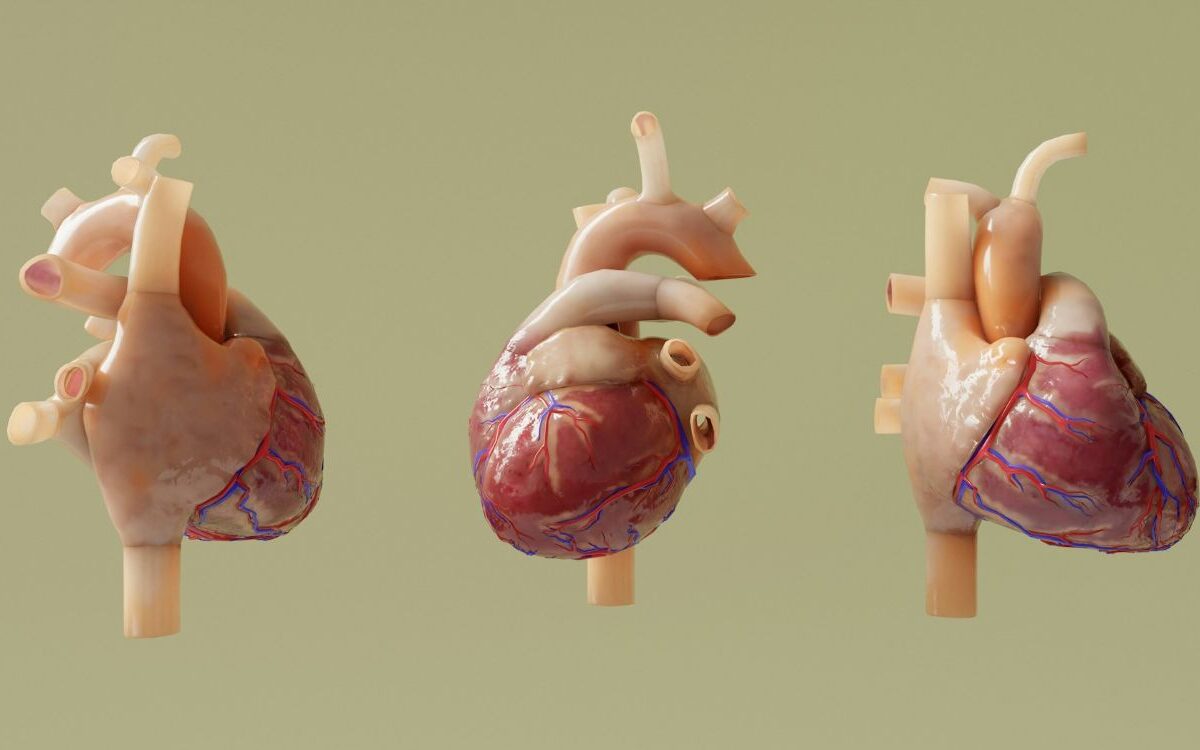
There’s a concerning number of Australians living with a dangerous heart rhythm disorder – and many of them have no idea.
Atrial fibrillation (AF) is a condition most people have never heard of and that’s a big problem, because it is already a silent cause of stroke.
A landmark trial is hoping to change that.
So, what is AF? It’s an irregular heart rhythm where the heart’s upper chambers don’t beat effectively, affecting one in 10 Australians over the age of 70 and is linked to one third of all strokes in Australia. If you have AF, your risk of having a stroke is up to five times higher than someone without the condition.
When detected, AF is easy to treat and strokes from AF can be prevented.
Finding AF earlier could spare thousands of Australians and their families from preventable harm. Every stroke prevented means more time with loved ones, greater independence and fewer hospitalisations.
I have dedicated my career to matters of the heart as a cardiologist and recently as a stroke researcher, spending countless hours learning about the dangers of AF and examining new ways to detect and prevent it.
We regularly see people presenting to hospital with a stroke, and only then do we discover they have AF. If we can find it earlier, we have a real opportunity to prevent those strokes from happening in the first place.
One of the biggest challenges is diagnosis. Unlike breast or bowel cancer, there is no national screening program for AF. A GP can check your pulse or order an ECG, but both approaches have a fundamental flaw: they only capture a brief snapshot in time. If your heart happens to be beating normally during that 30-second to one-minute window, AF won’t show up – even if you have it. The chances of detection are slim.
As our population ages, the burden of stroke will only grow unless we become more proactive about prevention.
Screening programs have transformed outcomes for other serious health conditions because they allow us to act before disaster strikes. Heart rhythm disorders deserve the same attention.
I have been leading a team of researchers at the Heart Research Institute (HRI) and the University of Sydney in the SAFER-AUS trial as part of the world’s largest clinical trial on AF screening investigating whether systematic screening for AF can prevent stroke.
We have just hit a milestone in the five-year trial, with the completion of the recruitment and screening phase within Australia.
More than 600 Australians aged 70 and over across New South Wales, Western Australia and Tasmania took part, with trial participants using a handheld ECG device at home to check their heart rhythm four times a day for three weeks. Twice that number also took part in the trial as controls, without receiving the screening intervention.
Preliminary findings confirm that previously undiagnosed cases of AF were identified during the screening process, cases that may otherwise have gone undetected until a stroke occurred.
Now we’re in the wait-and-discover phase. If the trial ultimately demonstrates fewer strokes in the screened group, we could implement national screening for AF immediately. We’ve already shown it works logistically in our general practice network.
For older Australians, a simple heart rhythm check could be the difference between years of healthy, independent living and a life altered forever by stroke. For policymakers, the evidence emerging from SAFER-AUS represents an opportunity to invest in prevention rather than treatment.
Australia is not alone in this work. The University of Cambridge last year completed screening in the broader SAFER study funded by the UK’s National Institute of Health and Care Research, with over 100,000 participants. SAFER-AUS is its only international arm.
The combined findings from both trials have the potential to reshape international healthcare guidelines and transform how AF is detected and managed around the world.
Governments quite rightly want proof that systematic screening reduces strokes before investing in it.
Based on a prevalence of around 10% in this age group, as many as 358,000 people over 70 may have AF without knowing it.
I’ve worked in stroke prevention for many years, and I’ve experienced a stroke myself. It reinforces how important prevention is. If we can stop even a fraction of strokes by identifying AF earlier, the impact on individuals, families and the health system would be enormous.
The screening project has been generously supported by a Medical Research Future Fund (MRFF) grant and the NHMRC Clinical Trials Centre (CTC), University of Sydney, which served as the Central Coordinating Centre for the operational aspects of the SAFER-AUS trial, and a NSW Health Senior Researcher Cardiovascular Grant.
Author Bio
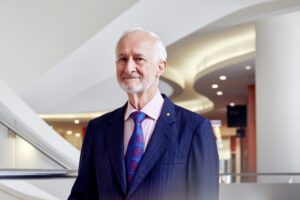
Professor Ben Freedman OAM is Director of External Affairs at the Heart Research Institute (HRI) and Group Leader of its Heart Rhythm and Stroke Prevention Group. He is Honorary Professor of Cardiology at the University of Sydney and a chief investigator on the international SAFER Trial. In 2015, he founded the AF-SCREEN International Collaboration, which now has over 200 members across 40 countries. He was awarded the Order of Australia Medal in 2011 for service to medicine as a clinician, educator and researcher.