China’s National Medical Products Administration (NMPA) approved satricabtagene autoleucel (satri-cel) on 22 June 2026, making it the world’s first CAR-T cell therapy approved for a solid tumour. Developed by Shanghai-based CARsgen Therapeutics, satri-cel is cleared for patients with Claudin18.2-positive, HER2-negative advanced gastric or gastroesophageal junction (GEJ) adenocarcinoma who have failed at least two prior lines of treatment. The approval marks a turning point in a field that has long struggled to extend the extraordinary successes of CAR-T beyond blood cancers into the far more complicated terrain of solid tumours.
Why Solid Tumours Have Been So Difficult
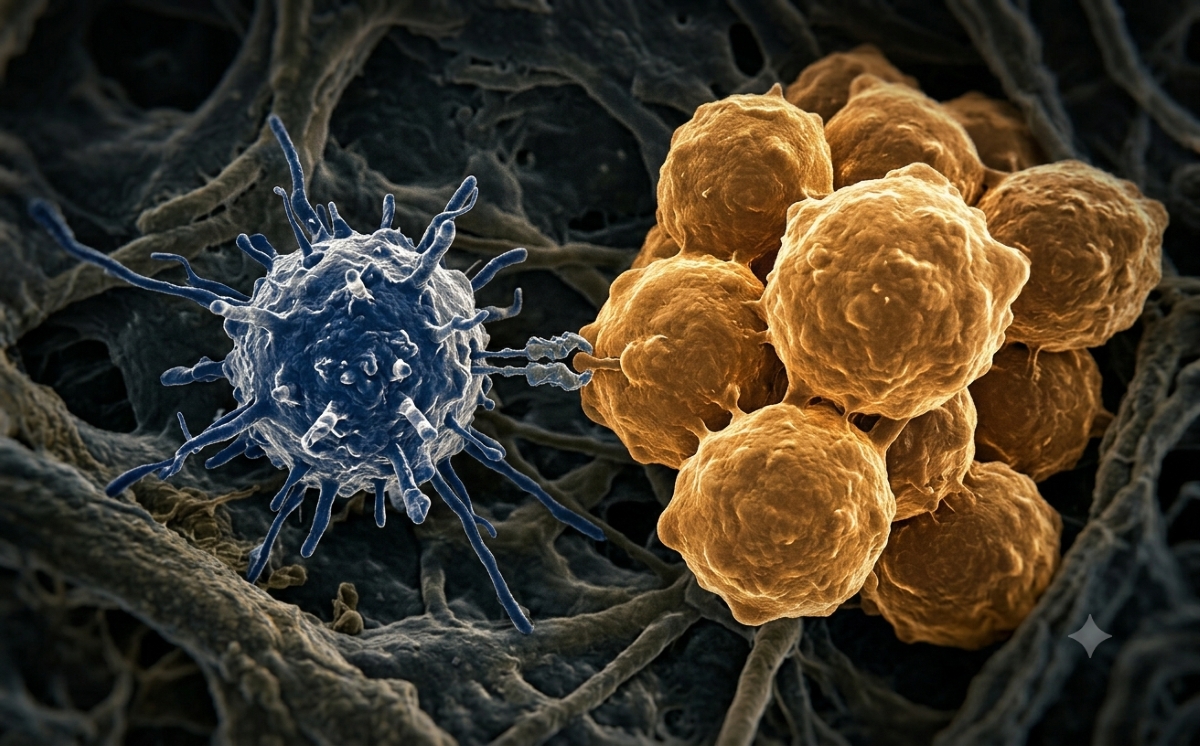
CAR-T cell therapy works by harvesting a patient’s own T cells, genetically engineering them to express chimeric antigen receptors that recognise specific cancer proteins, and reinfusing them to seek and destroy tumour cells. Since the FDA approved the first CAR-T therapy in 2017 for acute lymphoblastic leukaemia in children, the approach has transformed outcomes in blood cancers including B-cell lymphoma and multiple myeloma. Seven CAR-T products are now approved in the United States alone.
Yet for more than a decade, solid tumours have resisted this progress. The barriers are structural as well as biological. Unlike the circulating cancer cells that CAR-T therapies encounter readily in blood cancers, solid tumours present a hostile physical environment. T cells must infiltrate dense tumour tissue, navigate an immunosuppressive microenvironment and maintain function despite chronic antigen exposure that causes exhaustion. Antigen heterogeneity within a single tumour means cancer cells can evade detection by altering or downregulating their surface proteins. These challenges, taken together, have kept approval in solid tumour indications elusive, regardless of the investment behind it.
“We have zero approved products for solid tumours, and there are many barriers to that: a suppressive tumour microenvironment, immune checkpoints, and problems with tumour access are all potential issues,” said Dr Jared Weiss, Section Chief of Thoracic and Head/Neck Oncology at the University of North Carolina Lineberger Comprehensive Cancer Center, summarising the field’s position as recently as August 2025. As of 22 June 2026, that statement is no longer accurate.
The CARsgen Approach: Targeting Claudin18.2
Satri-cel targets Claudin18.2, a tight junction protein with a striking expression profile. In healthy tissue, it is found almost exclusively in differentiated gastric mucosal epithelial cells and remains inaccessible on the cell surface. In gastric cancer and other gastrointestinal malignancies, however, disrupted cell polarity exposes Claudin18.2 on the tumour cell surface, making it a highly selective oncology target.
The CAR construct incorporates a humanised Claudin18.2-specific single-chain antibody fragment alongside CD28 and CD3 signalling domains. Critically, CARsgen developed a proprietary preconditioning regimen that adds low-dose nab-paclitaxel to the conventional cyclophosphamide and fludarabine lymphodepletion protocol. The modification was designed to enhance CAR-T cell infiltration into the immunosuppressive solid tumour microenvironment, one of the central obstacles that has limited cellular therapy in epithelial cancers. Patients receive satri-cel as a single infusion following this preconditioning regimen, with a second infusion permitted in a subset of cases.
The Clinical Evidence: CT041-ST-01
The NMPA approval is supported by CT041-ST-01, a randomised, open-label Phase II trial conducted across 24 sites in China between March 2022 and July 2024. Results were published in The Lancet in June 2025 and presented at the ASCO Annual Meeting. The trial is, by CARsgen’s own account and widely acknowledged in the literature, the world’s first randomised controlled trial of a CAR-T cell therapy in solid tumours.
The study enrolled 156 patients with previously treated, Claudin18.2-positive advanced gastric or GEJ adenocarcinoma, randomised 2:1 to satri-cel (104 patients) or physician’s choice of therapy (52 patients). The patient population was heavily pretreated: 27% of those in the satri-cel arm had received three or more prior lines of treatment, and 69% had peritoneal metastasis, a particularly poor prognostic feature.
The primary endpoint was progression-free survival assessed by independent review committee. Patients receiving satri-cel achieved a median PFS of 3.25 months compared with 1.77 months in the physician’s choice arm, representing a hazard ratio of 0.37 (95% CI 0.24 to 0.56; p less than 0.0001). The overall response rate among patients with measurable disease in the satri-cel arm was 30%. A clinically meaningful improvement in overall survival was also observed, with median OS of 7.92 months versus 5.49 months for physician’s choice (HR 0.69).
“In patients who have failed multiple lines of prior therapy, previous treatment options were extremely limited and the prognosis was very poor,” said Professor Lin Shen of Peking University Cancer Hospital, who led the pivotal trial. “The approval of satri-cel provides us with a novel and effective therapeutic weapon.”
Dr Muhammad Shaalan Beg of the University of Texas Southwestern Medical Center, commenting at ASCO 2025, was direct about the significance: “CAR-T cell therapies have largely been ineffective in treating solid malignancies, and this is the first positive randomised trial of CAR-T cell therapy in solid tumours.”
The Disease Burden Behind the Milestone
Gastric cancer is the fifth most common malignancy globally, with approximately 970,000 new cases and 660,000 deaths annually according to GLOBOCAN 2022 data. The disease carries a particularly heavy burden in East Asia; China alone accounts for approximately 47% of new gastric cancer cases globally, and a similarly disproportionate share of related deaths. Most patients in China continue to present with late-stage disease, where prognosis remains poor and treatment options in the third line and beyond are limited to cytotoxic agents with modest benefit. Trifluridine and tipiracil, the oral combination used as the main comparator in CT041-ST-01, was the current standard in this setting.
For patients with Claudin18.2-positive disease in this line, satri-cel now provides the first approved cellular therapy option. The NMPA had previously granted satri-cel both Breakthrough Therapy Designation and Priority Review, reflecting the strength of the unmet need.
The Competitive Landscape for Claudin18.2
Satri-cel does not arrive in isolation. Astellas’s zolbetuximab (Vyloy) was approved in 2024 as a first-line therapy for Claudin18.2-positive, HER2-negative gastric cancer in combination with chemotherapy, establishing Claudin18.2 as a validated therapeutic target across multiple modalities. Astellas is also advancing ASP2138, a Claudin18.2-targeting bispecific T-cell engager, through Phase I trials, with a Phase III study in first-line gastric cancer planned for the second half of 2026. These programmes operate in distinct patient populations, but they collectively validate the biology. The broader cell therapy sector has also seen significant M&A activity in 2026, with Eli Lilly’s announced $7 billion acquisition of Kelonia Therapeutics, which is developing in vivo CAR-T approaches, with a lead programme in multiple myeloma and broader platform ambitions in solid tumours, underscoring how urgently the industry is pursuing the next generation of cellular therapies.
What Comes Next for Satri-Cel
Satri-cel’s regulatory trajectory extends beyond its current approval. The therapy received Regenerative Medicine Advanced Therapy (RMAT) designation from the US FDA in January 2022 and Orphan Drug Designation in September 2020 for advanced gastric and GEJ cancers. CARsgen is conducting the ELIMYN18.2 (CT041-ST-02) Phase Ib/II study in North America for patients with Claudin18.2-positive gastric and pancreatic cancers, positioning the programme for potential regulatory filings in Western markets.
Pancreatic cancer is a particular focus. Satri-cel is also being assessed in an ongoing Phase Ib clinical trial for pancreatic cancer adjuvant therapy in China, and investigator-initiated trials are evaluating it as consolidation and sequential therapy in earlier-line gastric cancer settings. The company is also exploring perioperative applications, reflecting the broader ambition to move satri-cel from salvage therapy to a meaningful role in curative-intent treatment.
A Proof of Principle for the Field
Beyond satri-cel itself, the approval carries significance for the entire solid tumour CAR-T field. For researchers and biotech companies working on CAR-T programmes targeting lung cancer, pancreatic cancer, breast cancer and other epithelial malignancies, this outcome provides the first clinical and regulatory proof that the approach can work outside haematology. The barriers that made solid tumours appear uniquely resistant have been breached, at least partially, in one disease setting. CARsgen’s modified lymphodepletion protocol and its approach to target selection are now published, presented at ASCO and embedded in a regulatory submission that resulted in approval. That is a template.
The absolute efficacy figures in CT041-ST-01 are modest when set against the dramatic responses seen in B-cell lymphoma or multiple myeloma. A median PFS of 3.25 months and an overall response rate of 30% in a heavily pretreated population reflect the difficulty of the setting. But they were sufficient to demonstrate statistically significant superiority over physician’s choice, in a patient population with no good alternatives and a prognosis measured in months. And they were enough to earn regulatory approval.
The question now is how far this proof of principle travels. Gastric cancer with a specific biomarker is one solid tumour. The other major epithelial cancers, with their own microenvironments, antigens and heterogeneity profiles, remain unsolved. But the answer to the question that has defined a generation of oncology research, namely whether CAR-T can work in solid tumours, is now yes.