Dr Steven Cox, CEO of the research charity, Cardiac Risk in the Young (CRY) explains the key findings and importance of a seminal study (reviewing cardiac screening data collated over a 10 year period), published on 24 February 2026 in the Journal of the American College of Cardiology – and why this new evidence should now be informing cardiac screening policy in the UK:
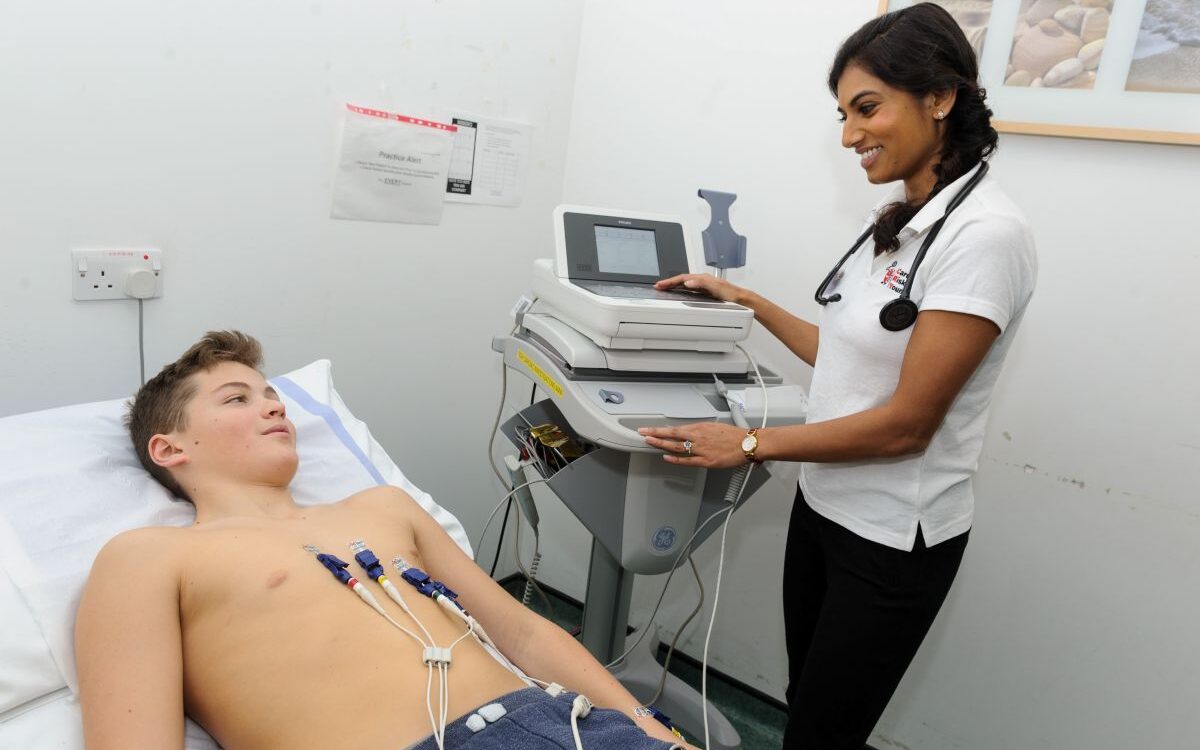
“The largest-ever study of cardiac screening in young people has delivered compelling evidence that heart checks using electrocardiograms (ECGs) can identify potentially life‑threatening conditions in young people and save lives, but whilst also demonstrating that a single screening is not enough to protect all those at risk.
“Conducted by a team of 25 researchers at City St George’s, University of London and St George’s University Hospitals NHS Foundation Trust – and funded by Cardiac Risk in the Young (CRY) – the study analysed outcomes from more than 104,000 individuals aged 14 to 35 who underwent testing (through CRY’s UK-wide screening programme) between 2008 and 2018.
“It is the first – and largest – study of its kind to systematically follow up every participant, providing an unprecedented dataset that reveals how vital cardiac screening is in asymptomatic young people.
“The findings, published in the Journal of the American College of Cardiology (24.02.26) show that one in 300 young people screened were diagnosed with a serious cardiac condition that could have fatal consequences if left untreated, and that 41% of those diagnosed went on to receive significant risk‑reducing interventions such as implantable defibrillators, pacemakers, ablation procedures and, in two cases, heart transplantation. Others received medical management, monitoring and lifestyle guidance.
“The study also highlights the importance of repeat screening: although ECG testing demonstrated strong – arguably, ‘unrivalled’ – sensitivity (77%) and a low false‑positive rate of 2.1%, follow‑up revealed that 0.08% of individuals with an initially normal ECG later developed a condition associated with Young Sudden Cardiac Death (YSCD). So yes, these findings underscore that some conditions do develop later / are ‘acquired’, reinforcing the need for ongoing screening rather than a ‘one‑off’ test.
“Importantly, the study challenges long‑held assumptions that screening should focus primarily on athletes: only 9% of participants were competitive athletes, and the research found no significant difference in risk of death between screened athletes and non‑athletes, suggesting that current policies—largely centred on elite sport—fail to protect the wider population.
“With 12 young people (aged 35 and under) dying each week in the UK from previously undiagnosed heart conditions, and 80% showing no symptoms beforehand, CRY maintains that proactive screening is essential.
“We hope the study will strengthen the case for national investment in preventive screening, particularly at a time when the UK National Screening Committee faces scrutiny for rejecting screening proposals in other disease areas (e.g prostate cancer).
“Looking ahead, our researchers plan to expand their dataset to 300,000 individuals and explore how AI / ML could enhance ECG interpretation, detect subtle abnormalities and support scalable, cost‑effective screening. CRY’s 2030 strategy includes a major AI‑driven cardiac screening and research initiative, recognising that wearable technologies will soon make screening more accessible but that robust data is needed to power accurate algorithms.
A Landmark in Clinical Literature
The significance of these findings has been echoed by the leadership at the Journal of the American College of Cardiology. In a rare commendation to the lead authors, the Editor-in-Chief of JACC noted:
“This study is one of the largest and most comprehensive examinations of cardiac screening in young individuals, with national data linkage, long-term follow-up, and inclusion of both athletes and non-athletes. It has the potential to become a definitive reference paper in the field—one that will be cited for years to come in guidelines, reviews, and policy debates.”
“And, for CRY’s bereaved families – who have funded this work – the study marks a pivotal moment: clear evidence that screening saves lives, and a roadmap for preventing further, devastating tragedies.”
Author Bio

Dr Steven Cox, CEO
Dr. Steven Cox is the Chief Executive of Cardiac Risk in the Young (CRY), a national charity dedicated to preventing young sudden cardiac deaths. As an elite athlete on a US tennis scholarship, he was diagnosed with a rare cardiac condition during routine screening, shaping his personal and professional journey. After earning a degree in Applied Psychology and Sociology (University of Surrey), he collaborated with leading experts to publish pioneering research on the quality of life for patients with Hypertrophic Cardiomyopathy (1997). He later obtained a PhD from UCL, focusing on the psychological impact of cardiac screening.
Since joining CRY in 2000 and becoming CEO in 2016, Steve has overseen the expansion of its screening programme, which, to date, has tested the hearts over 350,000 young people. He supports world-leading research with top scientists and cardiologists and advocates for the prevention of young sudden cardiac deaths as a media spokesperson and government advisor.