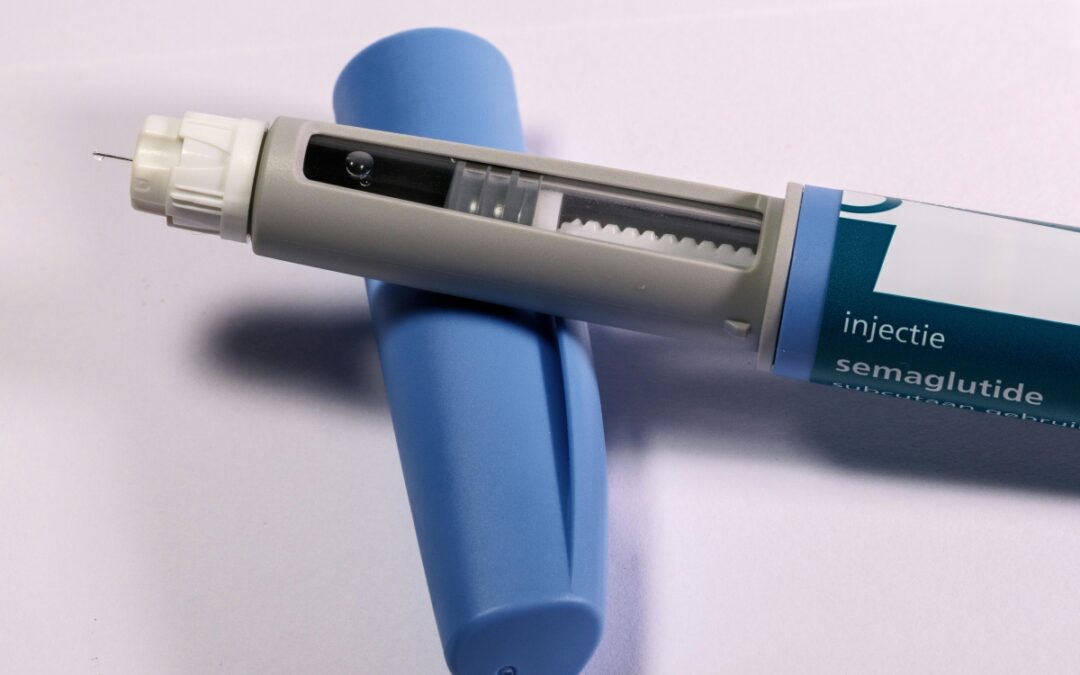
When US and Israeli military operations against Iran began on 28 February 2026, the consequences for global energy markets were immediate and predictable. What was less widely anticipated was the scale of the disruption now rippling through the life sciences sector....
UK Government’s LSLIP: A New Era for British Life Science
UK Government's Life Sciences Large Investment Portfolio: A New Era for British Life Science The United Kingdom's life sciences sector received a significant policy boost on 14 April 2026 when the government formally announced the Life Sciences Large Investment...
The UK Spine Crisis: Beyond Posture to a Future of Regenerative Care
The UK is currently navigating a silent epidemic that threatens not only our collective physical well-being but also our national productivity and the long-term sustainability of our healthcare infrastructure. Musculoskeletal (MSK) conditions now impact nearly one in...
Weekly News Roundup | 13 April 2026
Life science news 13 April 2026: A record-breaking wave of M&A, an escalating GLP-1 pricing war and major FDA approvals define a landmark week for the global life science industry. Gilead Sciences announced on 7 April its acquisition of Munich-based antibody-drug...
Weekly News Roundup | 6 April 2026
Life science news 6 April 2026: A landmark obesity pill approval, 100% pharma tariffs and a record $6.3 billion life sciences fund headline a transformative week for the global pharmaceutical industry. The FDA approved Eli Lilly's once-daily obesity pill Foundayo...
Python Blood Molecule Opens Door to New Obesity Treatments
Scientists studying the extraordinary metabolism of Burmese pythons have identified a python blood molecule that dramatically suppresses appetite in obese mice, raising the prospect of a new class of weight loss therapies that could avoid some of the side effects...
UK Boosts Clinical Trials With Faster, Agile Regulation
Press Release: Patients to benefit sooner as UK boosts clinical trials attractiveness with faster assessments and agile regulation The MHRA is now setting out the next phase of reforms for 2026, aimed at helping patients access new cutting-edge treatments more...
The Research Partnership That Looked Perfect – Until it Wasn’t
The dream is always the same: strike out on your own and build something that’s truly yours. Perhaps you’re spinning out from a university, commercialising years of research with a fellow academic who shares your vision. Or maybe you’re breaking away from the big...
Science & Nuclear Leaders Urge Pause on Apprenticeship Reforms
Leaders in life sciences and nuclear urge review of proposed changes Leaders across the science sector have made an urgent call to government to reconsider potentially harmful reforms to the way apprenticeships are assessed. Members of two leading employer bodies...
The Lost World of Autism
Dhruv Shenai explores how females have been left behind in conversations on autism by discussing the history and lack of female representation within the field. Neuroscientist Gina Rippon has spent years challenging the male-centred bias in autism research. Her new...
FDA Novel Drug Approvals in 2025 Analysis and What it Signals for 2026
The U.S. Food and Drug Administration released its official list of novel drug approvals for 2025, marking a year of significant therapeutic breadth and scientific innovation. Novel drugs are defined as new molecular entities or biologics approved for use in the...
Why Life Sciences Can no Longer Rely on Traditional Media
The life sciences industry is advancing at a speed that would have felt unimaginable just a few years ago. Artificial intelligence is shortening drug discovery timelines. Digital therapeutics are reshaping care delivery. Precision medicine is moving healthcare from...
A New Year’s Resolution for 2026: Share Your Voice in Life Sciences
As 2026 begins, it is natural to pause and reflect on the year behind us while thinking about what lies ahead. In the life sciences, these reflections often centre on progress: new experiments to launch, collaborations to build, technologies to adopt, or ideas to...
7,000 Steps a Day May Improve Brain and Reduce Disease Risk
Walking around 7,000 steps each day could help sharpen cognition and shield against a variety of chronic illnesses, according to a major new analysis. This target may be more attainable, yet still effective, than the widely publicised 10,000 step goal. Published in...
How the UK May Be Undervaluing Life Sciences Manufacturing Investments
Concerns are mounting that the United Kingdom’s official appraisal framework is systematically underestimating the economic and social value of investments in life sciences manufacturing. Industry bodies and independent analysts warn that the methods used to evaluate...
UK Winter Flu 2025: Current Trends and Vaccine Advice
As the UK enters the heart of the 2025 to 2026 winter respiratory season, influenza flu is emerging as a major public health challenge, with cases rising earlier and more sharply than usual. Health services are already under strain, and experts are urging the public...
Astatine-211: The Alpha-Emitter Gaining Momentum in Targeted Radiotherapy
Astatine, the heaviest halogen and the rarest naturally occurring element, has long been a scientific curiosity. Among its many isotopes, ²¹¹At has emerged over the past decade as a frontrunner in the quest to harness alpha particles for highly targeted radiotherapy....
Life Science Development in Singapore: A Rising Global Powerhouse
Singapore has rapidly transformed into one of the world’s most advanced and influential life science hubs. Over the past two decades, the city-state has combined strategic investment, world-class infrastructure, and a thriving innovation ecosystem to position itself...