An FDA advisory panel backed GRAIL’s Galleri multi-cancer early detection test six to four on effectiveness, days after the English trial behind much of the evidence missed its primary endpoint.
When Life Sciences Compliance Problems Are Really Operations Problems
When a life sciences organization struggles during a regulatory inspection or quality audit, the first reaction is fairly predictable: people point to evolving regulatory expectations, expanding documentation requirements, or the complexity of maintaining compliance...
Obesity Drug Access in the UK: NHS and Private Routes in 2026
Obesity drug access in the UK now runs along two tracks that rarely meet. One is a publicly funded NHS rollout of tirzepatide (Mounjaro), phased over as long as 12 years. The other is a private market that has grown far faster. A UCL survey estimates that about 1.6...
Telix Buys ITM: Radioisotope Supply and a Manufacturing Test
Telix will pay US$1.65bn for ITM, placing the sector’s largest radioisotope supply business inside a developer whose rivals depend on it.
Azetukalner NDA Filed as Xenon Pauses Depression Trials
Xenon filed the azetukalner NDA for focal seizures on 17 September, then paused depression trial enrolment over neuropsychiatric events.
FDA Clears First Glioma PET Imaging Drug After 2025 Rejection
The FDA has approved Pixclara, the first glioma PET imaging drug, sixteen months after rejecting the same application. No UK filing has been announced.
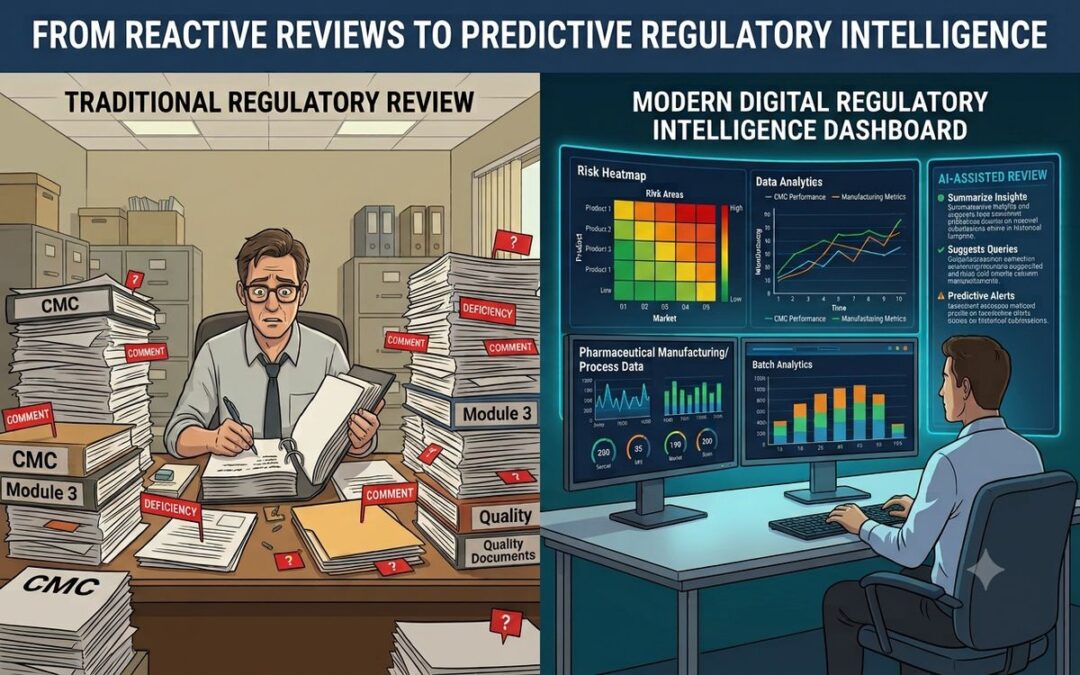
From Reactive Reviews to Predictive Regulatory Intelligence
Every regulatory professional has experienced the same moment. After months, and sometimes years, of preparing a Chemistry, Manufacturing, and Controls (CMC) submission, the application is finally submitted to a health authority. At that point, the questions begin....
Why AI in Life Sciences Lives or Dies on its Data Foundations
AI has moved quickly in the life sciences making exciting breakthroughs and reframing how we think about healthcare. But beneath these breakthroughs, work is happening in places that rarely make headlines, data catalogues, validation plans, audit trails, integration...
CagriSema FDA Review: Novo Nordisk NDA Timeline Explained
The CagriSema FDA review has become one of the most closely watched regulatory processes in metabolic medicine. Novo Nordisk filed a New Drug Application for its once-weekly obesity combination in December 2025, and a decision is widely expected in the final quarter...
Daraxonrasib FDA Filing: What Happens Next for Pancreatic Cancer Patients?
The daraxonrasib FDA filing is nearing completion, marking a pivotal regulatory moment for patients with metastatic pancreatic ductal adenocarcinoma (PDAC). Revolution Medicines announced on 7 July 2026 that its rolling submission of a New Drug Application (NDA) to...
FDA Drug Approval Decisions to Watch: July and August 2026
The second half of 2026 is shaping up to be one of the most consequential periods for FDA drug approval decisions in recent memory. Between mid-July and late August, the US Food and Drug Administration faces a succession of Prescription Drug User Fee Act target action...
Atacicept FDA Approval: Trutakna Cleared for IgAN
The atacicept FDA approval that the nephrology community had been anticipating since January arrived on schedule on 7 July 2026, when the US Food and Drug Administration granted accelerated approval to Vera Therapeutics' atacicept-vymj, to be marketed as Trutakna, for...
CE Marking Is Not Enough: Three Layers for Connected Medical Devices
If your device connects to a network and runs AI, CE marking under MDR or IVDR is only the first layer for connected medical devices. Two further EU frameworks, the AI Act and the Cyber Resilience Act, can also apply, each with obligations that go beyond what MDR...
Atacicept IgA Nephropathy: FDA Decision Due 7 July
Four days from now, the US Food and Drug Administration is due to hand down its atacicept IgA nephropathy decision, ruling on whether the experimental Vera Therapeutics drug becomes the first therapy to target both BAFF and APRIL in adults with the disease. The...
FDA Accelerated Approval: How the Fast-Track Pathway Works
FDA accelerated approval is one of the agency's most powerful and most debated regulatory tools. Designed to speed access to treatments for patients with serious or life-threatening conditions, it has delivered transformative therapies to those with no other options....
AI Governance in Biopharma Is Failing the Translation Test
Artificial intelligence is no longer experimental in biopharma. It is operational. Across drug discovery and development, AI systems are being used to identify targets, design molecules, optimize mRNA constructs, and simulate biological interactions that were...
AI Transparency Gap in SaMD Regulation
Artificial intelligence is no longer on the horizon of medical device regulation — it’s already on regulators’ desks. The FDA’s iterative guidance on AI/ML-based Software as a Medical Device (SaMD), the EU AI Act’s risk classification scheme, and Health Canada’s...
Why Europe’s Precision Oncology Trials Keep Stalling
Precision medicine works when the right biomarker test reaches the right patient in time. In Europe, the regulatory plumbing is making that harder than it should be. At the 16th Clinical Biomarkers & CDx Summit in London in March 2026, I discussed lessons from MDx...