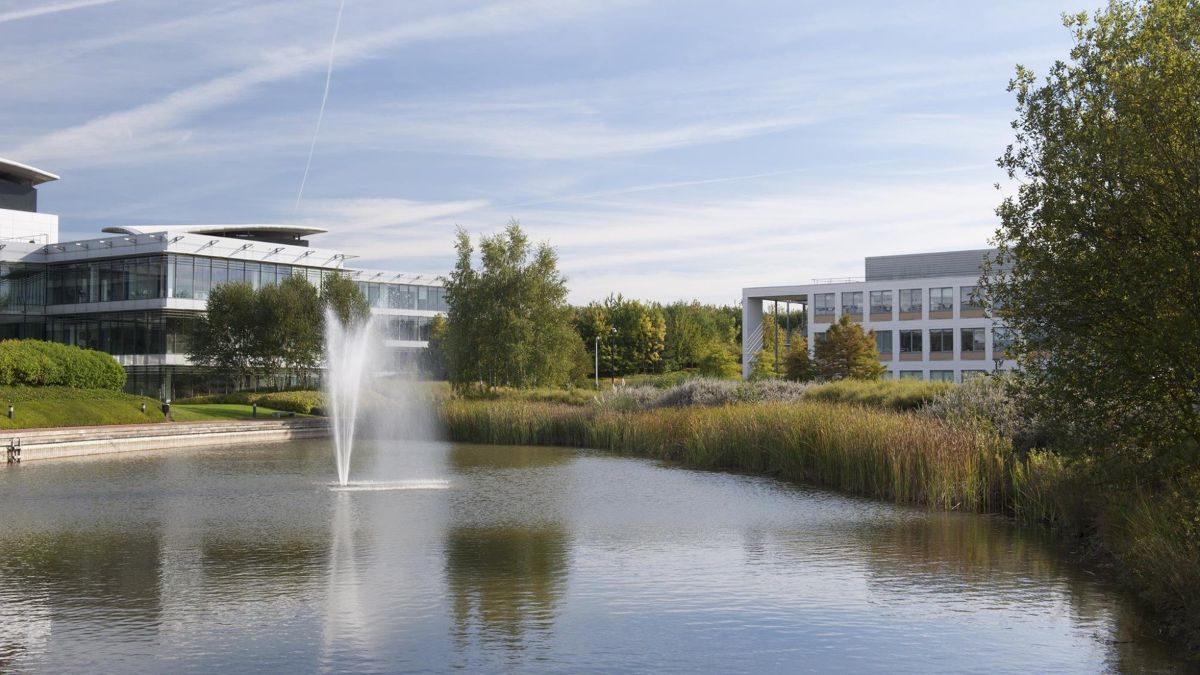
The Oxford Science Park (OSP), located on the southern edge of Oxford and owned by Magdalen College, Oxford, is entering a significant new phase of expansion aimed at strengthening the UK’s life sciences and technology infrastructure. This growth is driven by strong demand for high-quality laboratory and office space, global competition for scientific talent, and Oxford’s ambition to maintain its reputation as a world-leading innovation cluster.
Ambitious Growth Strategy
The Park has secured planning permission (22 May 2025) for a new 80,000 sq ft four-storey laboratory and office building located at the eastern edge of the site, adjacent to the proposed new station on the reopened Cowley Branch Line. The approved development will provide best-in-class space tailored for cutting-edge science and technology companies.
Yong Shen, Director of the Oxford Science Park, said:
“This is fantastic news for the Oxfordshire ecosystem and for the companies shaping the future of science and technology. This development allows us to offer more world-class facilities in an established setting that promotes collaboration, sustainability and discovery.”
The building’s design places sustainability at its core and includes a biodiversity net gain of 5.86 %, 168 car-parking spaces (25 % of which are fitted with EV charging), 104 bicycle spaces, rooftop photovoltaic panels and anodised aluminium façades.
Chronology of Recent Expansion Milestones
The new development builds on several major phases of expansion that have taken shape over the past few years, reflecting OSP’s long-term strategy to meet growing demand for advanced science infrastructure.
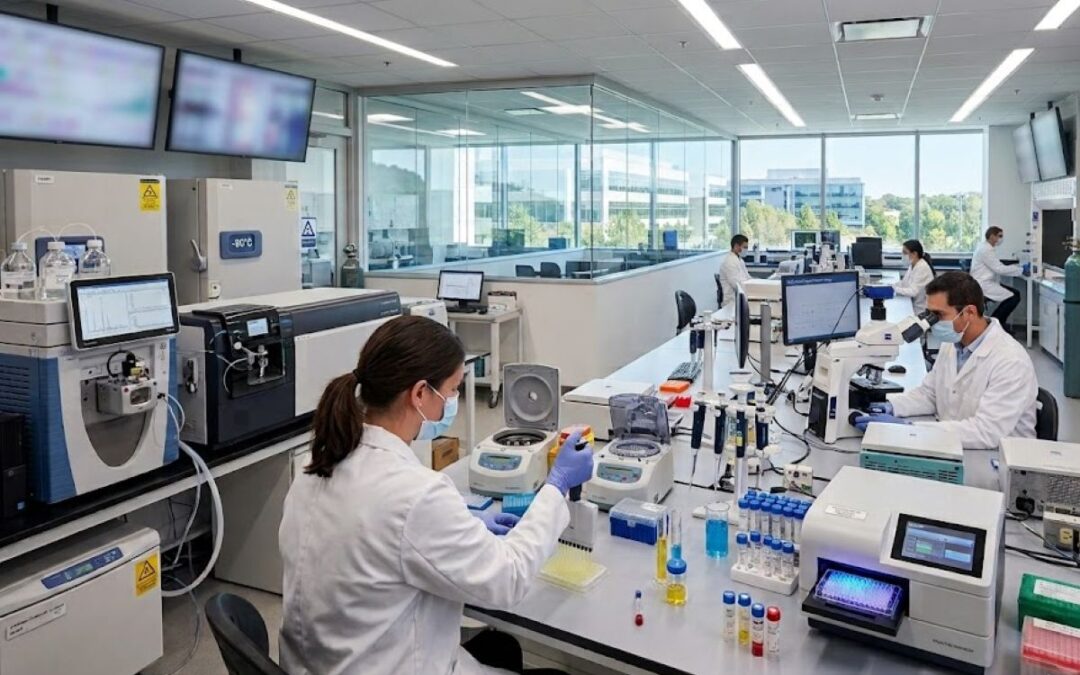
In March 2023, planning approval was granted for three new buildings (Plots 23-26) totalling more than 400,000 sq ft of laboratory and office space. These buildings were designed with flexibility in mind, incorporating lab-ready infrastructure, shared co-working zones and social spaces to foster collaboration between start-ups, scale-ups and established research enterprises.
By July 2024 the Park advanced further, awarding Mace Group a £184 million contract to deliver “The Daubeny Project” — three state-of-the-art laboratory and office buildings providing an additional 400,500 sq ft. The project places a strong emphasis on sustainable construction, with the use of recycled aluminium curtain-walling, innovative structural solutions to reduce embodied carbon, and an expected saving of more than 3,000 tonnes of carbon through design efficiencies.
The 2025 approval for the 80,000 sq ft facility extends this trajectory, bringing new capacity online in alignment with Oxford’s wider infrastructure improvements and the planned reopening of the Cowley Branch Line by 2030.
Implications for Oxford’s Science Cluster
These developments strengthen Oxford’s position as one of Europe’s most dynamic science and technology centres. They respond directly to the UK’s acute shortage of high-quality laboratory space and provide a platform for innovation-led economic growth. The 2023 and 2024 projects were designed to deliver the kind of adaptable, high-specification lab and office space required by emerging and mature science companies alike.
The expansion also deepens the Park’s integration into the regional research ecosystem. Its proximity to the University of Oxford and the wider knowledge-driven corridor ensures seamless connections between academic research, industry and investment. This concentration of capability reinforces the strategic importance of the Oxford–Cambridge Arc to the UK’s innovation economy.
Location and Connectivity Advantage
The Oxford Science Park is situated approximately five miles south-east of the city centre, with access to Oxford’s ring road, the A34, M40 and direct routes to Heathrow Airport. The proposed Cowley Branch Line station, adjacent to the new development, will provide direct rail connectivity to Oxford and London, enhancing accessibility for employees, researchers and collaborators. This link will also help reduce reliance on car travel, aligning with the Park’s broader sustainability agenda.
What It Means for Occupiers and Investors
The companies committing to the new space represent a cross-section of the modern science and innovation economy. These include firms engaged in next-generation drug discovery, biotechnology, diagnostics, digital health, artificial intelligence and advanced materials. Many are university spin-outs or scaling ventures translating academic breakthroughs into commercial applications, while others are established technology firms expanding research capacity close to Oxford’s knowledge base.
For occupiers, the new space offers purpose-built infrastructure, advanced laboratory specifications, and proximity to research collaborators — elements crucial to retaining top-tier talent and accelerating innovation cycles. For investors, the developments signal that Oxford remains a strong market for science real-estate, underpinned by consistent demand and high growth potential. Together, these dynamics reinforce the Park’s role as a cornerstone of the UK’s scientific economy, capable of accommodating everything from early-stage ventures to global research institutions.
Outlook
As construction progresses, the Oxford Science Park is emerging as a model for how research campuses can combine sustainability, infrastructure and innovation in one environment. With over half a million square feet of new laboratory and office space under development and more phases planned, the Park’s influence on Oxfordshire’s innovation landscape will continue to grow. The coming years will determine how effectively these investments translate into new discoveries, high-value employment and strengthened links between academia and industry.
Related Reads
- Strategic sale to the Ellison Institute of Technology at Oxford Science Park
- Progress in expansion of Oxford Science Park – submissions for Plots 23–26