
The wearable health technology market has expanded at a pace that regulators, clinicians, and patients have struggled to keep up with. Smartwatches, adhesive biosensors, continuous glucose monitors, and cardiac patches are now part of the fabric of daily life for millions of people. But in clinical settings, where device outputs inform treatment decisions with direct consequences for patient safety, the question of regulatory clearance is not a technicality. For FDA cleared wearable devices, that clearance is the evidentiary floor, not the ceiling. It is the difference between a device that has been independently validated for a specific medical purpose and one that has not.
The landscape is complex, and it is changing rapidly. In January 2026, the US Food and Drug Administration published two final guidance documents that significantly loosened the regulatory requirements for consumer wearables and AI-enabled clinical decision support tools, clarifying that many low-risk products fall outside the definition of a medical device when their outputs are reviewed by a clinician before action is taken. The announcement, made by FDA Commissioner Marty Makary at the Consumer Electronics Show, was welcomed by the digital health industry as a signal of regulatory modernisation. For clinical professionals, it raised an equally important question: if fewer wearables require FDA clearance, how do healthcare systems distinguish devices with validated clinical utility from the rapidly growing number of products that have not been held to the same evidentiary standard?
What Regulatory Clearance Actually Means
In the United States, medical devices are regulated by the FDA under a risk-based classification framework. Class II devices, which are considered moderate to high risk, typically require 510(k) clearance, a process that asks manufacturers to demonstrate that their device is substantially equivalent to a previously cleared predicate device. This process differs from full FDA approval, which applies to Class III devices and requires extensive clinical trial evidence of safety and efficacy. The distinction matters in clinical practice, because 510(k) clearance does not in itself confirm that a device has been tested in large, prospective clinical trials.
In Europe, medical devices require a CE mark under the Medical Device Regulation, which came into full effect in 2021 and introduced significantly stricter clinical evidence requirements than the previous framework. Devices used in clinical settings must demonstrate clinical performance through sufficient clinical data, a requirement that has proved challenging for some wearable manufacturers to meet, particularly for novel sensing technologies without established clinical comparators. Understanding the evidentiary basis behind FDA cleared wearable devices is therefore essential for any clinical team integrating these technologies into patient care workflows.
The January 2026 FDA guidance further refined the distinction between regulated medical devices and general wellness products. According to analysis by law firm Ropes and Gray, the revised guidance clarifies that whether a non-invasive wearable can be considered a general wellness product depends on how its manufacturer promotes it, not whether it measures a parameter such as blood pressure that is inherently associated with a disease or condition. This represents a notable shift from the position the FDA had taken just six months earlier, when it issued a warning letter to WHOOP, Inc. in July 2025 asserting that its blood pressure monitoring feature could not qualify as a wellness product. The revised guidance effectively reversed that position.
Continuous Glucose Monitors: A Proven Clinical Category
Among wearable device categories, continuous glucose monitors (CGMs) have the most established clinical evidence base and the clearest regulatory standing. The FDA’s integrated CGM (iCGM) designation, which represents the highest level of CGM clearance, requires devices to meet rigorous accuracy performance standards and enables them to be used as standalone, non-adjunctive tools for informing insulin dosing decisions, without requiring a confirmatory fingerstick blood test.
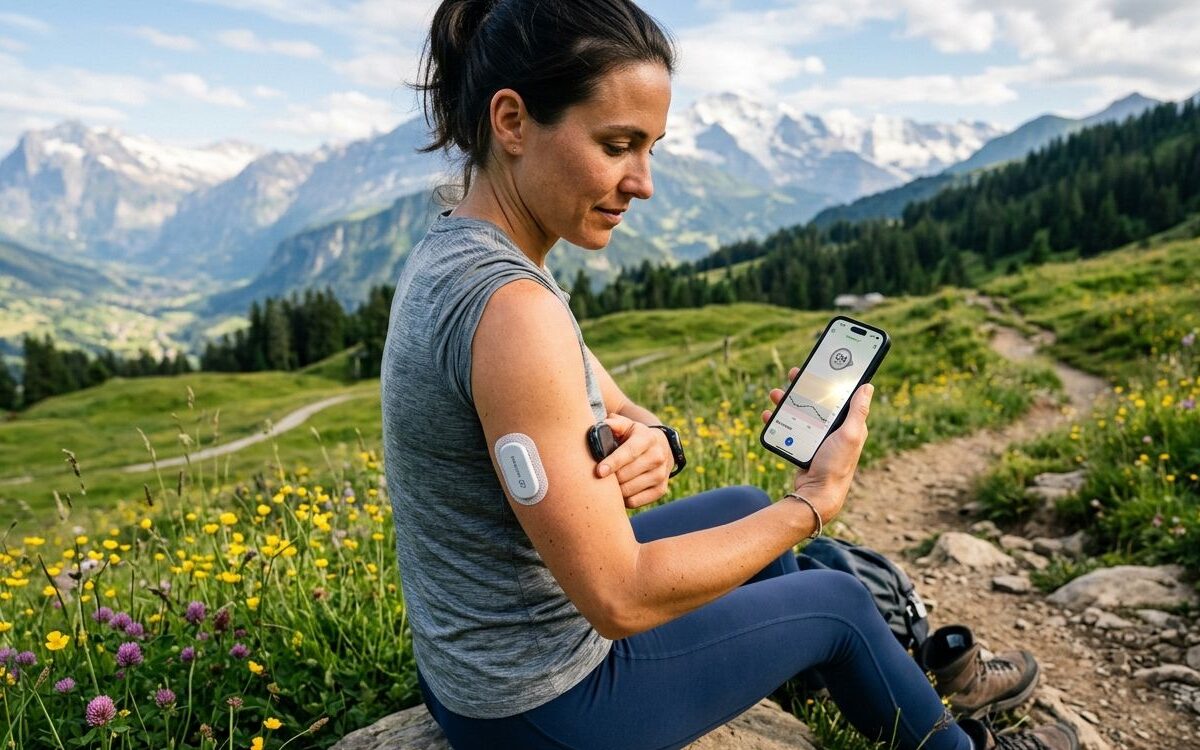
Currently, the only devices meeting iCGM criteria are Abbott’s FreeStyle Libre 2, FreeStyle Libre 2 Plus, FreeStyle Libre 3, and FreeStyle Libre 3 Plus, alongside Dexcom’s G6 and G7 systems. The FreeStyle Libre 3 system, cleared for use in people aged four and older, offers 14-day continuous glucose sensing with minute-by-minute readings transmitted automatically to a compatible smartphone. The Dexcom G7 15-Day CGM System, which received FDA clearance in April 2025 with a mean absolute relative difference of 8.0%, extended the performance standards of its predecessor.
The clinical evidence supporting CGM use in diabetes management is now substantial. Meta-analyses across real-world studies have shown sustained improvements in HbA1c and reductions in hypoglycaemia risk associated with CGM use, and these devices are now embedded in the clinical guidelines of major diabetes organisations worldwide. The separation between CGMs with iCGM clearance and non-iCGM devices approved in other markets is clinically significant, as devices without that designation typically require users to confirm glucose levels with a blood test before making treatment decisions.
A further development in the CGM category came in 2024 with the FDA clearance of the Eversense 365, the first and only fully implantable CGM, offering a sensor life of 365 days. The sensor is implanted under the skin of the upper arm by a healthcare provider using local anaesthesia, providing continuous monitoring without the need for regular sensor replacement.
Cardiac Monitoring: From Consumer Watches to Clinical Tools
Cardiac monitoring is the wearable category that has attracted the most regulatory and clinical scrutiny, partly because of the stakes involved in accurate arrhythmia detection and partly because of the extraordinary reach of consumer smartwatch platforms.
The Apple Watch became the first consumer smartwatch to receive FDA clearance for single-lead ECG monitoring, obtained through the 510(k) process. Its atrial fibrillation (AF) detection capability, based on an irregular rhythm notification using photoplethysmography, is FDA cleared for users with no prior AF diagnosis. In May 2024, the Apple Watch’s Atrial Fibrillation History feature achieved a further landmark, becoming the first digital health technology to receive qualification under the FDA’s Medical Device Development Tools (MDDT) programme, as a Class II photoplethysmography analysis software for over-the-counter use. The qualification means that sponsors of clinical trials evaluating cardiac ablation devices can use Apple Watch AF burden data as a secondary endpoint without submitting additional rationale to the FDA, a meaningful reduction in the regulatory burden of incorporating consumer wearables into clinical research.
Clinical validation studies have examined the Apple Watch ECG’s accuracy with generally positive findings. A systematic review and meta-analysis published in JACC: Advances found that the Apple Watch ECG showed pooled sensitivity of 94.8% (95% CI: 91.7%–96.8%) and specificity of 95% (95% CI: 88.6%–97.8%) for identifying AF across 11 studies comprising 4,241 participants.
The American College of Cardiology and European Society of Cardiology guidelines suggest using wearable devices for diagnosis and long-term surveillance of AF but advise caution due to the limited extent of clinical validation in broader, undiagnosed populations. The point is important: 510(k) clearance through the FDA’s substantial equivalence pathway does not substitute for the kind of large-scale, prospective clinical evidence that would be required to establish a device as a primary diagnostic tool in routine clinical practice.
Beyond consumer smartwatches, 2025 saw a significant expansion in FDA-cleared wearable cardiac monitoring devices designed specifically for clinical use. VitalConnect’s VitalRhythm biosensor received FDA clearance in April 2025 for continuous ECG, heart rate, and respiratory monitoring, enhancing its utility in remote patient monitoring programmes. CardioTag by Cardiosense received 510(k) clearance in July 2025 for non-invasive ECG, seismocardiography, and photoplethysmography monitoring for cardiac timing intervals. Element Science’s Jewel Patch Wearable Cardioverter Defibrillator also received FDA approval in May 2025, for patients at temporary risk of sudden cardiac arrest.
Respiratory and Metabolic Monitoring
Beyond cardiac and glucose monitoring, regulatory clearances in 2025 signalled the maturation of further clinical wearable categories. In May 2025, AeviceMD received FDA 510(k) clearance for a smart wearable stethoscope designed for paediatric respiratory monitoring, enabling continuous breath sound capture in a form factor that does not require a bedside clinician. The Masimo W1 watch received FDA clearance in May 2025 for continuous heart rate and blood oxygen saturation monitoring, building on Masimo’s established position in hospital-grade pulse oximetry.
In September 2025, Biolinq received FDA De Novo Classification for its Biolinq Shine biosensor, a forearm patch wearable for non-insulin-treated type 2 diabetes patients that tracks glucose, physical activity, and sleep. The De Novo pathway, reserved for novel, low-to-moderate risk devices without a cleared predicate, reflects the genuinely innovative nature of some wearable sensing technologies and the FDA’s efforts to provide appropriate regulatory frameworks for them.
Why Clearance Status Matters in Clinical Practice
The proliferation of wearable devices marketed with health-related claims creates real challenges for clinical teams attempting to evaluate which products are appropriate for use in patient care. A device that has received 510(k) clearance has met the FDA’s standard of substantial equivalence to a predicate device. It has not necessarily been evaluated in large randomised controlled trials, and its performance in specific patient populations may not have been established. A device classified as a general wellness product under the January 2026 guidance has not been evaluated by the FDA as a medical device at all. Clinicians must therefore treat FDA cleared wearable devices as a starting point for evaluation, not a conclusion.
This matters because the clinical consequences of inaccurate monitoring vary considerably depending on the application. An inaccurate reading from a consumer heart rate monitor during recreational exercise is unlikely to cause harm. An inaccurate glucose reading in a patient whose insulin dose is determined by CGM output could be life-threatening. The FDA’s iCGM framework exists precisely to make that distinction enforceable.
The shift in FDA posture under the Trump administration, towards reduced oversight of low-risk digital health products, places more responsibility on manufacturers to conduct rigorous clinical validation and communicate findings transparently. As legal analysts at MDDI Online noted following the January 2026 guidance, less FDA review means that clinical validation, post-market monitoring, and transparency will be shifted further onto manufacturers. For clinicians and health systems evaluating which wearables to adopt, the regulatory status of a device is a necessary but not sufficient criterion. The clinical evidence base, the patient population in which a device has been validated, and the consequences of measurement error all warrant careful assessment before a wearable is incorporated into clinical decision-making.
Towards a More Integrated Framework
The trajectory is broadly positive. The volume and quality of FDA-cleared wearable devices entering clinical settings has grown substantially in recent years, and the Apple Watch’s MDDT qualification in 2024 demonstrated that consumer-grade devices can meet the evidentiary standards required for use in formal clinical research. The FDA’s Technology-Enabled Meaningful Patient Outcomes Pilot, launched in late 2025 in partnership with the Centers for Medicare and Medicaid Services, represents an attempt to generate systematic real-world evidence on the performance of cleared digital health technologies in chronic disease care.
In Europe, the EMA and national regulators are working through the implications of the Medical Device Regulation’s stricter clinical evidence requirements for wearable devices, a process that is generating both delay and greater rigour in the evidence available to support clinical adoption.
For wearables to fulfil their potential as tools for earlier diagnosis, continuous monitoring, and more personalised treatment, the clinical and regulatory communities will need to maintain the distinction between devices that have earned their place in clinical settings through robust evidence and those that have not. For health systems, that process begins with confirming which FDA cleared wearable devices have been validated in the relevant patient population, and which have not. That distinction is not a barrier to innovation. It is what makes clinical adoption of innovation safe.