The Medicare GLP-1 Bridge launched on 1 July 2026, opening a new pathway for eligible Medicare Part D beneficiaries to access weight management medications at a fixed monthly copay of $50. For clinicians navigating GLP-1 Bridge eligibility criteria, the prior authorisation process and coverage boundaries, the details matter. Understanding who qualifies for the Medicare GLP-1 Bridge, and who does not, is now essential knowledge for any prescriber working with older adults living with obesity.
The programme is a time-limited demonstration run by the Centers for Medicare and Medicaid Services (CMS), operating under Section 402 authority of the Social Security Amendments of 1967 as outlined in CMS provider guidance. It is designed to fill a gap created by a longstanding federal exclusion that prevents Medicare Part D plans from covering medications prescribed solely for weight loss. CMS originally intended the Bridge to serve as a transition to the BALANCE Model (Better Approaches to Lifestyle and Nutrition for Comprehensive hEalth), a broader initiative allowing Part D sponsors to opt in to covering GLP-1 drugs for obesity. However, the Part D component of the BALANCE Model has been delayed indefinitely, and the Medicare GLP-1 Bridge has been extended through 31 December 2027 to maintain access while CMS gathers utilisation data.
CMS Administrator Dr Mehmet Oz described the programme as a response to a clear clinical need.
“These treatments are a major medical advancement, but too many seniors are currently unable to access them due to high cost,” he said at the programme’s announcement. “The Medicare GLP-1 Bridge changes that by making these medications more affordable and accessible.”
How the Medicare GLP-1 Bridge Works
The programme operates entirely outside the standard Part D benefit structure. Part D sponsors carry no financial risk for drugs dispensed under the Bridge and do not need to opt in for their enrollees to participate. CMS uses a single central processor, administered by Humana through its existing Limited Income Newly Eligible Transition (LI NET) infrastructure, to manage prior authorisations, claims adjudication and pharmacy payments.
Participating manufacturers supply eligible GLP-1 medications at a negotiated net price of approximately $245 per monthly supply. The beneficiary pays a flat $50 copay, and CMS covers the remaining $195. Crucially, the $50 copay does not count towards the beneficiary’s Part D deductible, does not accrue towards the annual out-of-pocket maximum, and is not reduced by the Low-Income Subsidy (LIS). This last point has drawn criticism from advocacy groups, who have noted that it may create a barrier for precisely the lower-income beneficiaries who stand to benefit most.
Which Medications Are Covered
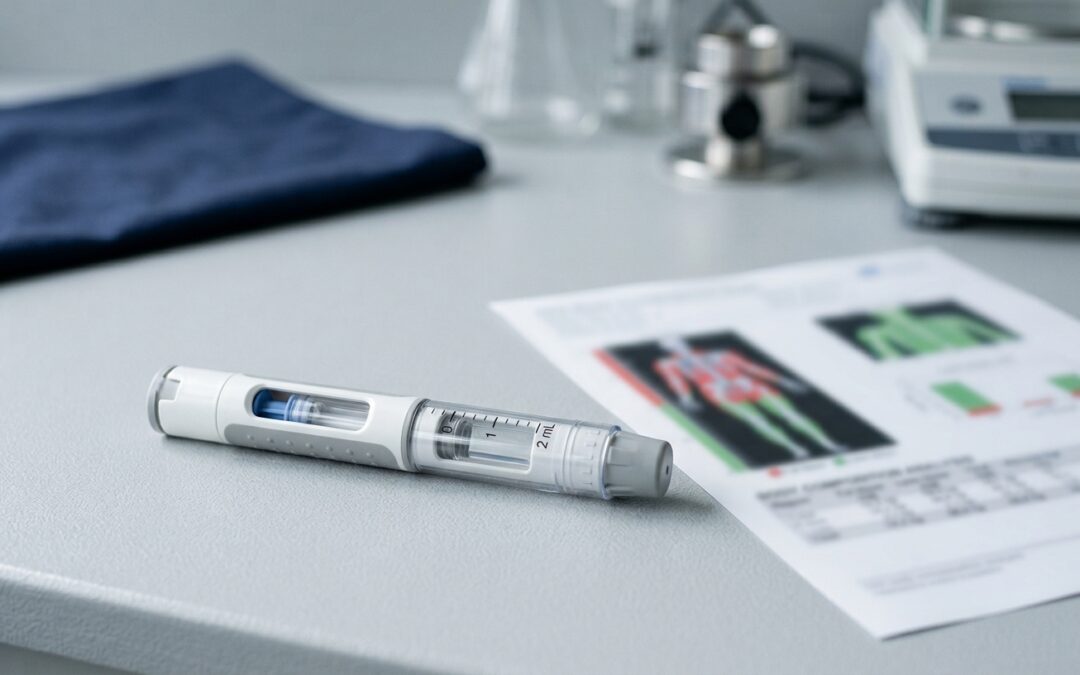
Three branded GLP-1 products are eligible under the Medicare GLP-1 Bridge when prescribed specifically for weight reduction and weight maintenance. These are Foundayo (orforglipron, Eli Lilly), available in all formulations; Wegovy (semaglutide, Novo Nordisk), available as both injectable and tablet formulations; and Zepbound (tirzepatide, Eli Lilly), available only in the KwikPen formulation. The single-dose vial and single-dose pen formulations of Zepbound are explicitly excluded.
Foundayo is a notable addition. Approved by the FDA on 1 April 2026, it is the only oral GLP-1 receptor agonist that can be taken at any time of day without food or water restrictions, distinguishing it from oral Wegovy, which must be taken in the morning on an empty stomach. As Life Science Daily News has reported in its overview of the GLP-1 drug pipeline in 2026, the oral formulation represents a significant advance in patient convenience. Foundayo was added to the Bridge programme’s eligible drug list on 6 April 2026.
Clinical Eligibility: The Three BMI Tiers
CMS structured GLP-1 Bridge eligibility around three distinct clinical pathways, each defined by body mass index thresholds and, for two of them, specific comorbid conditions. Prescribers must document the relevant criterion at the time of prescribing and attest to it on the prior authorisation form.
The first tier requires a BMI of 35 or higher at the time of GLP-1 therapy initiation. No additional clinical condition is required. This is the most straightforward pathway into the programme.
The second tier applies to beneficiaries with a BMI of 30 to 34.9 who also have at least one of the following conditions: heart failure with preserved ejection fraction (HFpEF), uncontrolled hypertension (defined as systolic blood pressure above 140 mmHg or diastolic above 90 mmHg despite concurrent treatment with two antihypertensive medications), or chronic kidney disease at stage 3a or higher.
The third tier covers beneficiaries with a BMI of 27 or higher who have a history of at least one of the following: pre-diabetes as defined by American Diabetes Association guidelines, previous myocardial infarction, previous stroke, or symptomatic peripheral artery disease.
All three tiers share additional baseline requirements. The beneficiary must be at least 18 years old, and the prescriber must attest that the medication is being used in combination with current and ongoing lifestyle modification, including structured nutrition and physical activity consistent with the applicable FDA-approved label. CMS has not specified whether participation in a formal lifestyle programme is required. The standard is met through the prescriber’s clinical attestation, and the programme does not require documentation of a specific diet or exercise regimen beyond what the prescriber certifies.
The Historical BMI Rule
One of the most clinically significant details of the Medicare GLP-1 Bridge, and one that prescribers must understand clearly, is that the relevant BMI is measured at the time of therapy initiation, not at the time of the prior authorisation request. CMS has provided a specific worked example: a beneficiary who began GLP-1 therapy in September 2024 with a BMI of 37 and whose BMI has since fallen to 34 through successful treatment would still qualify under the first tier. The prescriber attests to the historical BMI at initiation.
This is a critical protection for patients already on GLP-1 therapy who have achieved meaningful weight loss. Without this provision, their very success in treatment could have disqualified them from affordable access under the Bridge.
Who Is Excluded
Not every Medicare beneficiary with obesity is eligible. Several categories of exclusion apply.
Beneficiaries with a diagnosis of type 2 diabetes, moderate to severe obstructive sleep apnoea, or noncirrhotic metabolic dysfunction-associated steatohepatitis (MASH) are ineligible for the Bridge, because these conditions qualify for GLP-1 coverage under standard Part D. This exclusion applies regardless of whether the beneficiary is currently prescribed a GLP-1 and even if they also meet the Bridge’s BMI and comorbidity criteria for weight management.
These exclusions are designed to prevent utilisation shifting from standard Part D coverage to the Bridge, which would increase the programme’s cost without expanding actual access.
Plan type also matters. The Bridge is available to beneficiaries enrolled in standalone prescription drug plans (PDPs) or Medicare Advantage coordinated care plans with drug coverage (MA-PD), including HMOs, local and regional PPOs, Special Needs Plans and employer group waiver plans. Beneficiaries whose only coverage comes through private fee-for-service plans, cost contract plans, health care prepayment plans, PACE organisations, fallback plans or religious fraternal benefit plans are not eligible, unless they also hold a separate standalone PDP.
The Prior Authorisation Process
The Medicare GLP-1 Bridge uses a pharmacy-triggered prior authorisation process, which represents a departure from how most clinicians are accustomed to working with prior authorisations. There is no patient application form and no patient portal. The entire process runs through the prescriber’s office and the pharmacy.
The prescriber writes the prescription and sends it to the pharmacy. The pharmacist submits the claim to the central processor using a designated BIN (028918) and PCN (MEDDGLP1BR). The claim is initially denied, triggering the prior authorisation process. The prescriber then completes and submits a prior authorisation form to the central processor, either electronically via CoverMyMeds or by fax, attesting under penalty of perjury that the beneficiary meets all clinical criteria. CMS does not require the submission of supporting medical records, height measurements or weight documentation, though the attestation is cross-checked against existing Medicare data registries.
Once the prior authorisation is approved, the beneficiary receives a letter confirming their GLP-1 Bridge eligibility. The approval is valid through 31 December 2027 and covers subsequent refills and dose adjustments without requiring a new authorisation, unless the beneficiary switches from one covered GLP-1 drug to a different one.
Prescribers with questions about the process can contact the Medicare GLP-1 Bridge Call Center at 855-273-0102, available Monday to Friday from 8am to 7pm Eastern Time.
Common Pitfalls in the Prior Authorisation Submission
Early experience with the programme has highlighted several recurring errors that delay or prevent approval. Among the most common is listing the beneficiary’s current BMI rather than their BMI at therapy initiation, which can lead to an incorrect eligibility determination. Another frequent issue involves routing prescriptions for Part D-covered conditions, such as sleep apnoea or type 2 diabetes, through the Bridge rather than through the beneficiary’s existing plan.
Submitting the prior authorisation before the pharmacy has run and received a denial from the central processor is another documented error, as the Bridge workflow requires the initial claim denial to be on file before the request is processed.
Scale, Cost and the Access Question
An analysis by the Kaiser Family Foundation estimated that approximately 3.8 million Medicare Part D enrollees met all of the GLP-1 Bridge’s eligibility criteria, based on 2023 claims data and after excluding beneficiaries with Part D-covered diagnoses. Novo Nordisk and Eli Lilly have cited broader estimates suggesting 15 million to 20 million Medicare beneficiaries could meet clinical criteria for weight management therapy.
The programme’s cost to Medicare will depend heavily on uptake. KFF estimates that at 10 to 25 per cent uptake among eligible beneficiaries, the Bridge would cost Medicare between $1.3 billion and $3.3 billion over its 18-month run. At 50 to 75 per cent uptake, the figure could reach between $6.7 billion and $10 billion.
The exclusion of LIS beneficiaries from subsidised copays has emerged as one of the programme’s most contested features. KFF has noted that the $50 monthly copay may prove unaffordable for lower-income beneficiaries, limiting the real-world reach of the programme among those most likely to benefit from expanded access.
What Happens After 2027
The Medicare GLP-1 Bridge is explicitly temporary. Coverage under the programme expires on 31 December 2027, and there is currently no confirmed successor pathway. The BALANCE Model, which was originally intended to create a sustainable framework for Part D coverage of GLP-1 drugs for obesity, remains delayed. If neither the BALANCE Model nor an alternative coverage mechanism is implemented before the Bridge ends, beneficiaries who began therapy under the programme could face an abrupt loss of access.
This creates a difficult clinical conversation for prescribers. Initiating a patient on GLP-1 therapy under the Bridge provides up to 18 months of affordable access, enough time to achieve clinically meaningful weight loss and establish a comprehensive management plan. But it also requires an honest discussion about what happens if coverage ends and the patient cannot afford to continue therapy independently.
Implications for Clinical Practice
For clinicians, the Medicare GLP-1 Bridge represents a significant expansion of treatment options alongside a new set of administrative requirements. Familiarity with the three BMI tiers, the historical BMI rule, the Part D exclusion criteria and the pharmacy-triggered prior authorisation workflow is now a practical necessity for any prescriber managing obesity in the Medicare population.
The programme also underscores a broader shift in how obesity is treated within publicly funded healthcare. By creating a dedicated coverage pathway for weight management medications, CMS has taken a step towards recognising obesity as a chronic disease deserving of sustained pharmacological intervention. Whether that recognition translates into permanent coverage will depend on what emerges from the BALANCE Model deliberations, the utilisation data the Bridge generates, and the political appetite for absorbing a multi-billion-dollar annual cost. For now, the Medicare GLP-1 Bridge gives clinicians and patients an 18-month window of access that did not exist before, and the task for prescribers is to use it wisely while advocating for a durable solution beyond 2027.