Imagine a virus so cunning it hides in your body’s own cells, evading detection for decades while you take daily pills just to keep it at bay. That’s the reality for nearly 40 million people living with HIV worldwide. But what if we could flip the script—turning those infected cells into self-destructing time bombs that wipe out the virus without harming the rest of you? A groundbreaking discovery from researchers at Washington University in St. Louis is doing just that, harnessing a natural immune “alarm system” called the CARD8 inflammasome to target and eliminate HIV’s secret hideouts. This isn’t science fiction; it’s the latest leap toward a cure, blending clever drug repurposing with the body’s innate defenses. Let’s dive into this exciting development that’s got scientists buzzing and patient’s hopeful.
The Persistent Enemy: Why HIV is So Hard to Cure
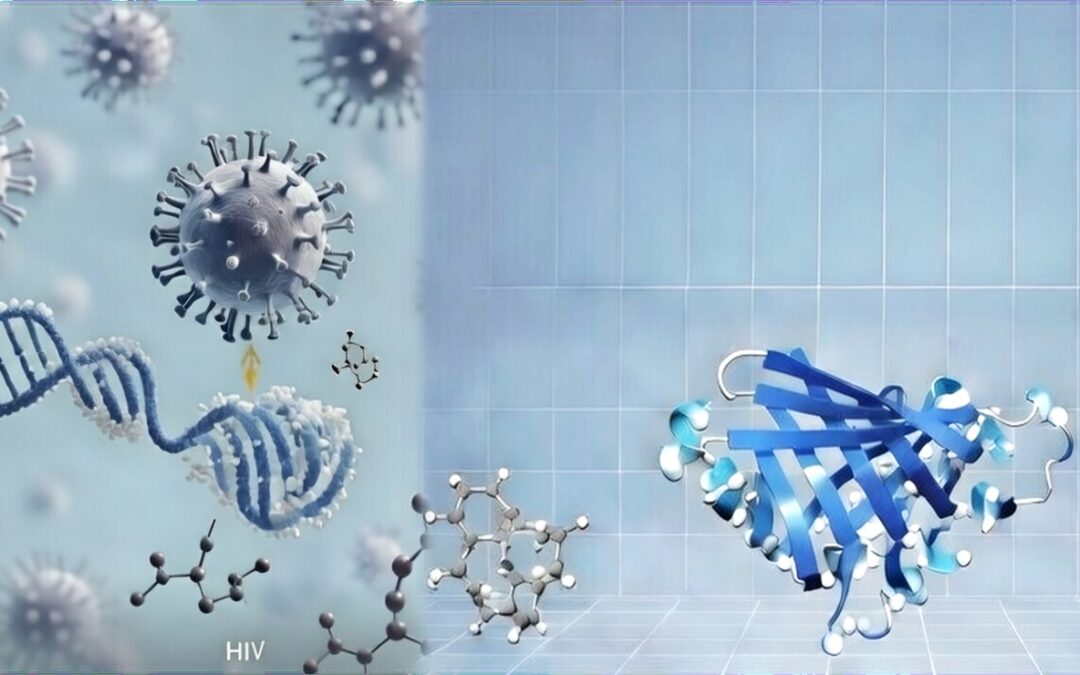
HIV, or Human Immunodeficiency Virus, doesn’t just infect—it infiltrates. Once inside CD4+ T cells (the immune system’s commandos), it inserts its genetic code and goes dormant, creating “reservoirs” where it lurks undetected by standard treatments. Antiretroviral therapy (ART) keeps the virus suppressed, turning HIV from a death sentence into a manageable condition. But stop the meds, and it roars back, leading to AIDS if unchecked. Globally, over 39 million people live with HIV, with about 1.3 million new infections in 2025 alone. The holy grail? Eradicating these reservoirs for a true cure.
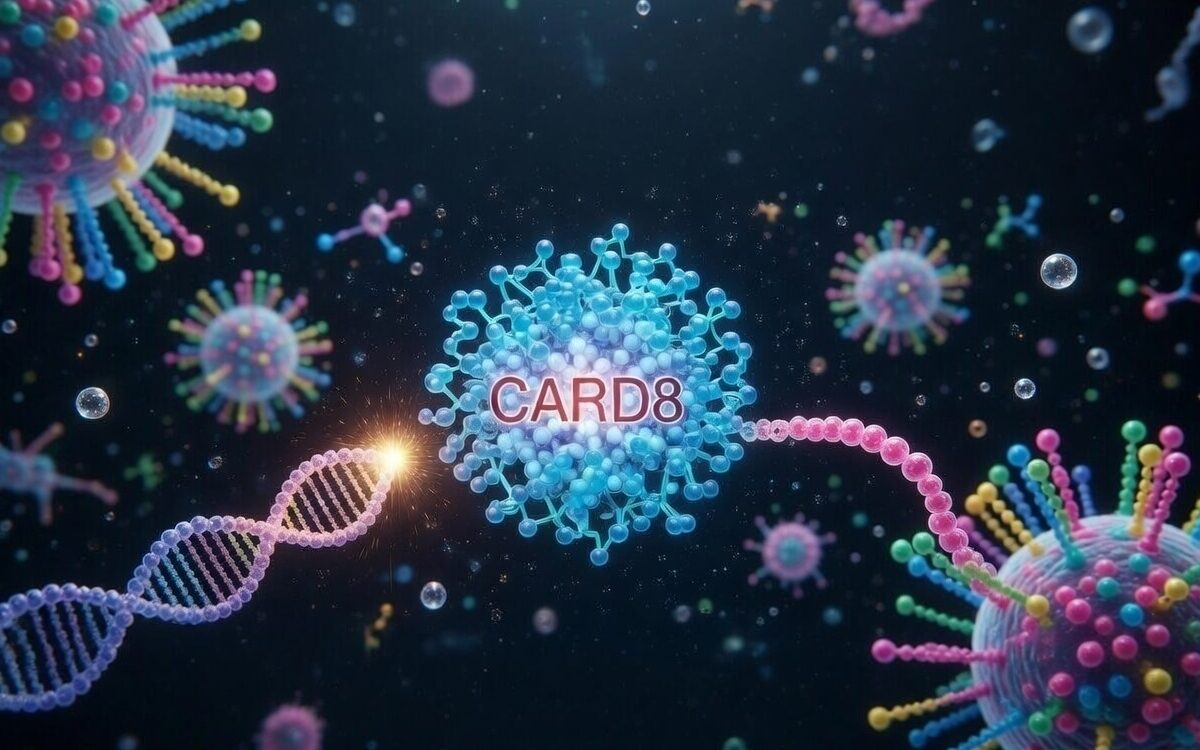
Traditional approaches like “shock and kill”—waking the virus with drugs then blasting it—have fallen short due to incomplete activation or side effects. A Enter CARD8: a protein sensor in our cells that acts like a vigilant guard. CARD8 is an inflammasome sensor for HIV-1 protease activity. Expression of CARD8 in human atherosclerosis and its regulation of inflammatory proteins in human endothelial cells detecting viral intruders and triggering pyroptosis, a fiery form of cell suicide that explodes infected cells and releases alarm signals. Discovered as an inflammasome sensor for HIV-1 protease activity, CARD8 could be the key to selectively destroying these hidden foes[1].
The Spark: How CARD8 Detects and Destroys HIV
Picture HIV as a thief sneaking in with a toolkit—its protease enzyme, crucial for assembling new virus particles. Normally, this protease stays inactive until the virus buds out of the cell. But CARD8 is no ordinary lock; it’s a tripwire. When HIV protease gets prematurely activated inside the cell, CARD8 senses it, cleaves itself, and unleashes a cascade: proteasome degradation frees its active fragment, recruiting caspase-1 to ignite pyroptosis. Boom—the infected cell dies, taking the virus with it.
This mechanism was first pinpointed in 2021, showing CARD8’s role in clearing latent HIV in patient T cells after reactivation[1]. It’s especially potent in quiescent (resting) cells, where HIV entry alone delivers enough protease to trigger death without full infection. In activated T cells, however, CARD8’s function dims, allowing the virus to replicate—explaining why HIV thrives in immune hotspots. Recent studies reveal this isn’t just lab trivia: In pathogenic HIV/SIV infections (like in humans and macaques), CARD8 drives rapid CD4+ T cell depletion, while “natural” hosts like sooty mangabeys monkeys have mutated CARD8 genes that dodge this, avoiding AIDS despite high viral loads.
The Fuel: Repurposing Drugs Like Efavirenz to Supercharge CARD8
Here’s where it gets clever: Non-nucleoside reverse transcriptase inhibitors (NNRTIs) like efavirenz (EFV)—already approved for HIV treatment—can force premature protease activation. By binding to HIV’s reverse transcriptase, they dimerize Gag-Pol polyproteins early, waking the protease and alerting CARD8. In lab tests, EFV induces pyroptosis in HIV-infected CD4+ T cells and macrophages, slashing viral reservoirs[2].
But EFV alone needs high doses. Enter DPP9, a CARD8 brake. Inhibiting DPP9 with drugs like Val-boroPro (VbP) sensitizes the system, allowing lower EFV doses to trigger massive cell death[2]. This combo clears infected cells in vitro, humanized mice, and even residual HIV in cells from people living with HIV (PLWH), partially bypassing NNRTI resistance[2]. A 2026 clinical trial, TACKITON, is testing EFV added to ART in patients with low-level viremia, aiming to reduce reservoirs over 8 weeks. Early results suggest 20-50% reservoir drops in small cohorts.
Recent Breakthroughs: From Lab to Hopeful Horizons
The buzz peaked at the 2026 Conference on Retroviruses and Opportunistic Infections (CROI) (National AIDS Treatment Advocacy Project, 2026), where Liang Shan’s team at WashU presented data on EFV-activated CARD8 eliminating latent reservoirs in a small human trial of 7 participants (Presented at: CROI; February 2026; Denver, CO). Abstract available via NATAP. Building on 2024 findings that CARD8 dictates disease progression—delaying CD4+ loss in CARD8-knockout humanized mice despite viremia—this approach shifts from suppression to elimination. Another twist: HIV cell-to-cell transmission via viral synapses activates CARD8 in macrophages, hinting at broader applications[3, 4].
In February 2026, related work at Case Western Reserve enhanced immune cells to target reservoirs, complementing CARD8 strategies. And a 2025 study showed “TACK” drugs (like EFV combos) drop viral loads profoundly in mice after one or two doses. These build on a human-specific CARD8 motif that amps up activation post-infection, explaining why we’re uniquely vulnerable yet potentially curable[5].
The Bigger Picture: Implications for Patients and Global Health
This isn’t just about HIV; it’s a paradigm shift. By exploiting CARD8, we could achieve a “functional cure”—no detectable virus, no meds needed. For PLWH in Nashville or sub-Saharan Africa, it means freedom from lifelong therapy and stigma. Challenges remain: balancing inflammation to avoid side effects, overcoming resistance, and scaling trials. But with VbP enhancing EFV, clearance rates soar, even in resistant strains.
Economically, a cure could save trillions lost to treatment and lost productivity. As climate change expands vector-borne diseases, lessons from HIV could inform fights against Zika or dengue.
Looking Ahead: The Road to an HIV-Free World
As 2030’s UNAIDS goal to end HIV as a public health threat looms, CARD8 research accelerates the pace. Ongoing trials like TACKITON and CRISPR edits to boost CARD8 could yield results by 2028. Shan’s team warns of hurdles, like macrophage inflammation, but optimism reigns: “We’re turning HIV’s weapons against it.”
For now, stay vigilant—get tested, use PrEP, and support research. This flame of hope, sparked by CARD8 and fueled by drugs like efavirenz, might just burn HIV out for good.
Author Bio

Prem Prakash, Ph.D., serves as a Research Scientist at the Center for AIDS Health Disparities Research, Meharry Medical College, Nashville, TN-37208. An expert in protein crystallography, enzymology, and antiviral drug design, he has over 20 publications and actively reviews for top journals.
Google Scholar: https://scholar.google.com/citations?user=Uk6TEwgAAAAJ&hl=en
LinkedIn: https://www.linkedin.com/in/prem-prakash-ph-d-779160160/
ResearchGate: https://www.researchgate.net/profile/Prem-Prakash-15