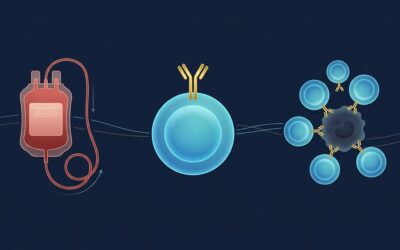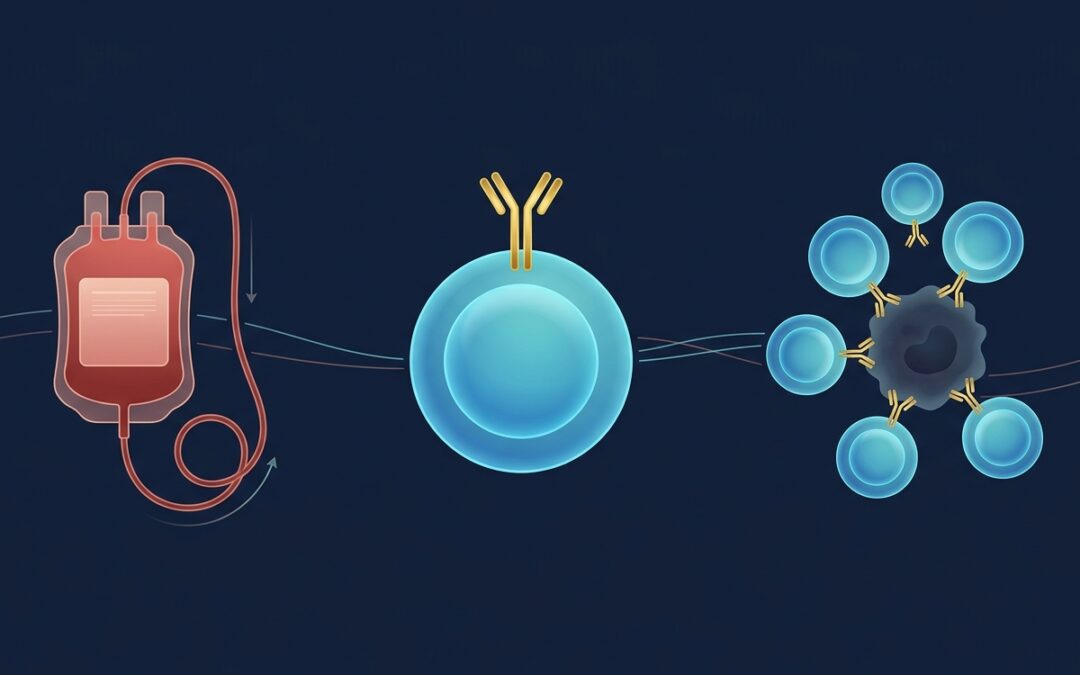

CAR cell therapy has demonstrated that immune cells can be genetically programmed to recognize and attack disease-associated targets. Yet conventional CAR-T therapy generally depends on an elaborate ex vivo workflow involving cell collection, genetic modification, expansion, characterization, and reinfusion.
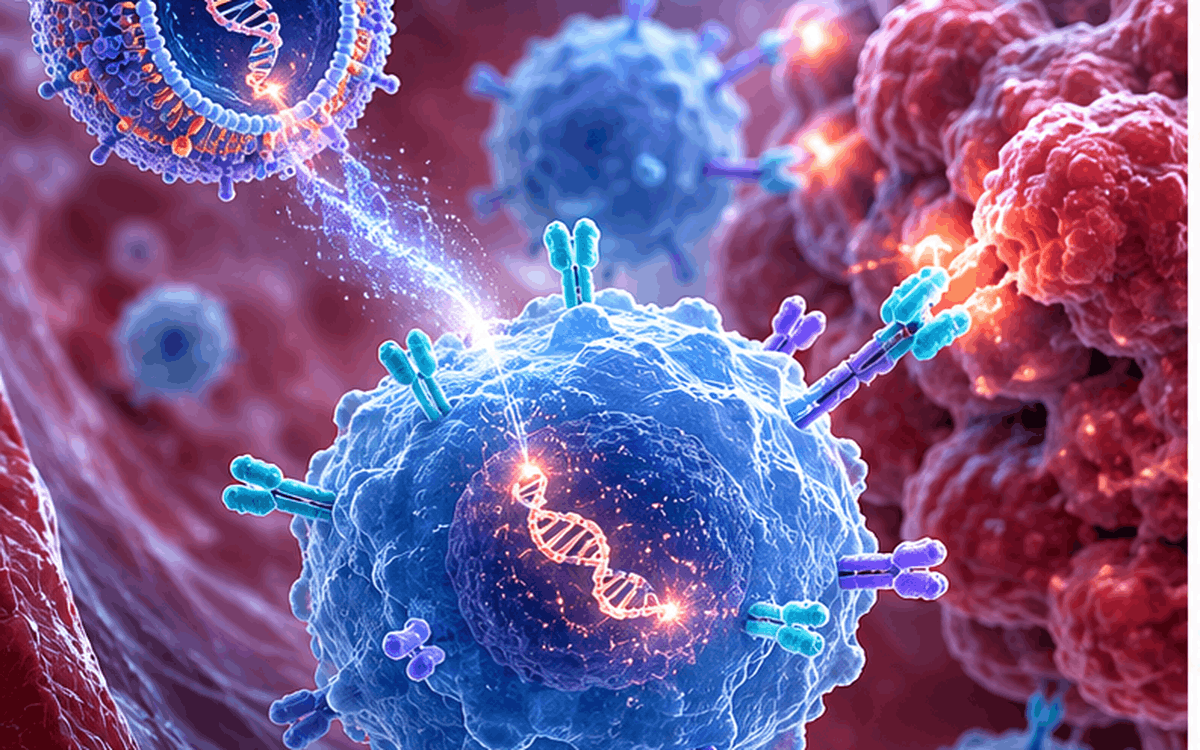
In vivo CAR engineering proposes a different model: delivering genetic instructions directly to selected immune cells inside the body. This approach could reduce dependence on individualized ex vivo manufacturing, but it introduces challenges involving delivery specificity, expression control, biodistribution, and safety.
As researchers investigate viral vectors and non-viral carriers such as lipid nanoparticles (LNPs), together with mRNA, DNA, and other genetic cargo formats, development increasingly requires coordination among the CAR construct, carrier, target immune cell, and desired duration of expression. Creative Biolabs’ in vivo CAR development solutions reflect this integrated approach by connecting construct engineering, delivery optimization, functional characterization, and preclinical evaluation.
In Vivo CAR Engineering Changes the Manufacturing Problem
Conventional autologous CAR-T manufacturing occurs largely outside the patient. T cells are collected, genetically engineered, expanded, and tested before administration. In vivo engineering instead delivers CAR-encoding genetic material with the goal of programming endogenous immune cells in situ.
This potentially reduces several ex vivo processing requirements, but the complexity shifts toward delivery and biological control. A successful system must deliver sufficient cargo to the desired immune population while limiting exposure to unintended cells. Researchers must also determine how much CAR is expressed, how long expression persists, and whether engineered cells retain appropriate functions.
Creative Biolabs’ in vivo CAR development framework combines customized genetic construct design with viral and non-viral delivery options and functional evaluation. Such workflows highlight an important principle: construct design and delivery technology cannot be optimized independently when therapeutic cells are generated directly inside the body.
Viral and Non-Viral Delivery Solve Different Problems
There is unlikely to be a universally optimal delivery vehicle for in vivo CAR engineering.
Viral vectors can provide efficient gene transfer and potentially sustained CAR expression. Engineered lentiviral vectors and other viral-vector approaches, including AAV-based strategies, are being investigated for direct immune-cell programming. Creative Biolabs incorporates viral-vector engineering into its in vivo CAR-T development capabilities, including vector construction and modification, in vivo programming in animal models, and functional validation.
The major challenge is selectivity. During ex vivo manufacturing, modified cells can be characterized before administration. With systemic in vivo delivery, vector tropism and cell-specific targeting become central safety and performance considerations.
Non-viral systems offer different trade-offs. LNPs and polymer-based nanoparticles can carry nucleic acids without the use of viral vectors. Creative Biolabs’ non-viral development portfolio includes LNP-mRNA, LNP-DNA, and PBAE nanocomplex approaches.
Cargo selection is equally important. With mRNA delivery, CAR expression is transient because the RNA is eventually degraded. This can be advantageous when temporary programming or greater temporal control is desired. DNA or integrating vector strategies may provide more persistent expression, but longer persistence places greater emphasis on targeting specificity and long-term safety.
The practical question is therefore not simply viral versus non-viral. Researchers should first define the desired biological outcome and then select a delivery system capable of producing the appropriate expression profile.
Beyond T Cells: The Opportunity for CAR Macrophages
In vivo CAR engineering is also expanding beyond T cells. Macrophages are particularly interesting for solid-tumor research because they naturally infiltrate tumor tissues and contribute extensively to the tumor microenvironment. CAR-engineered macrophages are being investigated for targeted recognition, phagocytosis, and their potential influence on local immune activity.
Creative Biolabs has extended its in vivo engineering capabilities through a dedicated CAR-M development platform involving targeted LNP delivery for mRNA cargo, CAR construct engineering, vector optimization, and evaluation in tumor models.
However, macrophages are highly heterogeneous, with phenotypes and functions varying among tissues and disease states. Efficient delivery to “macrophages” does not necessarily mean that the biologically appropriate population has been engineered. Researchers need to determine which myeloid populations receive the cargo and whether CAR expression affects phagocytosis, cytokine production, antigen presentation, tumor infiltration, or interactions with adaptive immune cells.
This illustrates a central principle: delivery efficiency is meaningful only when it produces the desired function in the intended cell population.
Four Questions for Preclinical Development
Whether developing an in vivo CAR-T, CAR-M, or another immune-cell strategy, four questions can help guide platform selection.
- Which cells actually receive the genetic cargo?
Bulk CAR-expression measurements can obscure heterogeneous delivery. Cell-level analysis and tissue biodistribution studies are needed to distinguish selective targeting from nonspecific transduction or transfection. - How long should CAR expression last?
Persistent and transient programming serve different therapeutic hypotheses. The required expression window should be defined before selecting viral vectors, mRNA, DNA, or other cargo formats. - Does CAR expression produce the intended immune function?
Expression alone is insufficient. T-cell programs may require analysis of activation, cytotoxicity, cytokine secretion, and persistence, while macrophage programs may additionally examine phagocytosis and effects on the tumor microenvironment. - What happens outside the target population?
Off-target delivery should be investigated early through biodistribution, immune-response, persistence, and safety studies.
Creative Biolabs’ comprehensive in vivo CAR workflow incorporates both in vitro functional testing and in vivo assessments such as biodistribution, persistence, and safety. Connecting these datasets can help distinguish a construct problem from a delivery problem or a target-cell biology problem.
Building an Integrated Development Strategy
Weak antitumor activity does not necessarily mean that a CAR construct is ineffective. The problem could arise from poor delivery, insufficient expression, inappropriate cell targeting, or inadequate persistence. Conversely, high CAR expression does not prove that a platform is successful if substantial expression occurs outside the intended immune population.
Creative Biolabs’ CellRapeutics™ platform follows an integrated model, supporting in vivo engineering across immune-cell populations while offering multiple delivery approaches. This flexibility illustrates how delivery technology can be matched to a biological objective rather than forcing every program into the same engineering framework.
More broadly, in vivo CAR engineering should not be viewed simply as a shortcut to conventional CAR-T manufacturing. Its significance lies in the possibility of generating CAR-expressing immune effector cells in situ through targeted delivery of genetic instructions.
Achieving this goal requires control over where the cargo travels, which cells receive it, how long CAR expression persists, and what those cells subsequently do. As delivery science and immune engineering converge, the central question may shift from how therapeutic cells should be manufactured outside the body to how precisely they can be programmed within it.
Researchers considering in vivo CAR development can explore Creative Biolabs’ in vivo CAR solutions to learn more about delivery strategies, CAR construct engineering, functional validation, and preclinical development.
Author Bio
Dr. Emily R. Coleman is a senior scientist at Creative Biolabs with a background in immunology, oncology research, and translational biotherapeutic development. Her work focuses on translating complex biological mechanisms into practical experimental strategies for next generation therapeutic discovery, with particular expertise in tumor immunology and antibody engineering.
At Creative Biolabs, she provides scientific insight across multiple R&D domains, including antibody discovery and development, gene and cell therapy research, and translational assay design. She is particularly focused on improving the connection between mechanistic biology and predictive preclinical models to support more effective therapeutic development across immune related disease areas.
About Creative Biolabs
Creative Biolabs provides research services and technology platforms supporting cell and gene therapy development. Its capabilities span customized CAR construct design, viral and non-viral delivery development, functional characterization, and in vivo evaluation.