
Few ideas in modern medicine are as unsettling as the prospect of a “post-antibiotic era.” For decades, antibiotics have underpinned infection control, transforming once-lethal diseases into manageable conditions. Yet their effectiveness is steadily eroding. Antimicrobial resistance (AMR), driven by the overuse of antimicrobials and the remarkable adaptability of microbes, is now recognised as one of the most pressing global health threats.
Against this backdrop, a new generation of antimicrobial strategies is emerging. Among the most promising is photodisinfection – more formally known as antimicrobial photodynamic therapy (aPDT). By combining light, a photosensitising agent, and oxygen to destroy pathogens, this approach offers something antibiotics cannot: rapid, broad-spectrum antimicrobial activity with minimal risk of resistance.
What is photodisinfection?
Photodisinfection is based on a deceptively simple principle: light-activated chemistry. A photosensitising compound is applied to infected tissue and then exposed to light of a specific wavelength, typically in the red spectrum. Upon activation, the compound transfers energy to molecular oxygen, generating reactive oxygen species (ROS). These highly reactive molecules rapidly oxidise key cellular components—including membranes, proteins, and nucleic acids – leading to microbial death.
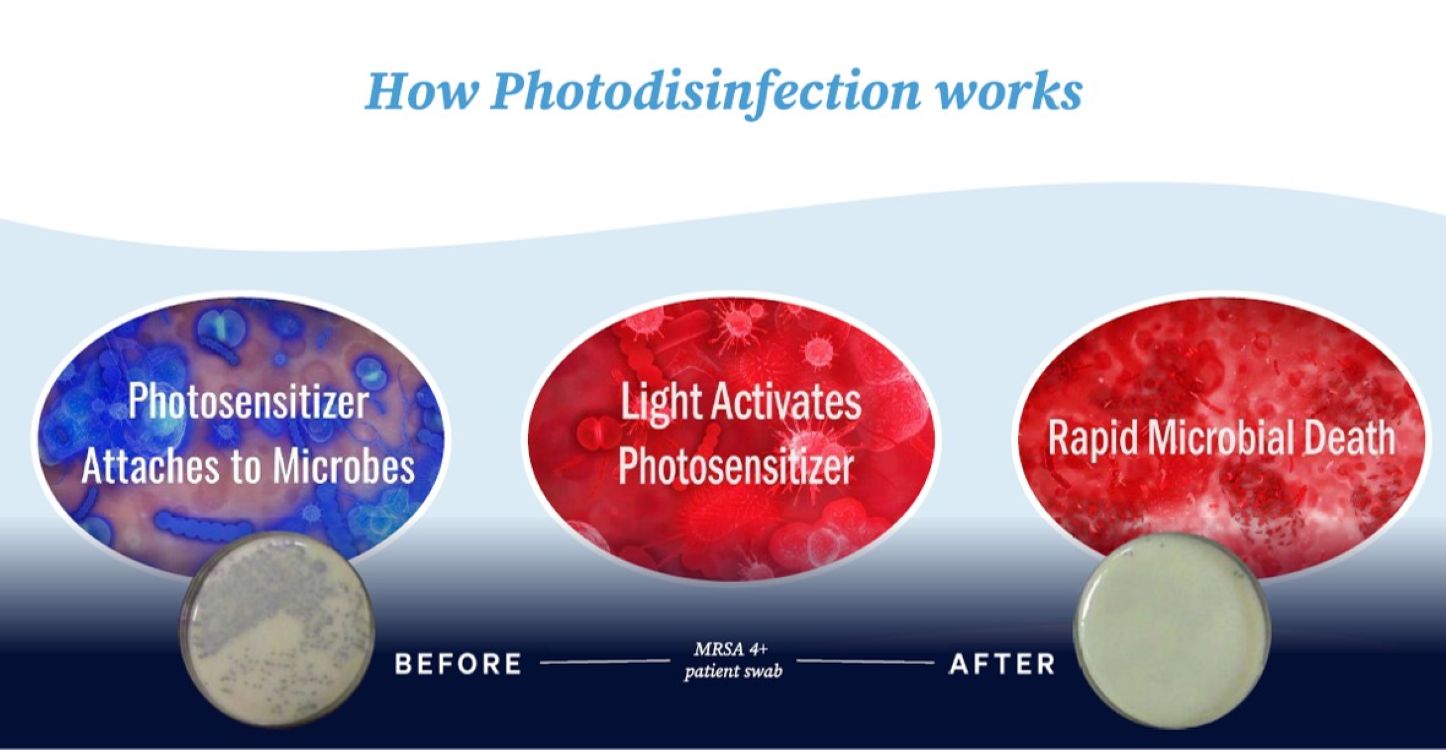
Unlike antibiotics, which generally target specific cellular pathways such as cell wall synthesis or protein production, photodisinfection exerts a multi-target oxidative effect. This non-specific mechanism is central to its appeal, as it makes it significantly more difficult for microorganisms to develop resistance.
Why interest is surging
Although photodisinfection has been studied for over a century, its clinical relevance has surged in recent years due to three converging trends.
First, the rise of antibiotic resistance has created an urgent need for alternative therapies. Pathogens such as methicillin-resistant Staphylococcus aureus (MRSA) and multidrug-resistant Gram-negative bacteria are increasingly difficult to treat, yet aPDT has demonstrated efficacy against both.
Second, the antibiotic development pipeline has slowed dramatically. Few new classes of antibiotics have emerged in recent decades, and those that do reach the market are often reserved as last-line treatments. This has prompted renewed interest in non-traditional antimicrobial approaches.
Third, advances in technology—particularly in light delivery systems, lasers, LEDs, and nanotechnology-enhanced photosensitisers—have made photodisinfection more precise, efficient, and clinically practical. Together, these factors have propelled aPDT from a niche concept into a viable therapeutic modality.
Distinct clinical advantages
Photodisinfection offers several advantages that distinguish it sharply from conventional antibiotics.
Most notably, it is inherently broad-spectrum, with activity against bacteria, viruses, fungi, and even biofilms – structured microbial communities that are notoriously resistant to antimicrobial drugs. Importantly, microbes do not readily develop resistance to photodisinfection. While antibiotics typically act on single molecular targets, allowing pathogens to evolve specific countermeasures, the oxidative damage induced by ROS affects multiple cellular structures simultaneously, making adaptive resistance far less likely.
In addition, photodisinfection is effective across all stages of microbial growth. Antibiotics are generally most effective against actively dividing cells, whereas dormant or slow-growing organisms can evade treatment. In contrast, aPDT remains effective regardless of metabolic state, including against inactive cells.
Beyond direct microbial killing, photodisinfection can neutralise virulence factors such as toxins and enzymes produced by pathogens like S. aureus, potentially reducing tissue damage and disease severity. It also inactivates endotoxins released by Gram-negative bacteria, thereby lowering the risk of inflammatory complications such as endotoxic shock.
Emerging evidence further suggests that aPDT modulates host immune responses. By inactivating certain pro-inflammatory cytokines, it may help temper excessive inflammation, which is often a major contributor to disease severity.
Why host tissues are spared
A key question is how such a potent antimicrobial approach avoids damaging host tissue. The answer lies in a combination of selectivity and localisation.
Photosensitisers tend to preferentially bind to microbial cells, which generally have negatively charged surfaces, whereas human cells are neutral. This promotes selective accumulation on pathogens. In addition, both the photosensitiser and the activating light are applied locally, ensuring that the effect is confined to the treatment site.
Crucially, the reactive oxygen species generated during the process are extremely short-lived and act only over microscopic distances. Their effects are therefore restricted to the immediate vicinity of their production. Human cells are further protected by intrinsic antioxidant defence systems capable of neutralising low levels of oxidative stress. Finally, because the therapy is non-systemic, it avoids the widespread exposure associated with conventional antibiotics.
Clinical applications and real-world evidence
Photodisinfection has already transitioned from theory to practice in several clinical settings, particularly where infections are localised and accessible to light.
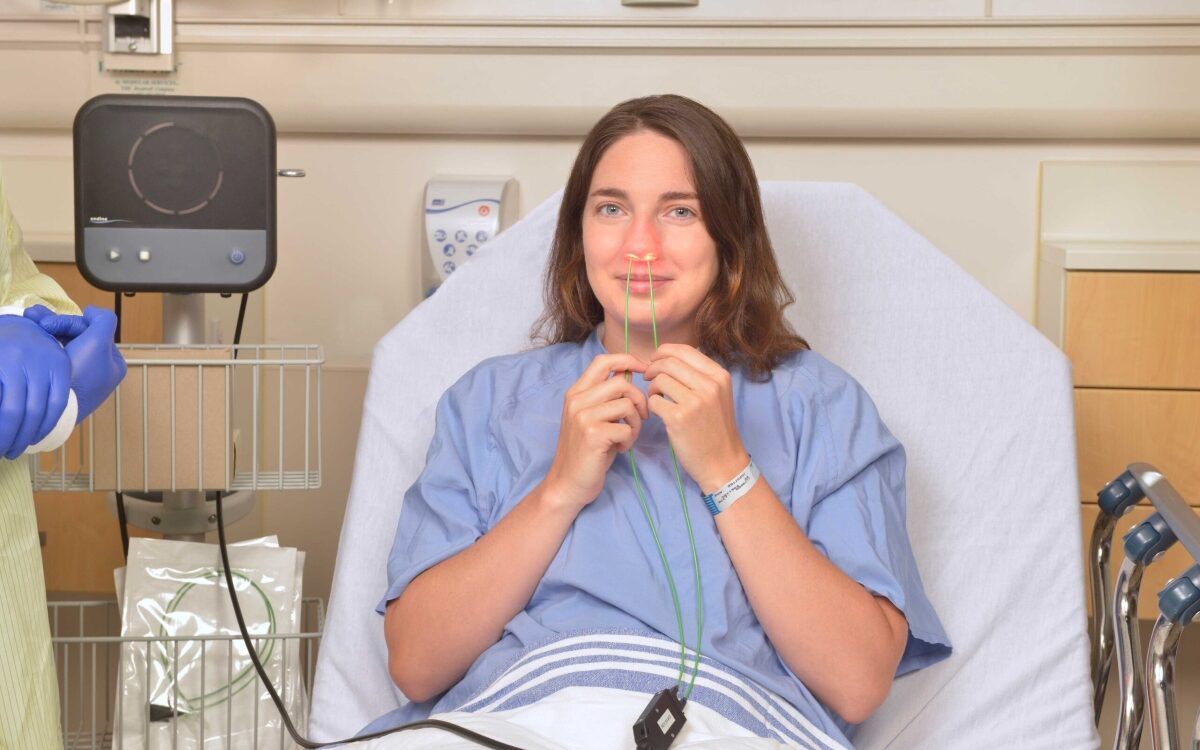
One widely used application is nasal decolonisation prior to surgery. Ondine’s Steriwave system is used in hospitals across Canada and the United Kingdom to reduce surgical site infections (SSIs) and prevent hospital-acquired infections. At Vancouver General Hospital, its use was associated with a 42% reduction in SSIs, with even greater benefits in orthopaedic and spinal procedures. Similarly, a study at Mid Yorkshire Teaching NHS Trust reported a 71.4% reduction in SSIs in elective hip and knee replacements over six months, with knee infection rates falling to zero from a baseline of 2.3%.
In intensive care settings, photodisinfection has been shown to be effective in reducing respiratory infections. A pilot study at Royal Columbian Hospital reported a 39.5% reduction in pneumonia rates, alongside a statistically significant decrease in nasal pathogen burden. These findings underscore the importance of reducing microbial colonisation as a strategy to prevent ventilator-associated and hospital-acquired pneumonia.
Beyond hospital infection control, aPDT is well established in dentistry, where it is used to treat periodontal disease, disinfect root canals, and manage oral infections. It is also increasingly applied in wound care and dermatology, particularly for chronic wounds and burns.
A complementary, not replacement, strategy
Despite its promise, photodisinfection is unlikely to replace antibiotics entirely, particularly for deep-seated or systemic infections where light delivery is impractical. Instead, its greatest potential may lie in combination therapy.
Pairing aPDT with antibiotics can enhance antimicrobial efficacy, reduce required drug doses, and help overcome resistance mechanisms. For example, photodisinfection can disrupt biofilms or weaken bacterial defences, rendering pathogens more susceptible to conventional drugs. In this way, it may help extend the useful lifespan of existing antibiotics.
Redefining antimicrobial strategy
The rise of photodisinfection reflects a broader shift in how infection is managed. Rather than relying exclusively on systemic pharmaceuticals, future strategies are likely to be multimodal, integrating physical, chemical, and biological approaches. These may include light-based therapies, antiseptics, bacteriophages, and microbiome-targeted interventions.
Within this evolving framework, photodisinfection represents a mechanism-diverse, non-antibiotic intervention that complements existing tools while addressing key limitations of traditional therapies.
Conclusion: light as medicine
The idea that light can be used to destroy pathogens may once have seemed futuristic. Today, it is widely supported by clinical evidence.
Photodisinfection represents a shift away from the chemical dominance of antibiotics toward a more targeted, physics-based approach to infection control. Its broad-spectrum activity, low propensity for resistance, and versatility make it one of the most promising innovations in the fight against antimicrobial resistance.
However, no single solution will resolve the AMR crisis. The future of infection control will likely be pluralistic, combining established and emerging strategies in more integrated ways.
In that future, antibiotics will remain essential—but they may no longer stand alone. Photodisinfection is poised to play a key role in ensuring that they do not have to.