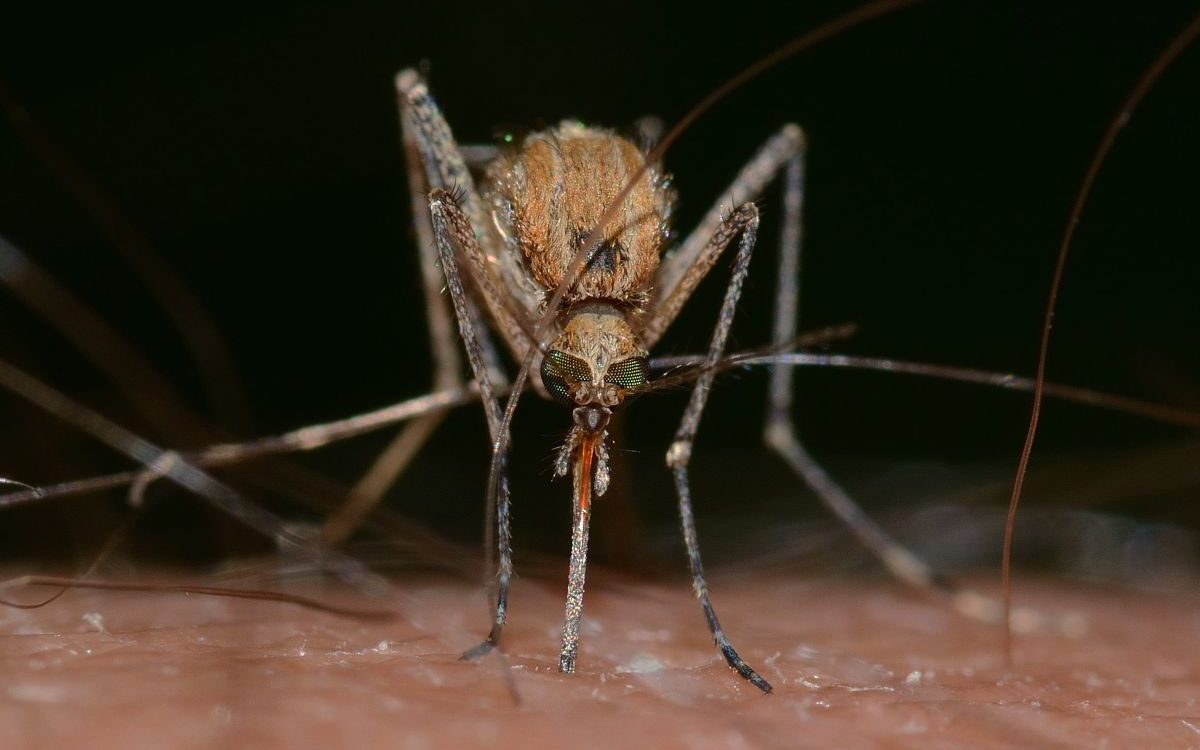
The impact of climate change is usually discussed in terms of heatwaves and floods. While less visible, its impact on infectious diseases is equally consequential for public health.
New data from the UK Health Security Agency (UKHSA) showing a surge in chikungunya cases is a timely reminder that diseases once considered “tropical” are moving closer to home – with 160 travel-associated chikungunya cases reported in the UK in 2025 and more than half of those recorded in London.1
While most infections were linked to overseas travel rather than local transmission, the figures highlight a broader reality. Diseases once considered distant or confined to tropical regions are becoming increasingly relevant to public health discussions in the UK and across Europe.1,2
From imported cases to local transmission
Globally, vector-borne diseases account for more than 17% of all infectious diseases and cause more than 700,000 deaths each year, according to the World Health Organization.3
While Europe has historically been considered relatively low risk, changing climate conditions and growing international travel – about 6 million more tourists travelled internationally in the first quarter of 2026, compared to the same period in 2025 – are reshaping the public health landscape across Europe and the UK.4
The recent rise of UK chikungunya cases demonstrate how infectious disease threats do not need to originate domestically to affect national health systems. Imported cases remain the primary concern for the UK, but elsewhere in Europe the picture is evolving. Countries including France, Italy and Spain have reported locally acquired outbreaks of mosquito-borne diseases, while Europe recorded a record number of chikungunya outbreaks in 2025.2
The distinction between imported and locally acquired cases is important. Imported cases demonstrate global connectivity and exposure risk, whereas locally acquired cases signal something potentially more significant – that the environmental conditions necessary for transmission are increasingly present within Europe itself.
What is driving this shift?
Research increasingly suggests that Europe is moving from sporadic outbreaks towards more sustained periods of transmission risk, as warmer conditions and changing, rainfall patterns create more favourable environments for disease vectors.5
This idea is supported by recent data from The European Centre for Disease Prevention and Control (ECDC) which suggests Europe is experiencing longer and more intense transmission seasons for mosquito-borne diseases, alongside the continued spread of invasive mosquito species. The agency has warned that climatic and environmental changes are creating increasingly favourable conditions for mosquitoes capable of transmitting diseases including dengue, chikungunya, Zika and West Nile virus.2
One mosquito species attracting particular attention is Aedes albopictus, commonly known as the Asian tiger mosquito. Capable of transmitting several diseases, including dengue and chikungunya, it has expanded its presence across multiple European countries over the past two decades.2 Global travel and trade are also playing a critical role. International travel has recovered strongly following the COVID-19 pandemic4, creating more opportunities for infectious diseases to move between regions.
Together, these trends mean mosquito-borne diseases can no longer be viewed as distant threats. They are increasingly becoming part of Europe’s public health reality.
From reaction to anticipation
Europe still has an opportunity to get ahead of this challenge, but that opportunity will narrow if preparedness only begins once local transmission becomes more common. The most effective response is one built on anticipation rather than reaction.
This means investing now in surveillance systems that can detect emerging threats early, strengthening cross-border data sharing, scaling vector control, and ensuring healthcare professionals can diagnose diseases rarely seen in Europe. Vaccines also have a critical role to play within that broader prevention toolkit, helping to reduce the impact of disease before infection and easing the pressure that health systems come under.6 Increasing public awareness will also be vital to teach individuals how to reduce their risk of infection before it occurs.
Encouragingly, preparedness is moving up the European agenda. A June 2026 ECDC supported meeting on mosquito-borne diseases brought together stakeholders across public health, research and policy to strengthen cooperation and reinforce the need for a coordinated response.7
Preparing for tomorrow’s public health challenges today
Europe’s infectious disease landscape is changing. What were once considered isolated or imported risks are becoming more relevant to public health planning across the continent, requiring a more proactive approach to surveillance, prevention and preparedness. As these risks continue to evolve, strengthening collaboration between governments, healthcare systems, researchers and industry will be essential to staying ahead of future threats.
Mosquito-borne diseases are only one part of a broader shift in vector-borne disease risk. Other vector-borne diseases such as Lyme disease are also being influenced by changing environmental conditions, highlighting the wider impact that climate change is having on public health across Europe.8
Europe still has time to prepare, but the opportunity is narrowing. Climate change, global travel, and the expansion of mosquito vectors are reshaping the epidemiology of infectious diseases. The question is no longer whether mosquito-borne diseases will affect Europe, but whether our health systems will be ready to respond before outbreaks become the new reality.
Author Bio