
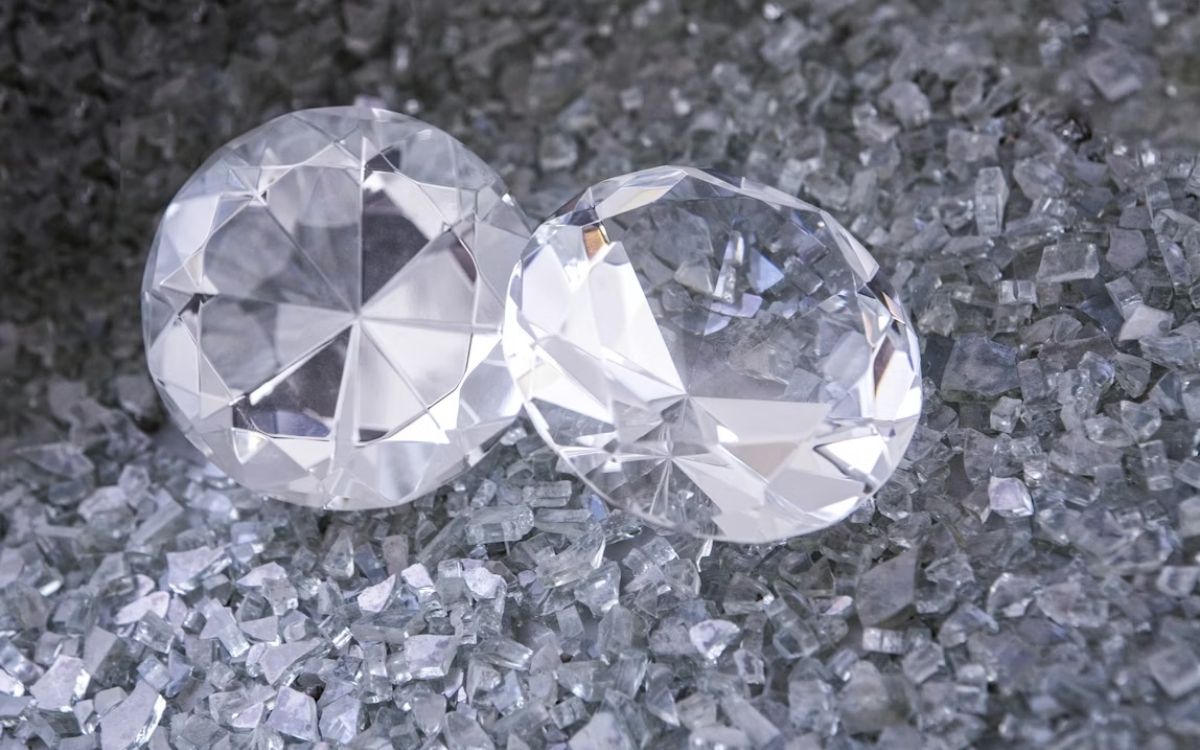
When we say “diamonds,” most people think of a luxurious necklace or a super sparkly ring. A research lab would be the last place people imagine them being used.
Interestingly, natural diamonds are getting a lot of attention in science and healthcare research. And there’s a good reason for it. These stones have incredible properties, which means they can be used for more than just jewelry.
Medical researchers are starting to use natural diamonds to study different diseases, introduce better treatments, and perhaps improve the tools used in healthcare as well.
Why Natural Diamonds Are Useful in Science
Diamonds are made of carbon atoms packed tightly together. That’s what makes them so hard. However, it also means they can tolerate environments where other materials usually start breaking down after a while.
The thing is, natural diamonds don’t react easily with other substances. That’s a huge plus for medical reasons. Materials that cause irritation or break apart over time are no good inside the human body. In fact, they can be harmful and lead to complications. Diamonds don’t cause any trouble, and that’s exactly what scientists want.
Also, natural diamonds are not completely flawless on the inside. They have minor imperfections that give them some extra properties, which researchers are taking advantage of.
Tiny Diamonds, Big Role in Drug Delivery
Medical researchers are breaking natural diamonds into super tiny particles and then using them to carry drugs inside the human body. The medicine is attached to the diamond’s surface and sent towards the cancer cells, for example.
We all know that a lot of cancer treatments, especially chemotherapy, don’t target the bad cells only. They affect everything inside the body, which is why patients experience such intense side effects.
When the medicine is delivered through diamond particles, they don’t hit healthy cells as much. A lot of this is still being studied, but early research shows that tiny diamond particles can help control how drugs are released and where they go inside the body (Benson, 2020). As a result, treatments would be more focused, safer, and more effective.
How Natural Diamonds Help Us “See” What’s Happening in Cells
Scientists can use natural diamonds to see what’s going on inside the cells in our body.
The defects in the structure of natural diamonds react to light in very particular ways. Because of that, diamonds can be used as tiny sensors (Schirhagl et al., 2014). They can notice the slight changes in temperature and other signals in the cells.
This means researchers can watch what’s happening inside the body in real time. They don’t have to make any guesses. They can track how cells behave to find early signs of illness as well.
Making Medical Tools Stronger (and Safer) with Natural Diamonds
Surgical tools, implants, and prosthetics are being coated with a thin layer of natural diamond to make them smoother, stronger, and longer-lasting (Narayan, 2010).
The benefit is that there’s much less chance of tissue damage during surgery. Implants and joints can also move naturally in the body without causing any discomfort or complications.
There’s More to Come
Natural diamonds will probably always remind us of jewelry, but we now know that they can do so much more.
The future of diamonds in healthcare is promising. However, scientists still need to test things, make sure everything is safe, and get approvals for hospital use. This takes time. If and when that happens, we will be looking at a whole new way of treating diseases.
Author Bio

Dr. Raquel Alonso-Perez, Ph.D
Dr. Raquel Alonso-Perez is the Curator of the Mineralogical and Geological Museum at Harvard University, where she oversees access to and development of the university’s world-class Earth science collections. Her work integrates research, teaching, and public education, with a focus on mineralogy and gemology. She earned her B.S. in Geology from the University of Granada in Spain and her Ph.D. in Earth Sciences from ETH Zurich in Switzerland. Dr. Alonso-Perez’s research centers on the geology and mineralogy of gem deposits, and she is particularly known for her expertise in optical mineralogy.