
Blenrep Multiple Myeloma NHS England Rollout Makes UK a World First in Blood Cancer Treatment
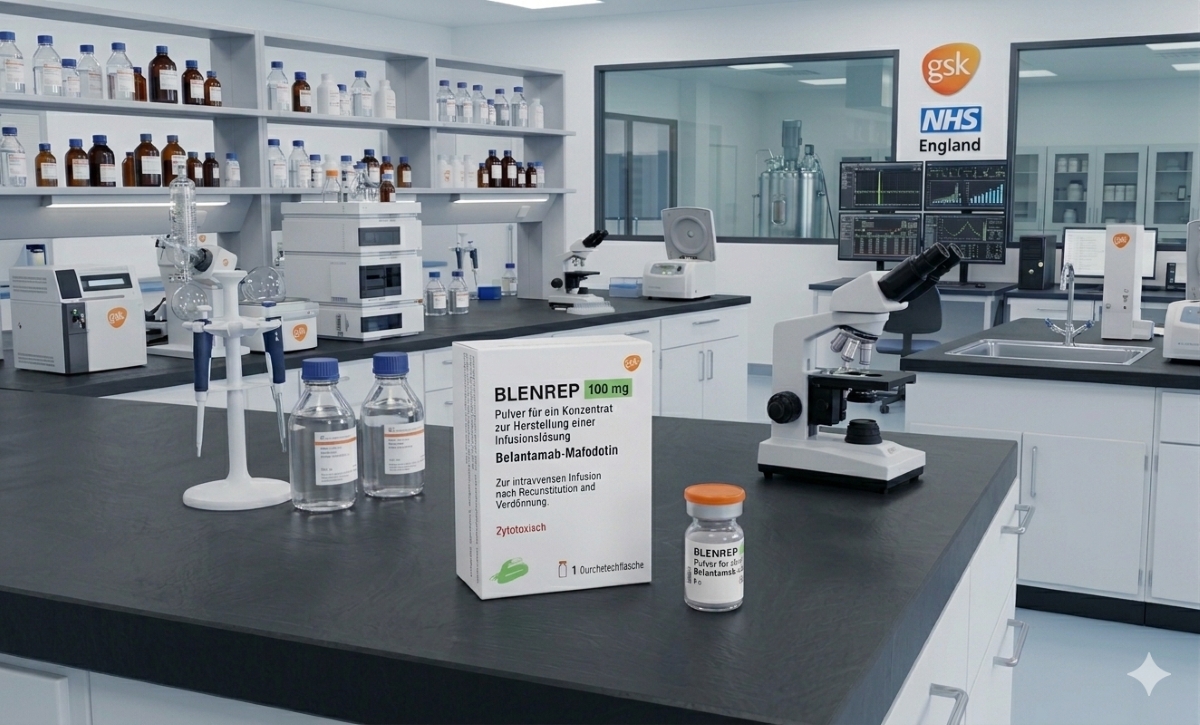
England has become the first country in the world to make GSK’s belantamab mafodotin, marketed as Blenrep, available to multiple myeloma patients through a national health service, following a recommendation from the National Institute for Health and Care Excellence. The decision marks a remarkable chapter in the history of cancer drug development, representing one of the most dramatic reversals of fortune ever seen in oncology, and delivers a meaningful new treatment option for thousands of patients living with an incurable blood cancer.
A Disease That Demands New Answers
Multiple myeloma is a cancer of plasma cells, the white blood cells found in bone marrow that normally produce antibodies to fight infection. In myeloma, these cells become malignant, multiply uncontrollably, and crowd out healthy blood cells while damaging bones and organs. Approximately 6,500 new cases are diagnosed in the UK each year, and while survival has improved considerably over the past five decades, the disease remains incurable. Most patients experience a cycle of remission and relapse, requiring successive rounds of treatment as their cancer finds new ways to evade therapies that previously worked. Only 55% of patients in the UK remain alive five years after diagnosis.
The arrival of new treatment options at the point of first relapse is therefore of particular clinical significance. When first-line therapy fails, typically a lenalidomide-based regimen, patients require second-line treatment quickly, and the quality of that second-line response often determines the trajectory of the disease for years to come.
The Trojan Horse Mechanism
Blenrep belongs to a class of drugs known as antibody-drug conjugates, which combine the precision of a targeted antibody with the destructive power of a cytotoxic agent. It is designed to seek out a protein called B-cell maturation antigen, or BCMA, which is expressed on the surface of myeloma cancer cells. Once attached, Blenrep delivers a potent cancer-killing drug directly into the cell, minimising damage to surrounding healthy tissue. Patient advocacy groups and clinicians have described this as a Trojan horse mechanism, with the antibody acting as a vehicle to smuggle a lethal payload into the cancer cell.
Blenrep is currently the only BCMA-targeted antibody-drug conjugate available for multiple myeloma, giving it a differentiated mechanism of action compared with the standard triplet combinations that have dominated second-line treatment. Helen Knight, director of medicines evaluation at NICE, described multiple myeloma as an “unpredictable and unrelenting” disease, and said Blenrep offered patients the hope of “a meaningful delay in their disease getting worse.”
A Remarkable Comeback Story
The approval carries particular resonance because of Blenrep’s troubled history. The drug first received accelerated approval from the US Food and Drug Administration in August 2020, becoming the first BCMA-targeted therapy ever approved, based on early response rate data in heavily pre-treated patients. However, in November 2022, GSK withdrew Blenrep from the US market at the FDA’s request after the Phase III DREAMM-3 confirmatory trial failed to meet its primary endpoint of progression-free survival against a standard comparator. The speed of the withdrawal, just 15 days after the announcement of the trial failure, was noted across the industry as unusually swift.
What might have been the end of the story instead became the beginning of one of the most compelling drug development comebacks in recent oncology history. Rather than abandoning the programme, GSK committed to the DREAMM-7 and DREAMM-8 clinical trials, evaluating belantamab mafodotin in combination with other agents at an earlier line of treatment, with the hypothesis that the drug might perform significantly better when used alongside partners and in less heavily pre-treated patients.
That hypothesis proved correct. The results from DREAMM-7 were striking. The trial, which enrolled 494 patients randomised to receive either belantamab mafodotin combined with bortezomib and dexamethasone or the established standard-of-care combination of daratumumab, bortezomib, and dexamethasone, demonstrated that the Blenrep combination nearly tripled median progression-free survival, delivering 36.6 months versus 13.4 months for the comparator arm. The trial also met the key secondary endpoint of overall survival, showing a statistically significant 42% reduction in the risk of death at a median follow-up of 39.4 months. After one year, 71% of patients receiving the Blenrep combination remained free from disease progression, compared with 51% on standard care. At three years, survival was 74% in the Blenrep group compared with 60% in the daratumumab comparator arm.
DREAMM-8, which studied belantamab mafodotin in combination with pomalidomide and dexamethasone in patients previously exposed to lenalidomide, also delivered clinically meaningful progression-free survival improvements over its comparator regimen. Results from DREAMM-8 were first presented at the 2024 American Society of Clinical Oncology Annual Meeting and subsequently published in the New England Journal of Medicine.
The NICE Recommendation and NHS Access
The MHRA granted its first regulatory approval for the Blenrep combinations in April 2025, marking the first such authorisation in the world for the drug in this treatment setting. NICE’s final guidance followed, recommending belantamab mafodotin in combination with bortezomib and dexamethasone as a second-line treatment for adults with multiple myeloma who are refractory to or intolerant of lenalidomide. The most recent NICE guidance has broadened access further, with the recommendation covering anyone who has had one previous line of treatment, whether or not it included lenalidomide, and also endorsing the pomalidomide-based combination for eligible patients.
NHS England has fast-tracked access to the treatment through the Cancer Drugs Fund, a mechanism providing interim funding for promising therapies while additional efficacy and safety data continues to be generated. Around 1,500 patients a year in England are expected to be eligible for the bortezomib-based combination alone. The Scottish Medicines Consortium has also approved access in Scotland, and a decision covering Northern Ireland is still awaited.
The treatment is administered as an intravenous infusion every three weeks alongside bortezomib injections and oral dexamethasone. NICE noted that the drug’s safety profile is broadly consistent with the known profiles of the individual agents, though an increase in ocular side effects was identified. These effects are manageable and had been a feature of the drug’s profile since its earliest trials.
Patient and Clinical Response
Responses from the patient and clinical communities have been strongly positive. Shelagh McKinlay, Director of Research and Advocacy at Myeloma UK, described the approval as the result of three years of intensive effort. “It’s fantastic to see the UK at the forefront of myeloma treatment globally,” she said. “BVD has been shown in clinical trials to give patients remissions of more than three years on average, and we know this treatment will make a huge difference to the lives of thousands of people with myeloma.”
Dr Scott Purdon, head of patient advocacy at Myeloma UK, emphasised what the remission data means in human terms. “Approvals like this highlight why we continue to fight for treatment, submit evidence on behalf of the myeloma community, and push for access to pioneering drugs,” he said.
Paul Silvester, a father of three from Sheffield who was diagnosed with myeloma in 2023, was enrolled in a clinical trial for the treatment after his initial therapy failed to maintain remission. Within weeks of his first dose, he went into remission. “I feel like this treatment has brought the party balloons back in the house,” said the 60-year-old. “Within the first two or three weeks, after the first dose, my light chains went from 1,300 down to six, which is counted as being in remission.”
Tracey Loftis, Deputy Director of Policy and Influencing at Blood Cancer UK, highlighted the wider significance of the decision. “Blood cancer is the UK’s third largest cancer killer, and myeloma remains an incurable blood cancer,” she said. “Access to innovative therapies like Blenrep will provide renewed hope for many newly diagnosed.”
Commercial Implications for GSK
For GSK, the NHS rollout represents a significant commercial milestone in the drug’s rehabilitation. Having been written off following the 2022 withdrawal, Blenrep is now approved in the UK and Japan, with regulatory reviews ongoing in the US, the EU, and China. GSK is targeting peak annual sales of around £3 billion for the drug, contingent on it also breaking through into first-line multiple myeloma use. The company is already running the DREAMM-10 study to investigate this possibility, pitting Blenrep combined with lenalidomide and dexamethasone against a daratumumab-based triplet in newly diagnosed, transplant-ineligible patients. If successful, the addressable patient population would expand considerably.
As the Blenrep multiple myeloma NHS England rollout gets under way, it stands as a reminder that setback in drug development need not mean the end of a programme, and that the willingness to return to the clinic with a better-designed trial can ultimately transform the outlook for patients who might otherwise have had little to look forward to.