
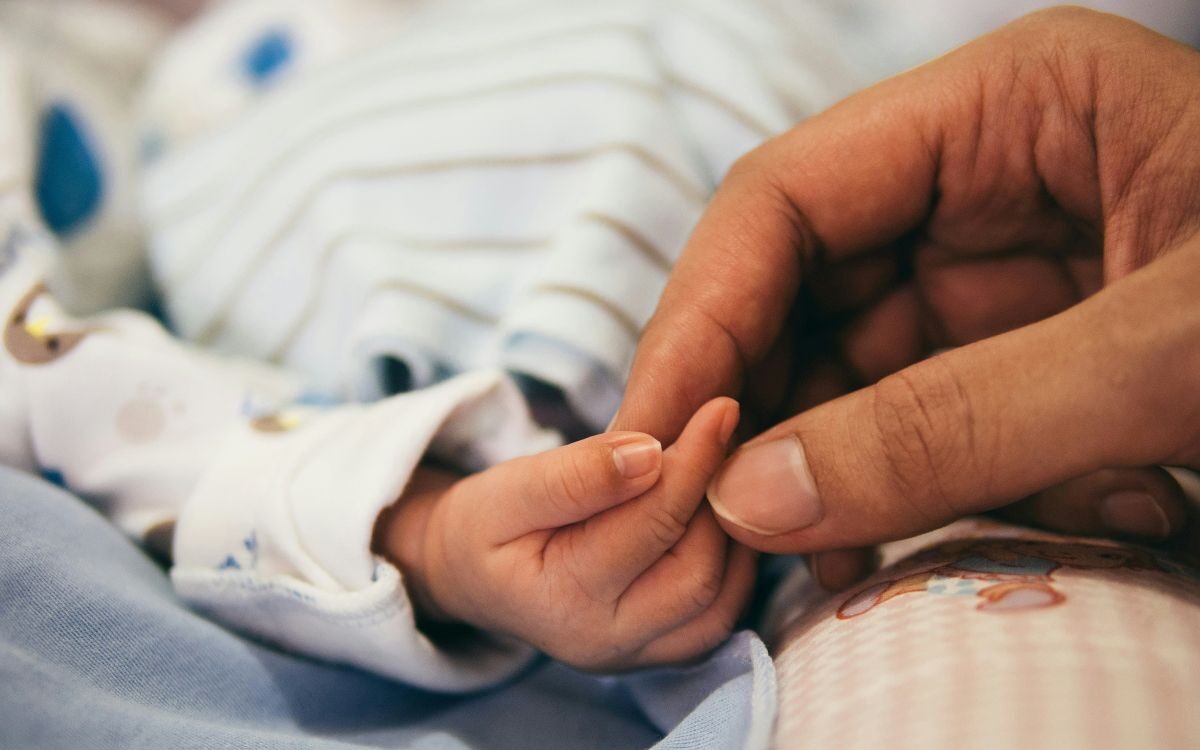
Children have long been described as therapeutic orphans. It is a term first used by the American paediatrician Harry Shirkey of the Children’s Hospital in Birmingham, Alabama, at a 1963 conference and formally published in 1968. Despite more than five decades of regulatory reform, advocacy, and scientific progress, it retains an uncomfortable degree of accuracy. The failure to conduct adequate paediatric clinical trials is a root cause of this discomfort. The majority of medicines administered to children around the world today have never been formally tested in paediatric populations. Doctors prescribe them based on adult data, adjusting doses by weight or body surface area and hoping the extrapolation holds. Sometimes it does. Sometimes it does not.
Consider what that means in practice. A neonatologist prescribing a sedative for a premature infant, or a paediatrician managing seizures in a toddler, is routinely working without the kind of trial evidence that would be considered baseline for an adult patient in the same clinical situation. The drug may work. The dose may be appropriate. But the evidence to confirm either is often absent, and the consequences of getting it wrong fall entirely on the child.
The gaps in paediatric clinical trials represent one of the most enduring and consequential failures of the global drug development system. In October 2025, the World Health Organization published a landmark technical report setting out a global research agenda specifically designed to address what it described as persistent evidence gaps for essential interventions and treatments in children aged zero to nine years. The report, titled The Future of Paediatric Clinical Trials, was built on contributions from more than 380 stakeholders across the research, clinical, and policy communities worldwide, and identified 172 priority clinical research questions spanning infectious diseases, noncommunicable diseases, newborn health, and early childhood development. Its publication is a signal that, at the highest level of global health governance, paediatric clinical trials are finally being treated as a systemic priority rather than a niche concern.
The Scope of the Problem
To understand why the WHO felt compelled to act, it helps to appreciate the scale of what remains undone. These challenges are precisely why well-designed paediatric clinical trials are so critical, and so consistently lacking. Drug safety has historically been understudied in paediatric populations, and dosing in children is routinely inferred by extrapolating from adult studies, an approach that fails to account for the significant differences in disease pathophysiology and developmental pharmacokinetics that distinguish a child’s body from an adult’s. A two-year-old metabolises medicines differently from a ten-year-old, and both metabolise them differently from an adult. The liver enzymes responsible for processing drugs mature at different rates. Kidney function, body composition, and protein binding all change across childhood in ways that can materially affect both the efficacy and the safety of a given medicine.
Off-label prescribing, where a drug is used outside the terms of its licensed indication, is the direct consequence of this evidence gap. Research published in the British Journal of Clinical Pharmacology documented that even after the introduction of regulatory changes in the EU specifically designed to increase paediatric drug research, off-label use rates changed only marginally, with the majority of drug use in children concentrated in older, often off-patent medications that the new regulations were never designed to address. Studies throughout Europe have consistently shown that at least one third of children receive either an unlicensed or an off-label drug during a hospital stay.
The risks are not theoretical. Adverse drug reactions in children are more common when dosing is based on inadequately validated extrapolations. Formulation is a related and frequently overlooked problem. Many children under the age of eight, and essentially all children under the age of four, have difficulty swallowing conventional tablets, yet large proportions of medicines available for paediatric use are not produced in age-appropriate liquid, dispersible, or chewable forms.
Regulatory Frameworks: Progress and Its Limits
The regulatory response to these failures has been significant, if incomplete. In the United States, the Best Pharmaceuticals for Children Act and the Paediatric Research Equity Act together created a framework requiring pharmaceutical companies to study new drugs in children under certain conditions, with incentives including extended market exclusivity offered in exchange for conducting paediatric studies. The approach drove a meaningful increase in paediatric labelling for newly approved medicines over the following two decades. This legislative combination led to a significant rise in the number of paediatric clinical trials conducted for newly approved medicines.
In the European Union, the Paediatric Regulation came into force in January 2007, establishing the EMA’s Paediatric Committee (PDCO) and making submission of a Paediatric Investigation Plan (PIP) mandatory for any new medicine seeking marketing authorisation. The PIP sets out the studies, formulations, and timelines necessary to generate paediatric data. Companies that comply are rewarded with a six-month extension of supplementary protection certificates, and with two additional years of market exclusivity for paediatric orphan medicines.
The EU framework has delivered results. Between 2023 and 2025, the EMA received 27 eligibility requests and adopted eight stepwise PIPs, predominantly in the areas of rare diseases and oncology. A stepwise PIP allows sponsors to begin with a partial plan and add to it as evidence accumulates, a recognition that for some conditions, particularly those affecting small numbers of children, a full development programme cannot be specified at the outset.
The EU pharmaceutical legislation reform, agreed in December 2025 with final texts published in March 2026, is a significant development that warrants attention. Beyond streamlining the PIP process and reducing EMA assessment timelines for marketing authorisation opinions from 210 to 180 days, the reform restructures incentive arrangements for paediatric and orphan medicines. Notably, the two-year orphan exclusivity extension previously linked to completion of a paediatric investigation plan has been replaced by a six-month SPC extension, aligning orphan and non-orphan incentive structures and tying rewards more directly to genuine unmet need in children. Whether these changes produce a meaningful shift in industry behaviour will depend on how the EMA implements them in practice, but the direction of travel is the right one.
Yet the fundamental limitation of these frameworks remains unchanged. They apply to new medicines and new indications. The enormous backlog of older, off-patent medicines that are in widespread paediatric use but were never formally studied in children falls almost entirely outside the scope of both the US and EU regulatory requirements. Addressing that backlog requires public funding and collaborative research initiatives of a kind that have historically been underfunded and fragmented.
The conect4children Network: A European Model
One response to the structural limitations of commercially driven paediatric research has been the development of academic and public-private networks dedicated to supporting paediatric clinical trials regardless of commercial incentive. The conect4children network, a public-private partnership funded through the Innovative Medicines Initiative 2, operated between 2018 and 2025 and brought together ten large pharmaceutical companies and 33 academic and third-sector organisations. Over its seven-year lifespan, the network developed high-quality trial support services across more than 220 sites in 21 countries, addressing gaps in communication, site identification, feasibility assessment, and trial delivery that had historically made multinational paediatric research slow, expensive, and difficult to coordinate.
The network’s outputs were tangible. It produced standardised tools for site feasibility assessment, trained paediatric research coordinators across multiple countries, and developed consent frameworks adapted to different age groups and cultural settings. The project closed in April 2025, though a successor non-profit foundation, conect4children Stichting, has been established to continue supporting industry and academic partners. The risk, nonetheless, is that the coordination capacity built over seven years takes time to embed into routine trial infrastructure, and the foundation’s ability to replicate the scale of the original network remains to be demonstrated.
The network’s experience also illustrated the practical complexity of paediatric trial delivery at scale. Recruiting babies, children, and young people into clinical trials requires a fundamentally different approach from adult recruitment. Informed consent involves parents or guardians. Protocols must be adapted to account for developmental differences across age subgroups. Specialised paediatric nursing and pharmacy expertise must be available at trial sites. Blood sampling volumes must be minimised. Each of these requirements adds cost and complexity, and in markets where the eventual patient population is smaller than for adult conditions, the commercial case for investment is correspondingly weaker.
The Global Equity Dimension
The gaps in paediatric clinical trials are not distributed evenly across the world. They are deepest and most consequential in low- and middle-income countries, where 80% of the estimated 400,000 new cases of paediatric cancer that occur annually are diagnosed. Research published in JAMA Network Open in April 2025, drawing on a survey of 223 clinicians with cancer clinical trial experience in low- and middle-income countries, found that the most impactful barriers to conducting trials were lack of funding for investigator-initiated research and insufficient dedicated research time, with the absence of a functioning cancer clinical trial ecosystem compounding both challenges.
The human reality behind these numbers is stark. A child diagnosed with leukaemia in a high-income country with established trial infrastructure has access to treatment protocols refined through decades of prospective research. A child with the same diagnosis in a low-income country is likely to receive whatever treatment the local facility can provide, based on guidelines derived from populations that look nothing like them, in a setting without the clinical trial access that made those guidelines possible in the first place. The survival gap that results is not a medical mystery. It is a direct consequence of where clinical research investment has and has not gone.
Clinical trials have contributed to striking improvements in survival for children with cancer in high-income countries: five-year survival rates now exceed 80%, up from around 60% in the 1970s. In low- and middle-income countries, where trial access is severely limited and where patients often present with advanced disease, the equivalent improvements have not been achieved. The WHO Global Initiative for Childhood Cancer has set a target of at least a 60% survival rate for all paediatric patients with cancer by 2030, a goal that is explicitly conditional on expanded access to clinical trials in the settings where the burden of disease is concentrated.
Beyond oncology, the Lancet Global Health published a report in 2025 from the WHO Paediatric Clinical Trials Working Group that framed the issue in its broadest terms, identifying substantial gaps in knowledge on the efficacy and safety of paediatric interventions across infectious diseases, nutrition, neonatology, and neurodevelopment, and describing this as a failure to establish shared priorities and alignment across governments, researchers, communities, and funders.
Emerging Solutions and Persistent Challenges
Several developments offer genuine grounds for cautious optimism about the future of paediatric clinical trials. Adaptive trial designs, which allow protocols to be modified based on interim data, are particularly well-suited to paediatric research, where the smaller patient populations make traditional fixed designs statistically challenging and ethically difficult to justify. Extrapolation approaches, in which adult pharmacokinetic and pharmacodynamic data are used to model paediatric dosing requirements, are increasingly accepted by regulators as a means of reducing the number of children who need to be enrolled in trials while still generating valid safety and efficacy evidence.
The use of real-world data, including data from electronic health records, disease registries, and post-market surveillance, offers another pathway to supplementing evidence from formal trials, particularly for older medicines where the cost of a prospective trial is disproportionate to the market opportunity. The FDA’s 2025 guidance changes allowing broader submission of real-world evidence in drug applications are relevant here, though their application to paediatric populations remains to be fully defined.
None of these advances, however, addresses the underlying structural problem identified by the WHO’s 2025 research agenda: the lack of coordinated, adequately funded effort to fill the evidence gaps that exist not at the cutting edge of pharmaceutical innovation, but in the routine treatment of common childhood conditions with medicines that have been in clinical use for decades. Closing those gaps will require sustained investment from governments and research funders, regulatory frameworks that address off-patent medicines as well as new ones, and a commitment to conducting research in the communities, many of them in low- and middle-income countries, where the burden of inadequately treated childhood illness falls most heavily.
A Duty of Evidence
The designation of children as therapeutic orphans was coined as an indictment, not a description. More than fifty years on, the research and regulatory communities have made real progress in ensuring that new medicines are accompanied by paediatric data. But progress on new medicines does not reach the child in a district hospital being treated with a decades-old drug that was never tested in her age group, or the family in a low-income country navigating a cancer diagnosis without access to the trial that might change its outcome.
The WHO’s October 2025 research agenda represents a meaningful step towards a more systematic global response. The EU’s 2026 legislative reform points in the right direction. But frameworks and agendas are not the same as funded, coordinated action. The test of whether this moment represents genuine progress will come in the years ahead, in whether governments commit resources to off-patent paediatric research, whether the coordination infrastructure built by networks like conect4children is sustained and developed by its successor foundation, and whether the children who bear the heaviest burden of inadequately evidenced treatment are brought within the reach of the evidence-generating systems that currently exclude them.
Harry Shirkey’s phrase was meant to provoke. More than half a century later, it still should.