
Landmark clinical trial results expected in 2026 as disease-modifying Parkinson’s pipeline reaches critical phase
Medical research charity Cure Parkinson’s says the Parkinson’s research field is approaching a pivotal moment, as a wave of results from clinical trials testing treatments designed to slow or stop Parkinson’s disease is expected to land in 2026.
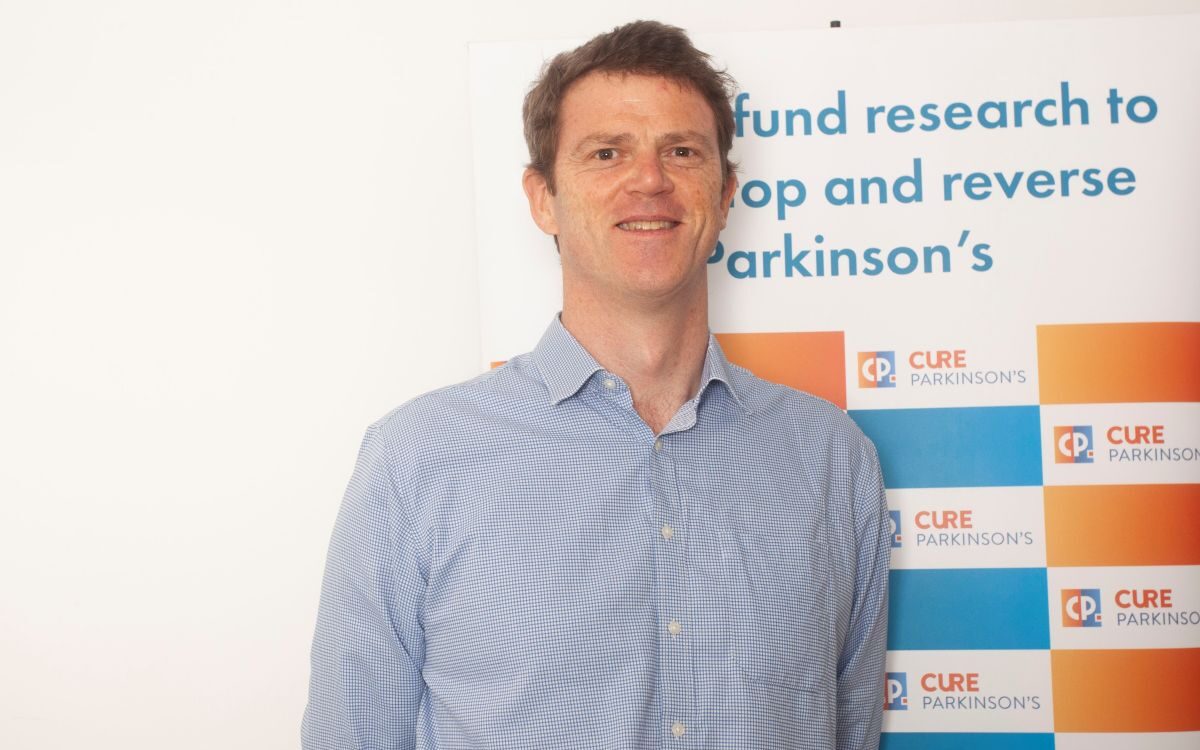
Dr Simon Stott, Director of Research at Cure Parkinson’s, presented new insights into the rapidly evolving clinical trial landscape at the 7th World Parkinson’s Congress – one of the field’s most significant international gatherings, which took place from 24-27 May in Phoenix, Arizona.
The tri-annual Congress comes alongside the publication of a major new paper in the Journal of Parkinson’s Disease (JPD). The paper, delivered by the Cure Parkinson’s research team in collaboration with Parkinson’s research advocates and The Michael J. Fox Foundation, provides a detailed analysis of the clinical trials landscape between 2015 and 2024.
Unlike the majority of treatments currently available for Parkinson’s, which manage symptoms but do not affect the underlying disease, disease-modifying treatments (DMTs) aim to slow or stop its progression entirely. No such therapy has yet been approved.
The latest analysis, which was highlighted by Dr Stott during his address to congress on Tuesday 26 May, provides data up to 2024 and shows that between 2022-2024 more than half of all Parkinson’s drug trials focus on disease-modifying approaches for the first time. This shift reflects decades of scientific progress in understanding the biology driving the condition, stretching back to the identification of the first genetic risk factors in the late 1990s.
The pipeline of trials covers a broad range of biological targets, including alpha-synuclein – the protein whose abnormal clumping is closely associated with Parkinson’s – as well as genetic pathways such as LRRK2 and GBA1, mitochondrial function and inflammation. But despite the scale and diversity of activity, the vast majority of these trials remain at an early stage, with only a small number having reached Phase 3 testing.
Several of the trials that are at advanced stages are expected to report results this year. Among them are the LUMA study of an LRRK2 inhibitor developed by Biogen and Denali (Phase 2b), the ASPro-PD Phase 3 trial of Ambroxol – a licensed cough medicine being repurposed for Parkinson’s – and a Phase 3 study of Prasinezumab, Roche’s anti-alpha-synuclein therapy. Results are also anticipated from trials targeting mitochondrial function and GBA1-related biology.
Collectively, these are expected to test whether current scientific theories about what drives Parkinson’s can translate into treatments that can change the course of the disease.
With the global spotlight on the World Parkinson Congress and new data on the horizon, Cure Parkinson’s is calling for continued investment and collaboration to ensure promising therapies progress through late-stage development.
Dr Simon Stott, Director of Research Cure Parkinson’s says:
“The pipeline of research into disease-modifying treatments for Parkinson’s is now broader and more scientifically sophisticated than at any point in history.
“The results coming this year will tell us whether our fundamental understanding of this disease is correct. That makes this a genuinely pivotal moment. But the opportunity it represents will only be realised with continued investment and collaboration to carry the most promising therapies through to the patients who need them.”
About Cure Parkinson’s
We’re here for the cure. Cure Parkinson’s is working with urgency to find new treatments to slow, stop and reverse Parkinson’s. Our funding and innovation has redefined the field of Parkinson’s research, enabling the world’s leading researchers to prioritise the next generation of drugs for clinical trial. Together we will conquer Parkinson’s.
Further information at cureparkinsons.org.
Cure Parkinson’s is the operating name of The Cure Parkinson’s Trust. The Cure Parkinson’s Trust is a registered charity in England and Wales (1111816) and Scotland (SCO44368) and is a company limited by guarantee – company number 05539974 (England and Wales).